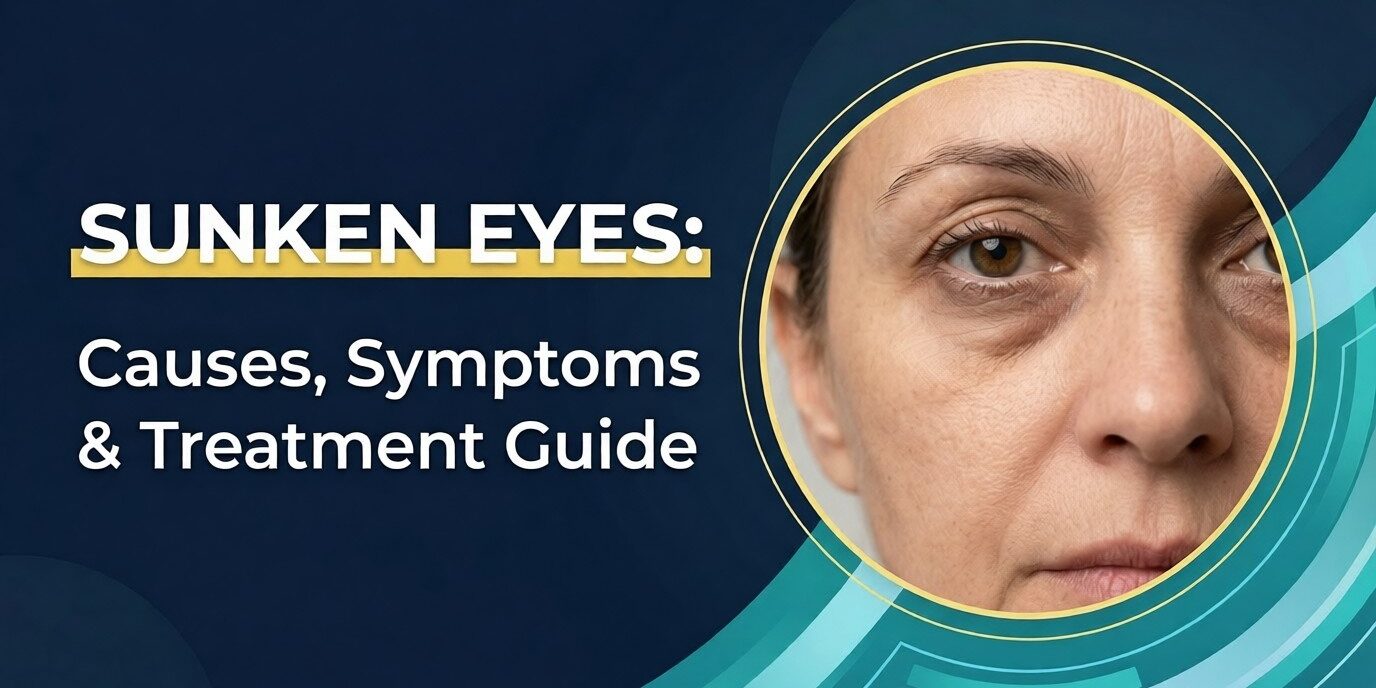
Sunken Eyes: Causes, Symptoms & Treatment Guide
Written by

Dr. K Subba Rao
Sr. Cataract & Refractive Surgeon
45+ Years Experience
Sunken eyes are something many people notice when they look tired, unwell, or older than their age. The area under the eyes may look hollow, dark, or slightly pulled in. Sometimes it is just temporary, but in some cases, it can point to an underlying health issue.
In India, sunken eyes are commonly linked with lack of sleep, dehydration, stress, and nutritional deficiencies. However, there can be other medical causes as well. Let us understand this condition properly.
What Are Sunken Eyes?
Sunken eyes refer to a hollow appearance around the lower eyelids and under-eye area. The skin may look thin, dark, and slightly depressed. The medical term often used is “tear trough deformity” or “hollow under-eyes”.
It happens when the soft tissue and fat under the eyes reduce, or when the skin becomes thin. Ageing is one common reason, but it is not the only one.
Some people naturally have deeper-set eyes due to facial structure. That is normal and not a medical problem. Sunken eyes become a concern when the appearance is new, sudden, or associated with other symptoms.
Sunken Eyes vs Normal Eyes
Normal eyes have a smooth transition from the lower eyelid to the cheek. The skin looks healthy and slightly firm.
In sunken eyes:
- There is visible hollowing under the eyes
- Dark shadows may appear
- The eyes may look tired or dull
- Fine lines may become more noticeable
Sometimes people confuse dark circles with sunken eyes. Dark circles are mainly skin pigmentation issues. Sunken eyes involve volume loss or tissue thinning. Both can occur together, but they are different problems.
Sunken Eyes vs Normal Eyes?
-
Ageing
As we grow older, the fat and collagen under the eyes reduce. The skin becomes thin and loses elasticity. This leads to hollowing. - Dehydration When the body lacks fluids, the skin loses its plumpness. The under-eye area looks dull and sunken. This is common in summer or during illness with vomiting or diarrhoea.
-
Lack of Sleep
Poor sleep affects blood circulation and skin health. The eyes look tired and sunken after several nights of inadequate sleep. -
Weight Loss
Sudden or major weight loss reduces fat from the face, including under the eyes. -
Malnutrition
Deficiency of iron, vitamin C, vitamin K, or protein can affect skin and tissue health. -
Smoking and Alcohol
Both damage collagen and reduce blood flow to the skin. -
Genetics
Some people inherit a naturally deep eye socket structure. -
Illness
Chronic illnesses, severe infections, sinus problems, and allergies can also cause hollow-looking sunken eyes.
Sunken Eyes Symptoms
Someone can easily identify sunken eyes by just looking at them:
- Hollow or depressed under-eye area
- Dark shadows below the eyes
- Thin, dry-looking skin
- Tired or aged appearance
- Mild swelling in some cases
If dehydration or illness has caused sunken eyes, then other symptoms may also appear, such as:
- Dry mouth
- Weakness
- Headache
- Reduced urination
- Fever or loose motions
In babies, sunken eyes can be a serious sign of dehydration. This needs urgent attention.
Common Reasons for Sunken Eyes
In daily practice, the most common causes of sunken eyes are:
- 1. Dehydration – Especially in children and elderly people.
- 2. Iron deficiency anaemia – Quite common in Indian women.
- 3. Poor sleep due to stress or long working hours.
- 4. Excess screen time.
- 5. Rapid weight loss through crash dieting.
In some cases, thyroid problems may also affect the eye area. Severe allergies and sinus congestion can create shadowing that looks like sunken eyes.
How to Get Rid of Sunken Eyes
Treatment for sunken eyes depends on the cause.
-
1. Stay Hydrated
Drink enough water daily. In the Indian climate, most adults need 2.5 to 3 litres of water, unless restricted for medical reasons. - 2. Improve Sleep Try to sleep at least 7 hours. Maintain a fixed sleep schedule. Avoid mobile usage late at night.
-
3. Balanced Diet
Include: - Green leafy vegetables
- Citrus fruits
- Nuts and seeds
- Protein-rich foods like eggs and tofu
-
4. Cold Compress
A simple cold compress or chilled spoon can temporarily reduce the hollow appearance by improving circulation. -
5. Under-Eye Creams
Creams with retinol, hyaluronic acid, or vitamin C may help improve skin thickness gradually. Results take time. -
6. Avoid Smoking and Excess Alcohol
These worsen skin ageing and dryness.
Lifestyle changes help in mild cases. For deeper hollows, medical treatment may be needed.
Medical Treatment for Sunken Eyes
If sunken eyes are due to ageing or significant volume loss, doctors may suggest cosmetic procedures.
-
1. Dermal Fillers
Hyaluronic acid fillers are injected into the under-eye area to restore volume. The effect lasts around 8–12 months. It should always be done by a trained dermatologist or plastic surgeon. - 2. Fat Grafting In this procedure, fat from another body area is transferred to the under-eye region. It is more long-lasting than fillers.
-
3. Laser Treatment
Laser procedures improve skin thickness and pigmentation. -
4. Treating Underlying Conditions
If the cause of sunken eyes is anaemia, thyroid disorder, or chronic illness, treating the root problem improves the eye appearance.
When Should You See an Eye Doctor?
Consult a doctor if:
- The appearance develops suddenly
- There is severe dehydration
- There is pain, redness, or vision problems
- It happens in a baby or a small child
- There are other symptoms with sunken eyes, like weight loss, fever, or weakness
You may visit an ophthalmologist or a general physician, depending on the associated symptoms of sunken eyes.
Conclusion: About Sunken Eyes
Sunken eyes are common and often harmless. But they should not be ignored when associated with other symptoms. Simple lifestyle corrections help in many cases. If the problem persists or worsens, a medical evaluation is important. Taking care of overall health reflects clearly on the face, especially the eyes.
Frequently Asked Questions
How to get rid of sunken eyes permanently?
Permanent improvement depends on the cause. If sunken eyes are due to dehydration or anaemia, correcting the problem can reverse it. If caused by ageing, procedures like fat grafting give long-lasting results, though ageing continues naturally.
What is the best treatment for sunken eyes?
For mild cases, hydration, sleep, and nutrition work well. For deep hollows, dermal fillers are commonly used. The best treatment varies from person to person.
Can dehydration cause sunken eyes?
Yes. Dehydration reduces skin elasticity and volume, making the under-eye area look hollow. In children, it can be a serious warning sign.
Are sunken eyes reversible?
Many cases are reversible if caused by lifestyle issues, dehydration, or nutritional deficiency. Age-related volume loss may need medical procedures for visible improvement.
How long does it take to fix sunken eyes?
If the reason for sunken eyes is dehydration, then improvement may be seen within a few days of proper fluid intake. For nutritional deficiencies, it may take weeks. Cosmetic treatments show results immediately or within a few days.
What are the symptoms of sunken eyes?
The main symptom of sunken eyes is a hollow appearance under the eyes. There may also be dark shadows and thin skin. In dehydration, other symptoms like weakness and dry mouth can occur.
What causes sudden sunken eyes?
Sudden sunken eyes are commonly due to dehydration, severe illness, rapid weight loss, or acute infection. It should not be ignored, especially in children.
Can sunken eyes in babies be dangerous?
Yes. In babies, sunken eyes can indicate severe dehydration, especially if there is diarrhoea or vomiting. Immediate medical care is required.