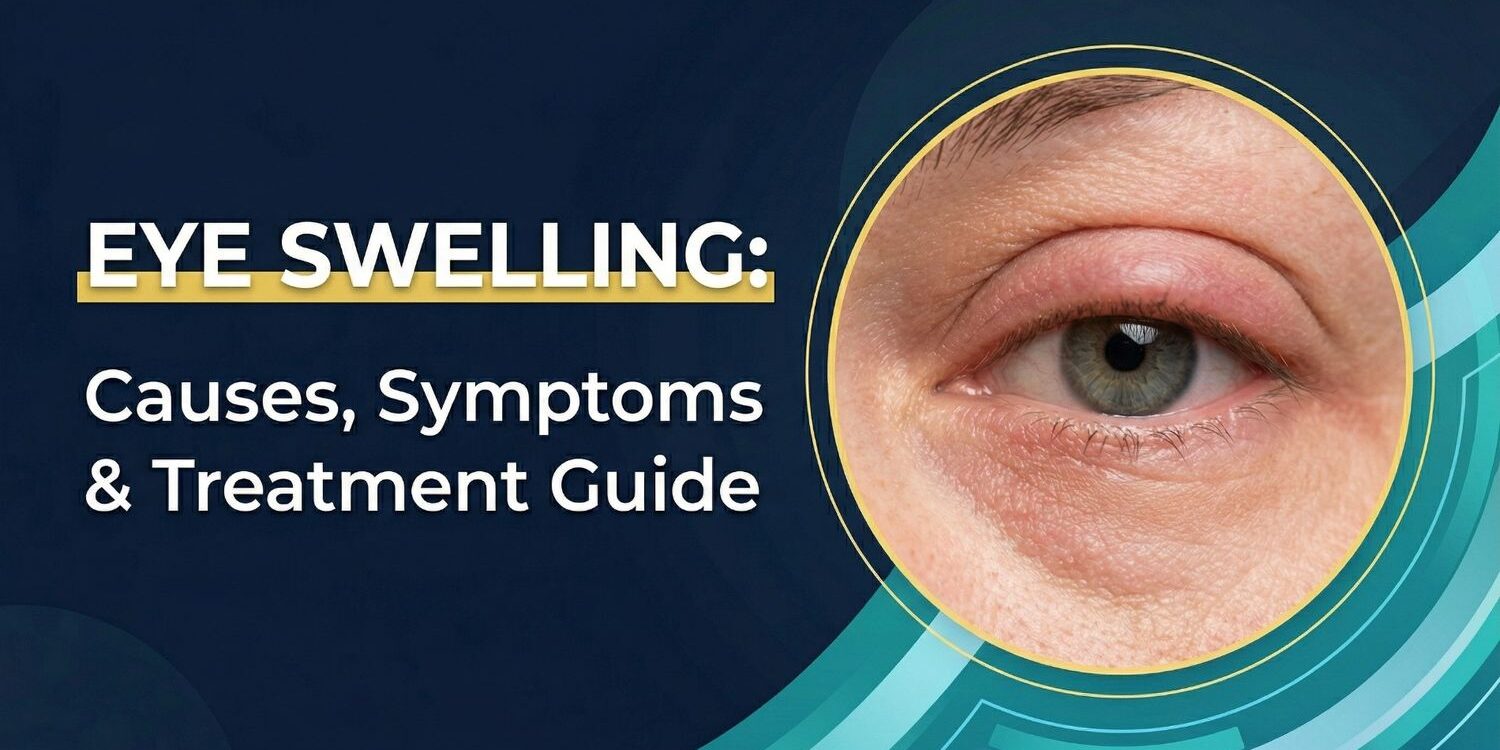
Eye Swelling Causes, Symptoms & Treatment Guide
Written by

Dr. K Subba Rao
Sr. Cataract & Refractive Surgeon
45+ Years Experience
Eye swelling is a common problem. Almost everyone faces it at some point. Sometimes it is just mild puffiness after waking up. In other cases, it can be painful and uncomfortable. The reasons for eye swelling can vary from a simple lack of sleep to an infection or an allergy. Understanding the cause of under-eye swelling helps in choosing the right treatment.
Why Is My Eye Swollen? Understanding the Causes
A swollen eye usually happens when fluid gets filled up the tissues around the eye. The skin around the eyes is very thin. So, even a small amount of fluid can make it look puffy.
Swelling can affect one eye or both. It may come suddenly, like in allergies, or sometimes slowly, just like in infections. In some cases, eye swelling goes away on its own. But sometimes, remedies for eye swelling are needed.
What Is Eye Swelling (Periorbital Oedema)?
The medical word for eye swelling is periorbital oedema. “Periorbital” means around the eye, and “oedema” means swelling due to fluid. It can involve the upper eyelid, lower eyelid, or the area under the eyes.
It is very different from swelling happening inside the eyeball. Many cases involve only the outer tissues. However, when swelling is severe and affects vision or eye movement, then it may be more serious.
Common Causes of Eye Swelling
There are many reasons why your eye may look swollen.
Allergies and Sudden Eyelid Swelling
Allergic reactions are one of the most common causes of eye swelling. Dust, pollen, pet hair, certain foods, or even new cosmetics can trigger swelling.
In allergies, you may notice:
- Itching
- Redness
- Watery eyes
- Swelling in both eyes
Conditions like allergic conjunctivitis can cause sudden puffiness and irritation. Antihistamines and a cold compress usually help.
Eye Infections That Cause Redness and Puffiness
Infections can cause painful eye swelling. A common example is conjunctivitis, also known as pink eye. It can be viral or bacterial. Eye swelling symptoms include redness, discharge, and irritation.
Another condition is a stye. It looks like a small, painful lump on the eyelid. It happens when an oil gland gets infected.
More serious infections, such as cellulitis around the eye, can cause severe swelling, fever, and pain. This needs urgent medical care.
Swelling in the Upper Eyelid: Why It Happens
If only the upper eyelid is swollen, it may be due to:
- A stye
- An insect bite
- Allergy
- Blocked oil glands
Sometimes, a painless lump called a chalazion forms on the eyelid. It develops slowly and may last for weeks
Lower Eyelid and Under-Eye Swelling Causes
Swelling under the eyes is often linked to:
- Lack of sleep
- High salt intake
- Age-related skin changes
- Sinus issues
In sinus infections, pressure builds up in the face and can cause puffiness under the eyes.
Fluid Retention, Lack of Sleep, and Dehydration
Late nights, too much screen time, or crying can make your eyes look swollen the next morning.
Eating very salty food causes the body to retain water. This fluid can collect around the eyes.
Dehydration is also a reason for eye puffiness. When the body lacks water, it tries to hold on to whatever fluid is available, leading to swelling in soft tissues.
Injury, Trauma, or Foreign Objects in the Eye
If you accidentally hit your eye or something enters it, swelling is a natural response. There may also be pain and redness.
A black eye after injury causes swelling and bruising. In such cases, a cold compress within the first 24 hours helps reduce swelling.
If a foreign object is stuck in the eye, do not rub it. Rinse gently with clean water and consult a doctor if discomfort continues.
Health Conditions Linked to Swollen Eyes
Sometimes eye swelling is related to other medical problems.
Thyroid disorders, especially Graves’ disease, can cause bulging and swelling around the eyes. Kidney problems may also lead to puffiness, especially in the morning.
Severe allergic reactions, such as angioedema, can cause rapid swelling of the upper and lower eyelids and the face. This can be serious and needs emergency care.
Symptoms of Eye Swelling
Eye swelling symptoms may come with:
- Redness
- Itching
- Burning sensation
- Pain
- Watery eyes
- Discharge
- Blurred vision
- Sensitivity to light
If swelling is mild and painless, it is usually not serious. But if it affects vision or eye movement, medical help is important.
When Should You See a Doctor for a Swollen Eye?
Consult a doctor if you notice:
- Severe pain
- Fever
- Sudden vision changes
- Swelling after an injury
- Swelling that does not improve in 2–3 days
- Pus-like discharge
Children with swollen eyes should be checked carefully, especially if they have a fever or seem unwell.
Eye Swelling Treatment Options
Treatment for the eye swelling depends on the cause.
For allergies:
- Cold compress
- Antihistamine tablets
- Anti-allergy eye drops
For fluid retention or lack of sleep:
- Adequate sleep
- Reduce salt intake
- Drink enough water
For injury:
- Cold compress
- Pain relief as advised by the doctor
Avoid self-medicating with steroid drops unless prescribed. Incorrect use can worsen the problem.
How to Prevent Recurring Eye Swelling
Some simple habits can reduce repeated swelling:
- Wash your hands before touching your eyes
- Remove makeup before sleeping
- Avoid sharing towels
- Limit salty foods
- Stay hydrated
- Get proper sleep
- Manage allergies properly
If you are prone to seasonal allergies, consult a doctor for preventive medicines.
Conclusion: About Eye Swelling
Eye swelling is common and mostly not serious. Still, do not ignore persistent or painful swelling. The eyes are delicate, and timely care prevents complications. If in doubt, it is always safer to consult an eye specialist.
Frequently Asked Questions
Can a sinus infection lead to swollen eyes and eyelids?
Yes. Sinus infections can cause pressure and inflammation around the eyes. This may lead to puffiness, especially under the eyes. If there is fever or severe pain, consult a doctor.
Can dehydration or high salt intake cause eye swelling?
Yes. High salt causes water retention. Dehydration makes the body hold on to fluids. Both can result in puffiness around the eyes.
Can stress cause eye swelling?
Stress itself may not directly cause eye swelling, but it can disturb sleep. Lack of sleep often leads to puffy eyes. Stress can also worsen allergies in some people.
Can allergies cause eyelid swelling?
Yes. Allergies are one of the most common causes of swollen eyelids. The swelling is usually accompanied by itching and watery eyes.
Is eye swelling a sign of infection?
Not always. It can be due to allergies, lack of sleep, or fluid retention. However, if there is pain, redness, discharge, or fever, infection may be the reason of the eye swelling.
Should I see a doctor for mild eyelid swelling?
If it is mild and improves within a day or two, a home remedy for eye swelling is usually enough. But if it keeps coming back or gets worse, see a doctor.
Why is my upper eyelid swollen but not painful?
A painless swelling of the upper eyelid is often due to a blocked oil gland, like a chalazion. It may settle on its own, but sometimes it needs treatment for eye swelling.