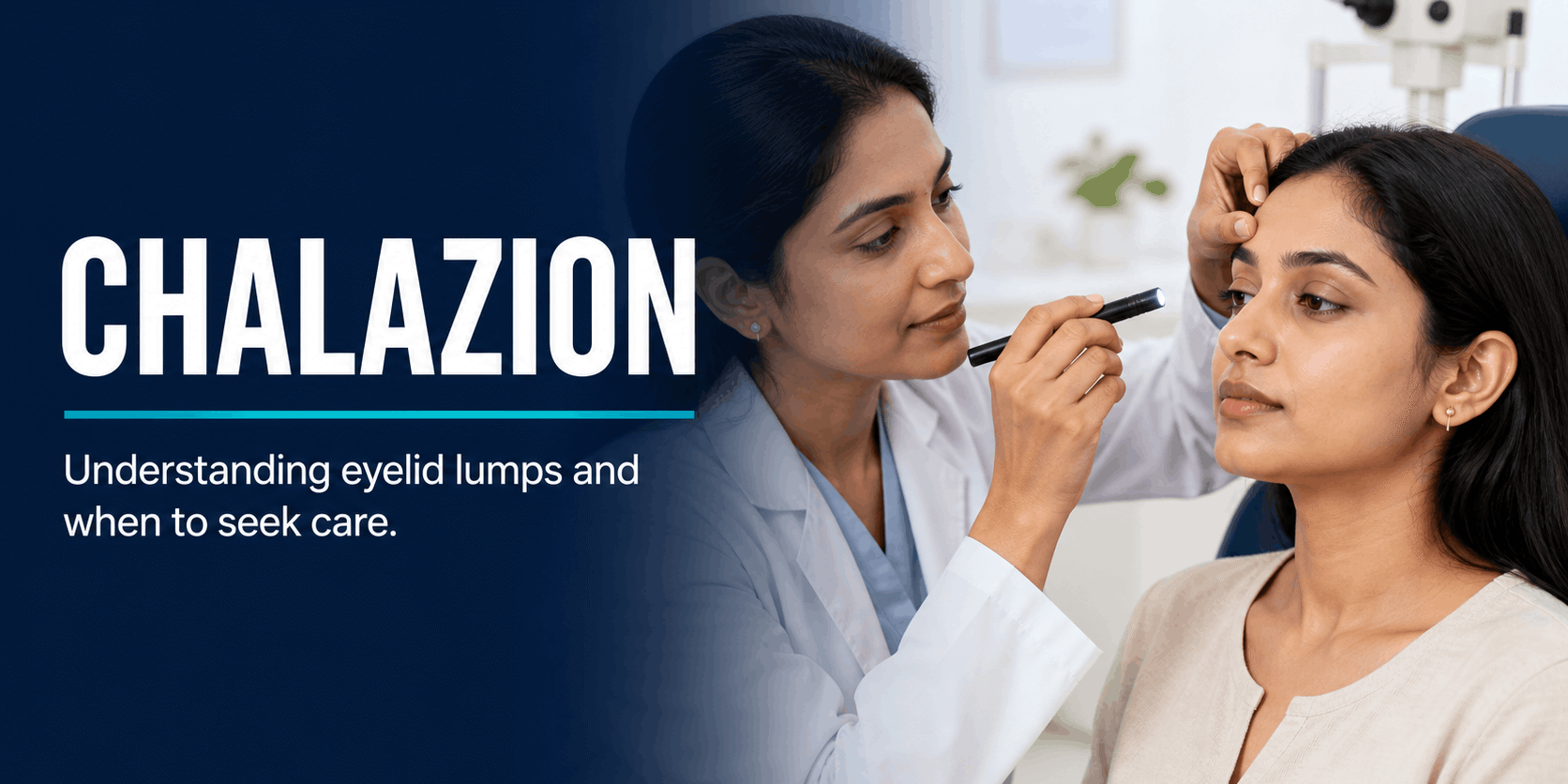
Chalazion: Causes, Symptoms and Treatment
A chalazion is a small, usually painless lump that forms when an oil gland in the eyelid gets blocked. Most clear up on their own within a few weeks with warm compresses. Some need medication or a short in-office procedure instead.
Key takeaways:
- This happens when a meibomian gland, an oil-producing gland in the eyelid, becomes blocked
- Many chalazia resolve within several weeks, although some can persist for longer
- Unlike a stye, this lump is usually painless and sits further from the eyelid edge
- Chalazion surgery is only needed for lumps that don’t respond to home care or medication
Disclaimer: This article is for general information only and isn’t a substitute for professional medical advice. Please consult an eye specialist if your symptoms persist or worsen.
The appearance of a small, firm nodule on the eyelid is a common clinical presentation that often develops gradually. While these localised swellings frequently present without acute pain or inflammation, they can cause a persistent sensation of pressure or discomfort during normal blinking. This indication is characteristic of a chalazion, which represents one of the most prevalent eyelid conditions managed under specialised eye disease care.
Most cases are harmless and may improve with conservative care. This guide covers what causes it, how it differs from a stye, and when it actually needs a doctor’s attention.
What Is a Chalazion?
A chalazion eye bump forms when a meibomian gland, a tiny oil-producing gland within the eyelid, becomes blocked. Oil and glandular secretions become trapped, causing local inflammation and the development of a firm lump.
Doctors sometimes call it a meibomian cyst, since the blocked gland is the root cause. It’s not an infection in most cases, although inflammation can occur around the blocked gland.
Are chalazia contagious? No. A chalazion itself is not contagious because it results from a blocked and inflamed meibomian gland rather than an infection that spreads from person to person.
Chalazion vs Stye: What’s the Difference?
The main difference is where the lesion develops and how it presents. A stye is a red, painful bump that appears quickly and usually involves infection. This type of lump develops slowly and rarely hurts.
A chalazion vs stye comparison also comes down to location. Styes usually form right at the edge of the eyelid, near an eyelash follicle. This kind of lump tends to sit further back on the lid.
What Causes a Chalazion?
There’s no single answer here, but a blocked meibomian gland is always the starting point. Thicker oil, inflammation, or old debris can all clog the gland’s opening.
Risk Factors
An eye cyst like this is more common in people with blepharitis, rosacea, or oily skin. Poor eyelid hygiene and leaving eye makeup on overnight also raise the risk.
Who Is More Likely to Get a Chalazion?
Anyone can develop a chalazion, but people with meibomian gland dysfunction, blepharitis, rosacea, or previous chalazia may be more prone to developing them. Children and adults can both be affected.
A history of previous chalazia also increases the likelihood of recurrence.
Chalazion Symptoms
Symptoms usually include a firm, painless lump on the eyelid and mild swelling. Some people may notice eyelid tenderness or redness, particularly during the early inflammatory stage.
Occasional blurry vision can follow if the lump is large enough to press against and distort the cornea.
Redness and tenderness can appear early on, before it fully forms and settles into a firmer, painless stage.
A large chalazion can also cause heaviness or discomfort of the eyelid.
Chalazion Treatment
Treatment usually begins with conservative measures. Some chalazia resolve without treatment, while persistent or larger lesions may need treatment from an ophthalmologist.
Home Remedies and Warm Compress
A warm compress for a chalazion, applied for 10 to 15 minutes several times a day, is the first-line treatment. Gentle massage afterwards can help the blocked gland drain naturally.
Medications and Medical Treatment
If home care isn’t enough, a doctor may prescribe medication for chalazion, such as antibiotic or steroid eye drops. A chalazion treatment eye drops course usually runs one to two weeks.
When Chalazion Surgery Is Needed
This procedure, called incision and curettage, is reserved for lumps that persist for months or affect vision. It’s a short in-office option, done under local anaesthetic and rarely needing stitches.
Chalazion Recovery and Prevention
Most chalazia clear up within 2 to 8 weeks with consistent warm compresses. Avoid wearing eye makeup or contact lenses until the lump has fully settled, since both can reintroduce irritation.
Regular lid hygiene, including gently cleaning the eyelid margins, reduces the risk of a recurrence. A yearly check-up catches early gland changes before they become a recurring problem.
When to Consult an Eye Specialist
See a specialist if the lump grows quickly, affects your vision, or hasn’t improved after a few weeks.
Recurring lumps in the same spot also deserve a proper check.
Conclusion: Chalazion Causes, Symptoms and Treatment
A chalazion is usually more annoying than dangerous, and most clear up with patience and a warm compress. Persistent, painful, or vision-affecting lumps are the exception, not the rule.
If the nodule does not improve after several weeks of conservative home care, a medical evaluation is recommended to explore alternative treatment options.