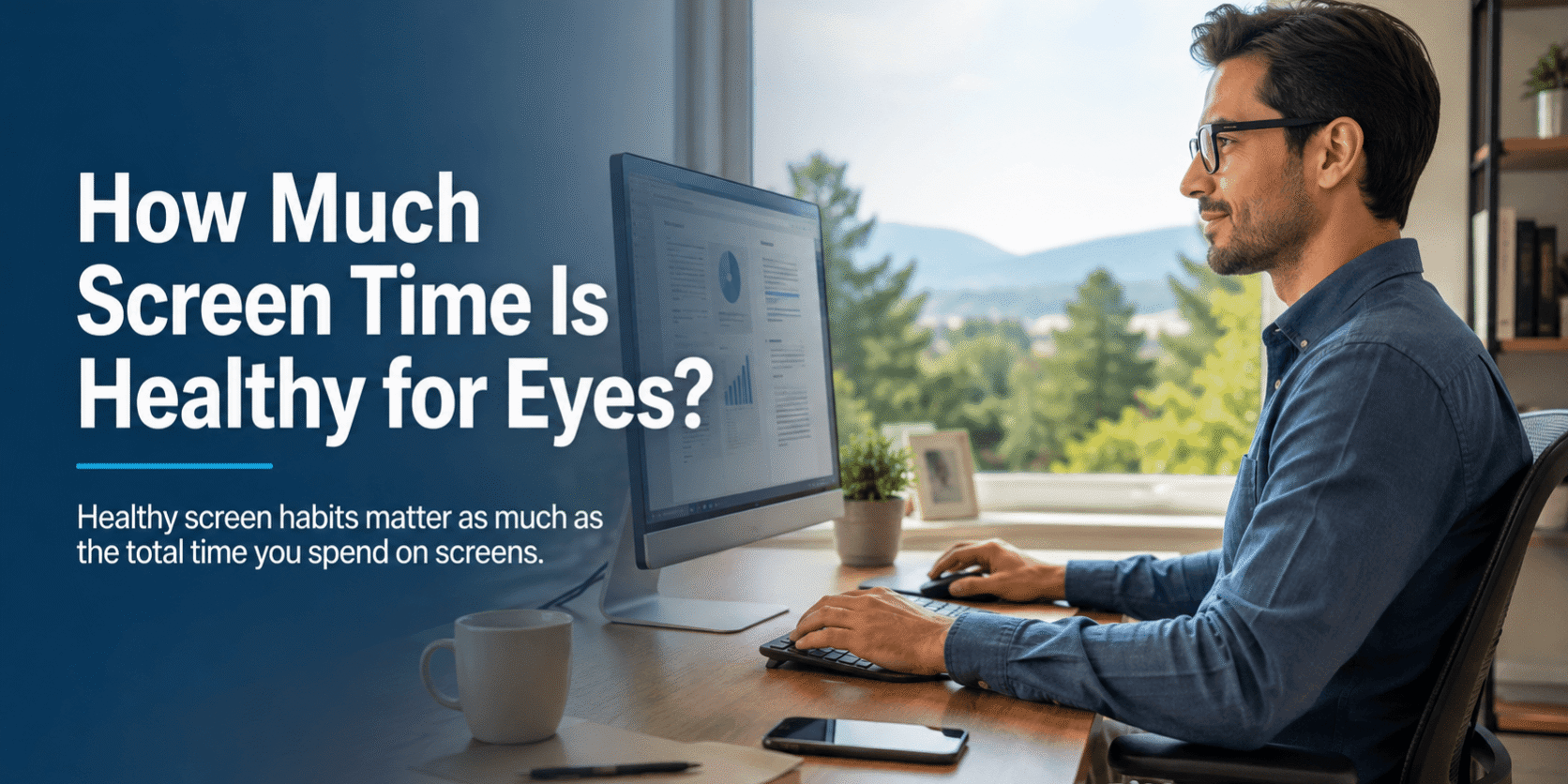
How Much Screen Time is Healthy for Your Eyes? | Eye Health Tips
In today’s digital world, smartphones, computers, tablets, and televisions are part of everyday life. Many people spend several hours looking at screens for work, education, communication, and entertainment. This raises an important question: how much screen time is healthy for eyes?
There is no single number of screen hours that is considered safe for every adult. For eye health, how you use screens matters as much as the total time spent on them. Long periods of uninterrupted screen use can contribute to digital eye strain, causing symptoms such as tired or dry eyes, blurred vision, headaches, and eye discomfort.
How Much Screen Time is Healthy for Eyes?
For adults, there is no universally recommended daily screen time limit specifically to protect the eyes. Work or study may require several hours of screen use, so the goal should be to reduce prolonged, uninterrupted viewing and maintain healthy visual habits.
A useful approach is to:
- Take regular breaks during screen use.
- Follow the 20-20-20 rule: every 20 minutes, look at something about 20 feet away for at least 20 seconds.
- Blink frequently to help maintain the eye’s natural moisture.
- Keep screens at a comfortable viewing distance.
- Adjust screen brightness and room lighting to reduce glare.
For children, screen habits should also consider sleep, physical activity, time outdoors, schoolwork, and family interactions rather than focusing solely on a fixed number of hours. The American Academy of Pediatrics now emphasizes the child’s age, needs, content, context, and what screen use may be replacing.
How Does Too Much Screen Time Affect the Eyes?
Extended screen use can cause digital eye strain, also called computer vision syndrome. Common symptoms include:
- Dry or irritated eyes
- Burning or gritty sensation
- Tired or aching eyes
- Temporary blurred vision
- Headaches
- Difficulty focusing
- Increased sensitivity or discomfort
These symptoms are often related to prolonged near focusing, reduced blinking, glare, poor lighting, or an uncorrected vision problem.
Screen use itself does not mean that your eyes are being permanently damaged every time you use a phone or computer. However, persistent symptoms should not simply be ignored.
How to Protect Your Eyes From Screen Time
Small changes can make screen use more comfortable.
Follow the 20-20-20 Rule.
Every 20 minutes, stop looking at your screen and focus on an object approximately 20 feet away for 20 seconds. This gives your eyes a short break from continuous near focusing.
Remember to blink.
People may blink less frequently while concentrating on digital screens. Making a conscious effort to blink regularly can help reduce dryness and discomfort.
Reduce Glare
Position your screen and lighting so that bright windows or lights do not create reflections on the display. Screen brightness should be comfortable for the surrounding environment.
Maintain a Comfortable Viewing Distance
Avoid holding phones extremely close to your face for prolonged periods. Keep computer screens at a comfortable distance and position them so you are looking slightly downward rather than upward.
Spend Time Outdoors
For children, balancing close-up activities and screen use with outdoor time is particularly important. More time outdoors may help reduce the risk of developing or worsening myopia (nearsightedness) during childhood.
When Should You See an Eye Specialist?
Occasional tiredness or dryness after prolonged screen use is common. However, consider having an eye examination if you experience:
- Persistent blurred vision
- Frequent headaches associated with visual tasks
- Ongoing eye pain or significant discomfort
- Persistent redness or irritation
- Difficulty focusing even after taking breaks
- Symptoms that continue despite improving your screen habits
An eye specialist can check whether an uncorrected refractive error, dry eye, or another eye condition may be contributing to your symptoms.
Key Takeaways
- There is no single daily screen-time limit that applies to every adult’s eye health.
- How much screen time is healthy for eyes depends partly on taking regular breaks and using screens appropriately.
- Follow the 20-20-20 rule during prolonged screen use.
- Blink regularly, reduce glare, and maintain a comfortable viewing distance.
- Children should have balanced screen habits that also allow enough sleep, physical activity, outdoor time, and family interaction.
- Persistent vision changes or eye discomfort should be evaluated by a qualified eye specialist.
Conclusion
So, how much screen time is healthy for eyes? There is no universal number of hours that guarantees healthy eyes. Instead, focus on reducing long, uninterrupted periods of screen use and practicing good eye-care habits throughout the day.
If screen-related eye discomfort, blurred vision, or headaches continue despite taking regular breaks, an eye examination can help identify the underlying cause and determine whether further care is needed.