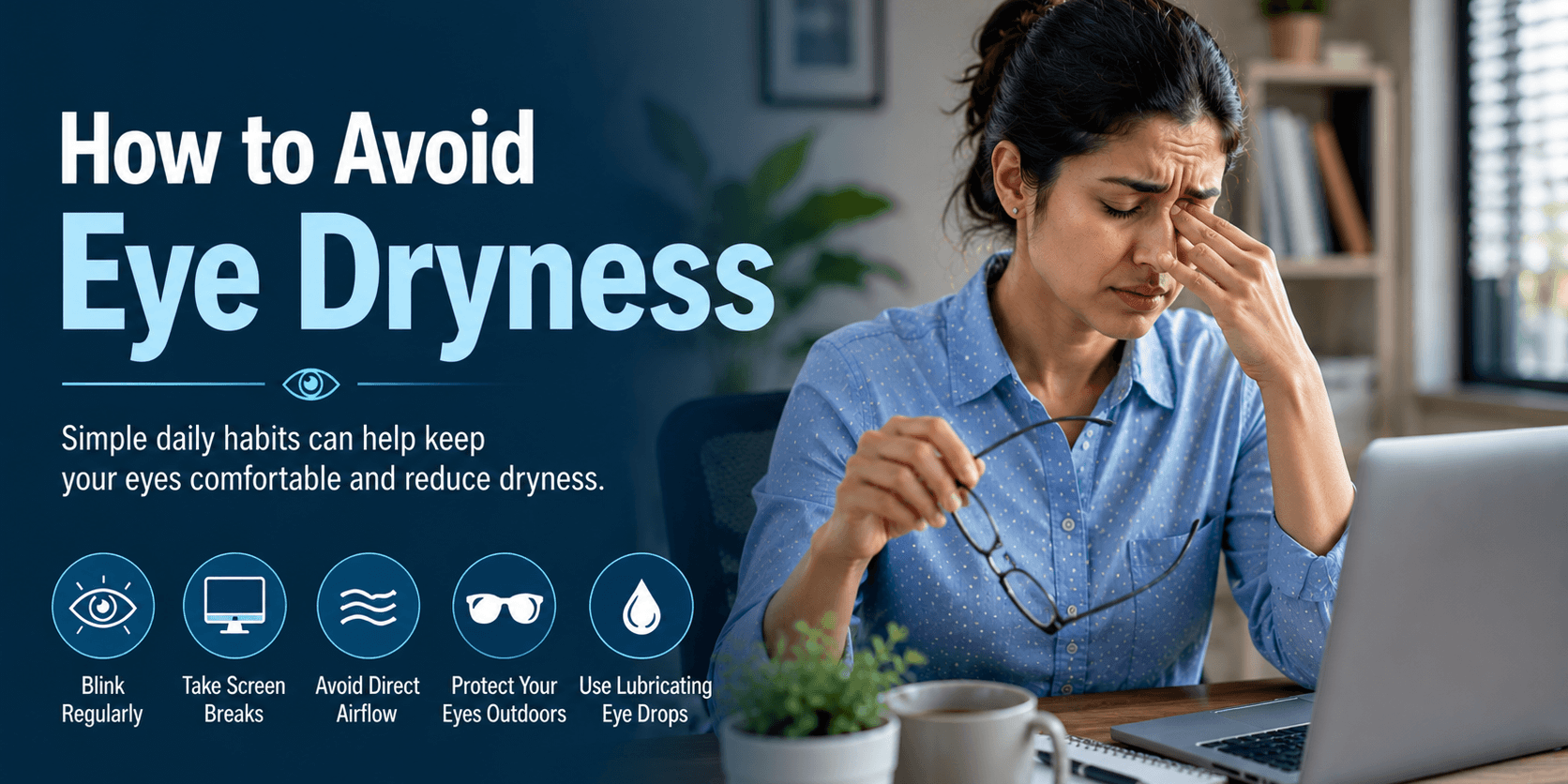
How to Avoid Eye Dryness: Simple Tips for Healthy and Comfortable Eyes
If your eyes often feel dry, gritty, burning, or irritated, you may be wondering how to avoid eye dryness. Dry eye can happen when your eyes do not produce enough tears or when tears evaporate too quickly. Long periods of screen use, dry or windy environments, certain medicines, aging, and some health conditions can increase the risk.
The good news is that several simple daily habits can help reduce eye dryness and protect your eye surface.
How to Avoid Eye Dryness
1. Blink More Often When Using Screens
When you concentrate on a computer, phone, or tablet, you may blink less often. Reduced blinking can allow tears to evaporate more quickly.
Try to take regular breaks from screens and consciously blink several times when working for long periods. Looking away from the screen periodically can also give your eyes a chance to rest.
2. Avoid Direct Air From Fans and Air Conditioners
Air from fans, air conditioners, heaters, and other sources can increase tear evaporation. If possible, avoid having air blow directly toward your face.
In dry indoor environments, a humidifier may help add moisture to the air and reduce discomfort.
3. Protect Your Eyes Outdoors
Wind, dust, smoke, and dry weather can worsen eye dryness. Wearing glasses or sunglasses that provide good coverage can help reduce direct exposure to wind and other environmental irritants.
If you spend a lot of time outdoors, protective eyewear may be particularly helpful on windy or dusty days.
4. Use Lubricating Eye Drops When Appropriate
Artificial tears, also called lubricating eye drops, can provide temporary relief from dry eye symptoms. If you need to use them frequently, ask an eye specialist whether preservative-free artificial tears would be appropriate for you.
Avoid using eye drops marketed simply to “get the red out” regularly unless an eye care professional recommends them for your situation.
5. Take Care of Your Eyelids
Problems affecting the eyelids, such as blepharitis, can contribute to dry eye symptoms. Keeping the eyelids clean and discussing persistent eyelid irritation with an eye specialist can help identify underlying problems.
6. Review Medicines and Health Conditions With Your Doctor
Some medicines can contribute to dry eye, including certain medicines used for allergies, colds, depression, and high blood pressure. Health conditions such as diabetes, thyroid disorders, and some autoimmune diseases can also be associated with dry eye.
Do not stop a prescribed medicine on your own. If you notice new or worsening eye dryness, discuss it with your doctor.
When to See an Eye Specialist
Occasional eye dryness may improve with simple lifestyle changes, but persistent symptoms should not be ignored. An eye specialist can examine the eye surface and tear film and determine whether an underlying condition is contributing to your symptoms. Tests may include a slit-lamp examination, Schirmer’s test, or tear break-up time testing.
Seek prompt medical attention if you experience significant eye pain, a noticeable change in vision, severe redness, or persistent blurred vision.
Key Takeaways
- Blink regularly, especially during prolonged screen use.
- Take regular breaks when using computers, phones, or tablets.
- Avoid direct exposure to fans, air conditioners, smoke, and strong wind.
- Consider lubricating eye drops when appropriate.
- Protect your eyes from dry, dusty, and windy environments.
- See an eye specialist if dryness is persistent, severe, or associated with pain or vision changes.
Conclusion
Knowing how to prevent dry eyes can help you maintain comfortable, healthy eyes. Simple habits such as blinking regularly, taking screen breaks, avoiding direct airflow, protecting your eyes outdoors, and using appropriate lubricating drops may help reduce dryness.
If your symptoms continue despite these measures, consult a qualified eye specialist. Persistent dry eye can sometimes be related to medications, eyelid problems, or other health conditions, so identifying the underlying cause is important.