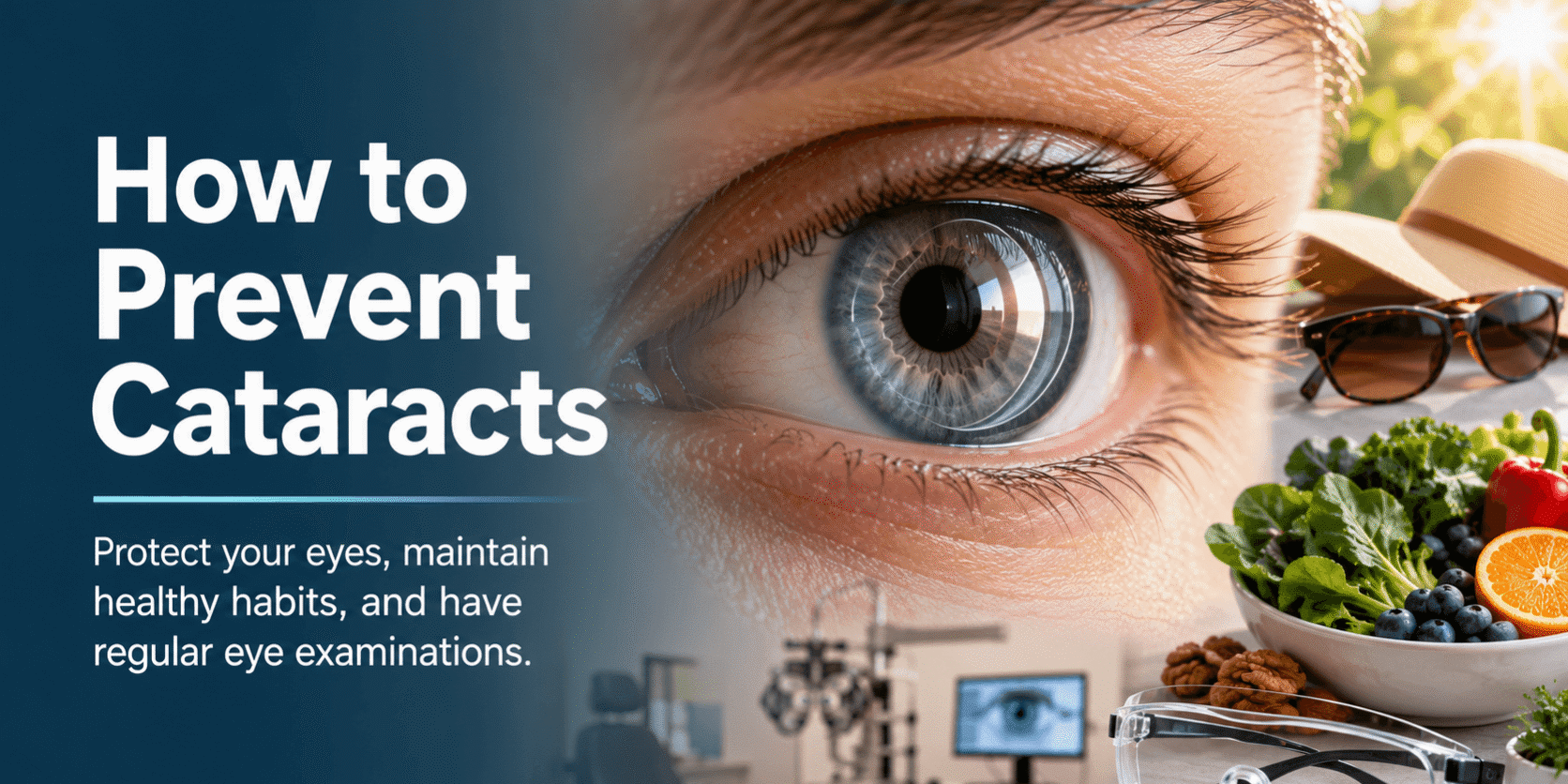
How to Prevent Cataracts: Simple Ways to Protect Your Eye Health
Cataracts are a common eye condition in which the normally clear lens of the eye becomes cloudy, causing blurry or hazy vision. Aging is the most common reason cataracts develop, but factors such as smoking, diabetes, prolonged exposure to sunlight, certain medications, and eye injuries can also increase the risk.
While there is no guaranteed way to prevent age-related cataracts completely, healthy lifestyle choices can help reduce your risk or potentially slow their development. Knowing how to prevent cataracts starts with protecting your eyes and maintaining your overall health.
How to Prevent Cataracts
1. Protect Your Eyes From UV Rays
Long-term exposure to ultraviolet (UV) radiation from sunlight can increase the risk of cataracts. When outdoors, wear sunglasses that block 99% to 100% of UVA and UVB rays. A wide-brimmed hat can provide additional protection.
This is particularly important if you spend a lot of time outdoors.
2. Do Not Smoke
Smoking is associated with a higher risk of cataracts and can contribute to faster cataract development. If you smoke, quitting can benefit your eye health as well as your overall health.
Avoiding tobacco is an important lifestyle step you can take to protect your eyes.
3. Eat a Balanced, Eye-Healthy Diet
A nutritious diet can support overall eye health. Include a variety of fruits and vegetables, particularly dark leafy greens, along with whole grains, nuts, and other nutrient-rich foods.
Eating well can also help reduce the risk of health conditions such as diabetes that are associated with eye problems.
4. Manage Diabetes and Other Health Conditions
Diabetes can increase the risk of developing cataracts. If you have diabetes, following your healthcare professional’s advice about blood sugar management, diet, physical activity, and medication can help protect your overall health and reduce the risk of diabetes-related eye problems.
Regular eye examinations are especially important for people with diabetes.
5. Protect Your Eyes From Injuries
Eye injuries can sometimes cause traumatic cataracts. Wear appropriate protective eyewear when using power tools, working with potentially hazardous materials, or participating in activities where an eye injury could occur.
6. Be Careful With Long-Term Steroid Use
Certain corticosteroid medicines can increase the risk of cataracts. If you use steroids for a long period, do not stop them without medical advice. Instead, discuss the potential eye-related side effects with the doctor who prescribed the medication.
7. Have Regular Eye Examinations
Regular eye examinations can help identify cataracts and other eye conditions at an early stage. Cataracts may develop gradually, and early changes may not always cause noticeable symptoms.
An eye specialist can assess your vision and recommend appropriate monitoring based on your age, health, symptoms, and risk factors.
Can Vitamins or Eye Supplements Prevent Cataracts?
There is currently no established vitamin or nutritional supplement that can reliably prevent cataracts. Large clinical trials of AREDS and AREDS2 supplements found that these formulations did not prevent cataracts, and omega-3 supplements did not show an effect on cataract development.
It is generally better to obtain nutrients through a balanced diet than to take supplements specifically to prevent cataracts, unless a healthcare professional recommends them for another reason.
When to See an Eye Specialist
See an ophthalmologist if you notice:
- Blurry or cloudy vision
- Increasing difficulty seeing at night
- Greater sensitivity to bright lights or glare
- Faded or less vivid colours
- Halos around lights
- Frequent changes in your glasses prescription
- Vision that is affecting reading, driving, work, or daily activities
These symptoms can have several causes and do not necessarily mean you have a cataract. An eye examination can help determine the cause.
Key Takeaways
- Age-related cataracts cannot always be prevented, but certain habits may help reduce your risk.
- Protect your eyes from UV radiation with appropriate sunglasses and a hat.
- Avoid smoking and maintain a healthy, balanced diet.
- Manage diabetes and other health conditions with appropriate medical care.
- Use protective eyewear to reduce the risk of eye injuries.
- Regular eye examinations can help detect cataracts and other eye problems early.
Conclusion
Knowing how to prevent cataracts involves taking practical steps to protect your eyes and maintain good overall health. Wearing UV-protective sunglasses, avoiding smoking, eating a balanced diet, managing conditions such as diabetes, protecting your eyes from injury, and having regular eye examinations can all contribute to healthier eyes.
Because aging remains the main risk factor for cataracts, prevention cannot guarantee that a cataract will never develop. If you experience changes in your vision, consult a qualified ophthalmologist for an appropriate eye examination and personalised advice.