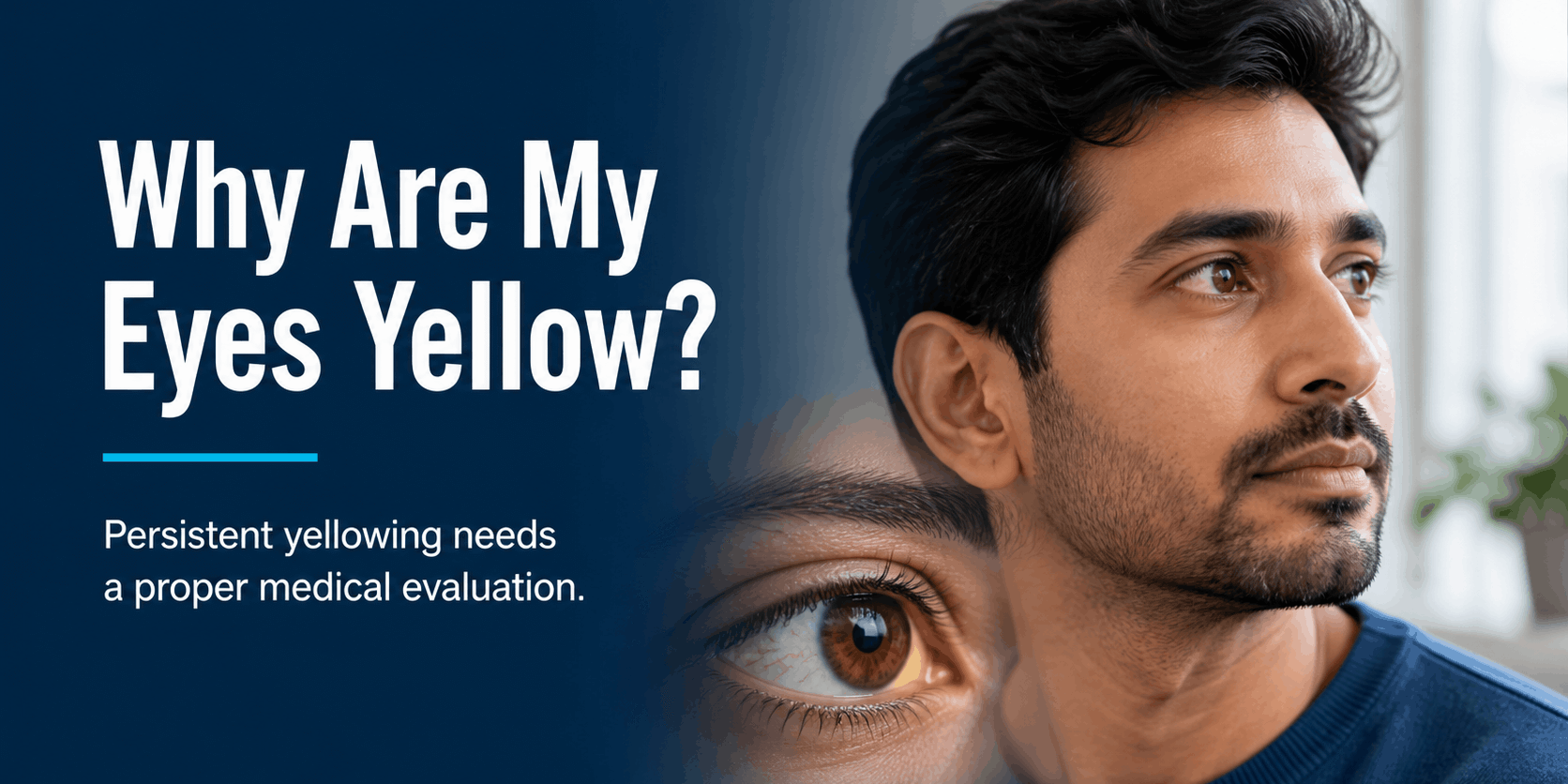
Yellow Eyes (Jaundice in the Eyes): Causes & When to Worry
Yellow eyes usually mean a buildup of bilirubin, a pigment linked to how your liver processes red blood cells. Mild yellowing can come from dehydration or certain foods. Persistent yellowing often indicates liver, gallbladder, or blood conditions that require medical attention.
Key takeaways:
- Yellow eyes are typically caused by excess bilirubin building up in the blood
- Jaundiced eyes can result from liver disease, gallstones, or blood disorders like haemolytic anaemia
- Slightly yellow eyes in adults aren’t always serious, but persistent yellowing needs a proper diagnosis
- Sudden yellowing with pain, fever, or dark urine needs same-day medical attention
Disclaimer: This article is for general information only and isn’t a substitute for professional medical advice. Please consult an eye specialist or physician promptly to discuss your specific symptoms.
Yellow eyes, clinically known as scleral icterus, are often the first visible indicator of an underlying systemic health issue. Because the discolouration typically develops without pain, irritation, or dryness, it is frequently noticed by chance. This change in colour serves as an external warning sign that something is wrong inside the body, most commonly with the liver or gallbladder (hepatic or biliary systems).
This guide walks through what causes it, what’s harmless, and when it becomes a genuine medical emergency.
What Do Yellow Eyes Mean?
It happens when bilirubin builds up in the blood. Bilirubin is produced during the normal breakdown of haemoglobin in red blood cells. The liver normally processes bilirubin so it can be eliminated from the body. Jaundice develops when bilirubin production, processing, or excretion is disrupted.
Jaundice in the eyes is usually one of the first visible signs of this buildup. The whites of your eyes show colour change quickly. Sometimes this mild yellowing is temporary and harmless, especially after a stomach bug or a few dehydrated days. Other times, it signals something that needs treatment.
Common Causes of Yellow Eyes
There’s more than one reason for yellow eyes, and the cause usually decides how urgently you need care.
Liver and Gallbladder Conditions
Hepatitis, cirrhosis, and gallstones are the most common serious causes. Each one can interfere with bilirubin processing, transport, or excretion in a different way.
Blood Disorders and Other Medical Causes
Conditions like haemolytic anaemia break down red blood cells faster than usual. This releases more bilirubin than the liver can handle. Certain inherited conditions, such as Gilbert’s syndrome, can also cause mild or intermittent increases in bilirubin and yellowing of the eyes.
Medications and Lifestyle Factors
Some medications affect liver processing and can trigger temporary yellowing. Heavy alcohol use is another factor. Less commonly, so is a very high intake of beta-carotene-rich foods. Both are yellow eye causes worth ruling out, though neither needs the same urgency as liver or blood conditions.
Symptoms That May Accompany Yellow Eyes
Yellow eyes symptoms may occur with other signs depending on the underlying cause. Watch for yellowing skin, dark urine, pale stools, fatigue, or abdominal pain alongside the eye colour change.
Itching, nausea, or unexplained weight loss are also worth mentioning to your doctor. They can point toward the underlying cause.
How Yellow Eyes Are Diagnosed
A doctor usually starts with a physical eye test and a blood test to check bilirubin and liver enzyme levels. Depending on the results, an ultrasound or further imaging may follow.
An eye specialist can also confirm whether the sclera itself is affected, or if something else explains the colour change.
Yellow Eyes Treatment
Treatment always targets the root cause rather than the colour itself.
Treating the Underlying Cause
Hepatitis is managed with antivirals or supportive care, depending on the type. Gallstones sometimes need surgical removal, and blood disorders are treated with medication or, in severe cases, transfusion.
Why Home Remedies Are Not Enough
No diet, supplement, or home remedy clears jaundice on its own, since the yellowing is a symptom, not the condition. Treating the underlying liver, gallbladder, or blood issue is what actually resolves it.
Yellow Eyes vs Other Eye Discolouration
Not every yellowish patch is jaundice. A yellow sclera can also come from pinguecula, a harmless, sun-related growth on the eye’s surface. Fatty deposits that build up with age are another cause.
The difference is coverage. True jaundice affects the entire white of the eye evenly. Pinguecula shows as a small, localised patch near the iris instead.
When to Consult a Doctor Immediately
New yellowing of the whites of the eyes in an adult should be assessed promptly rather than simply monitored at home, because jaundice can indicate significant liver or biliary disease.
Seek urgent medical attention if the yellowing appears alongside severe or worsening abdominal pain, fever or chills, confusion, marked drowsiness, vomiting, or other signs of becoming seriously unwell.
Dark urine or pale stools can accompany jaundice and should also be reported to a doctor, particularly when they occur with yellowing in the eyes or skin.
Conclusion: Yellow Eyes and When to Worry
Yellow eyes are rarely something to ignore, even when they turn out to be harmless. Mild, short-lived yellowing can follow dehydration or a stomach bug. However, a persistent colour change usually indicates that the liver or blood needs closer examination, making a professional medical evaluation essential to identify the underlying cause.