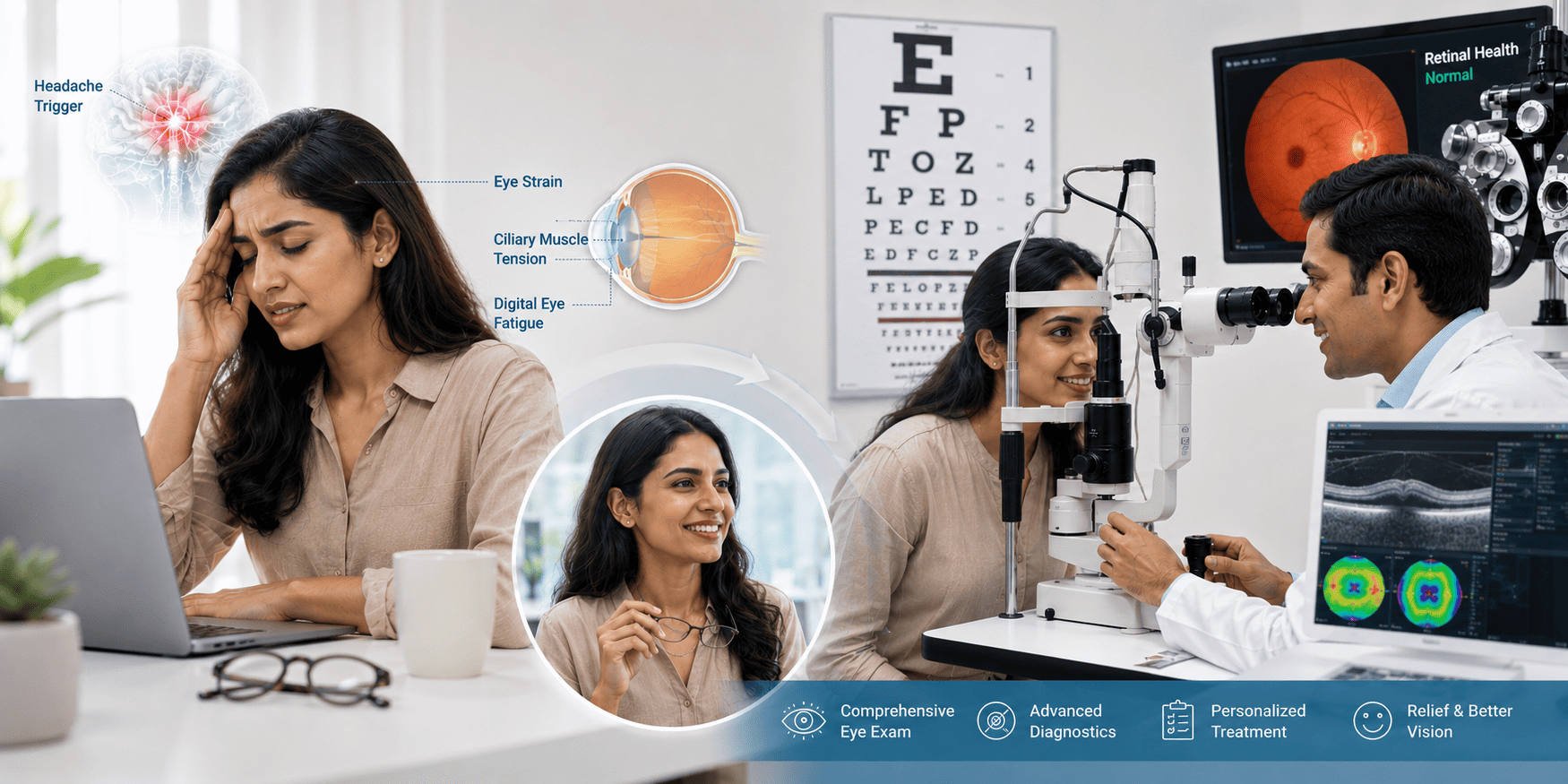
Recurring Headaches? Vision Problems That Could Be Contributing to Your Symptoms
Recurring headaches are the most common reason adults seek medical care. While factors such as stress, dehydration, poor sleep, and migraines often receive attention, vision-related problems remain an overlooked cause of persistent head pain.
In clinical eye care, patients often report headaches that have persisted for months—or even years—before discovering that an underlying visual issue was contributing to their symptoms. Because many vision disorders develop gradually, individuals may not recognise the connection between their eyes and recurring headaches.
If headaches occur regularly, especially during or after visually demanding activities, a comprehensive eye examination should be considered as part of the diagnostic process.
How Vision Problems Can Trigger Headaches
The visual system requires continuous coordination between the eyes, eye muscles, and brain. When vision is not functioning efficiently, the eyes may exert additional effort to maintain focus and visual clarity.
This increased workload can lead to:
- Eye muscle fatigue
- Visual strain
- Forehead tension
- Temple pain
- Headaches that worsen throughout the day
Eye-related headaches are particularly common during activities that require prolonged concentration, including reading, computer work, driving, and detailed close-up tasks.
Digital eye strain and uncorrected vision problems are among the leading contributors to visual discomfort and headaches associated with prolonged near work.
Clinical Experience: A Common Pattern Eye Doctors See
Eye care professionals frequently evaluate patients who have undergone extensive medical testing for headaches without identifying a clear cause. In many cases, an examination reveals a previously undiagnosed refractive error, a binocular vision issue, or digital eye strain.
A common clinical pattern includes:
- Headaches that worsen late in the day
- Symptoms triggered by screens or reading
- Temporary relief after resting the eyes
- Increasing discomfort despite normal neurological evaluations
While vision problems are not responsible for every headache, they are often an important and treatable contributing factor.
Common Eye Conditions Associated With Recurring Headaches
1. Uncorrected Refractive Errors
Refractive errors occur when the eye cannot focus light properly onto the retina.
Common examples include:
- Nearsightedness (Myopia)
- Farsightedness (Hyperopia)
- Astigmatism
Even relatively small prescription changes can force the visual system to compensate throughout the day.
2. Presbyopia
Presbyopia is an age-related decline in near-focusing ability that typically begins between ages 40 and 45.
Symptoms often include:
- Headaches after reading
- Eye fatigue
- Difficulty focusing on small print
- Needing brighter light for near tasks
- Holding reading material farther away
Because the progression is gradual, many adults adapt without realising that visual strain is developing.
3. Binocular Vision Dysfunction (BVD)
Binocular vision dysfunction occurs when the eyes struggle to maintain precise alignment.
Although the misalignment may be extremely small, the brain must continuously work to merge two slightly different visual images.
Potential symptoms include:
- Chronic headaches
- Eye strain
- Neck and shoulder tension
- Dizziness
- Motion sensitivity
- Difficulty reading for extended periods
Recent studies suggest that subtle binocular vision abnormalities may be underdiagnosed in patients with chronic headache complaints.
4. Dry Eye Disease
Dry eye disease affects an estimated hundreds of millions of people globally and becomes increasingly common with age, screen use, and environmental exposure.
When the tear film becomes unstable:
- Vision fluctuates
- Focus becomes less consistent
- The eyes repeatedly attempt to compensate
This cycle can contribute to visual fatigue and headache symptoms.
Risk factors include:
- Extended screen use
- Contact lens wear
- Air-conditioned environments
- Hormonal changes
- Certain medications
5. Glaucoma
Most forms of glaucoma develop without pain. However, certain types—particularly acute angle-closure glaucoma—can cause:
- Severe headaches
- Eye pain
- Blurred vision
- Halos around lights
- Nausea and vomiting
Acute glaucoma is a medical emergency requiring immediate treatment to prevent permanent vision loss.
Warning Signs That Suggest Your Headaches May Be Vision-Related
Several symptoms increase the likelihood that visual factors are contributing to headaches.
Watch for:
- Headaches after reading
- Symptoms triggered by computer use
- Blurred vision
- Double vision
- Frequent squinting
- Eye fatigue
- Light sensitivity
- Pain around the eyes
- Difficulty maintaining focus
Patients experiencing multiple symptoms from this list should consider a comprehensive eye evaluation.
Digital Eye Strain: A Growing Modern Health Concern
The modern workplace places unprecedented demands on the visual system.
Research indicates that many adults spend more than seven hours per day interacting with digital devices, while office workers often exceed ten hours of cumulative screen exposure.
This prolonged visual demand contributes to digital eye strain, also known as computer vision syndrome.
Why Screens Can Trigger Headaches
Digital device use affects visual comfort in several ways:
- Blink rates may decrease by up to 50%
- Continuous near focusing increases accommodative stress
- Screen glare increases visual demand
- Poor posture contributes to neck and shoulder tension
The resulting combination frequently produces headaches, fatigue, dry eyes, and musculoskeletal discomfort.
The Evidence-Based 20-20-20 Rule
Eye care professionals commonly recommend the 20-20-20 rule:
Every 20 minutes, look at an object approximately 20 feet away for at least 20 seconds.
This simple intervention helps reduce accommodative strain and encourages blinking, both of which improve visual comfort during prolonged screen use.
Blue Light: What Current Research Shows
Blue light is often blamed for headaches and digital eye strain. However, current evidence suggests that the primary causes of screen-related discomfort are:
- Extended near-focus demands
- Reduced blinking
- Dry eye symptoms
- Poor workstation ergonomics
Although blue-light filtering lenses may improve comfort for some individuals, major ophthalmology organizations note that evidence remains insufficient to conclude that blue light itself is the primary driver of headaches.
How Eye Doctors Evaluate Headache-Related Vision Problems
A comprehensive eye examination assesses far more than visual sharpness.
Visual Acuity Assessment
Measures clarity of vision at various distances.
Refraction Testing
Determines whether glasses or contact lens prescriptions require updating.
Binocular Vision Evaluation
Assesses eye alignment, tracking, and coordination.
Ocular Health Examination
Evaluates critical structures including:
- Retina
- Optic nerve
- Cornea
- Lens
- Macula
Intraocular Pressure Measurement
Screens for glaucoma and other pressure-related abnormalities.
In many cases, these assessments identify visual factors that may be contributing to recurring headaches.
When Headaches Require Immediate Medical Attention
Not all headaches originate from the eyes.
Seek urgent medical care if headaches occur alongside:
- Sudden vision loss
- Double vision of new onset
- Difficulty speaking
- Weakness or numbness
- Severe eye pain
- Loss of consciousness
- Sudden onset of the worst headache of your life
These symptoms may indicate serious neurological, vascular, or ocular emergencies.
Eye-Strain Headaches vs. Migraines
Differentiating headache types is important.
Eye-Strain Headaches
Typically:
- Develop gradually
- Occur after visual tasks
- Improve with rest
- Cause pressure-like discomfort
Migraines
Often involve:
- Throbbing pain
- Nausea
- Sensitivity to light and sound
- Visual aura in some patients
- Moderate to severe functional impairment
Visual stress can sometimes act as a migraine trigger in susceptible individuals, although it is not usually the sole cause.
Treatment Options
Update Your Prescription
One of the simplest and most effective interventions is correcting unaddressed refractive errors.
Patients frequently report significant improvement after receiving an updated prescription.
Computer-Specific Eyewear
Occupational lenses designed for screen distance can reduce accommodative stress and improve comfort during prolonged computer use.
Vision Therapy
For selected patients with binocular vision dysfunction, structured vision therapy programs may improve eye coordination and reduce associated symptoms.
Dry Eye Management
Treatment options may include:
- Artificial tears
- Prescription therapies
- Environmental modifications
- Increased hydration
- Screen-use adjustments
Ergonomic Improvements
Workstation modifications can substantially reduce visual and muscular strain.
Recommended practices include:
- Positioning monitors at eye level
- Reducing glare
- Maintaining neutral posture
- Taking scheduled visual breaks
Preventing Vision-Related Headaches
Maintain Regular Eye Examinations
Comprehensive eye examinations based on age, risk factors, and existing eye health conditions.
Regular evaluations often identify changes before significant symptoms develop.
Practice Smart Screen Habits
- Follow the 20-20-20 rule
- Blink consciously during screen use
- Adjust brightness and contrast appropriately
- Take regular breaks
Optimize Lighting Conditions
Adequate lighting reduces unnecessary visual effort and can improve comfort during reading and computer work.
Support Long-Term Eye Health Through Nutrition
Research supports the importance of nutrients such as:
- Vitamin A
- Vitamin C
- Vitamin E
- Zinc
- Omega-3 fatty acids
- Lutein
- Zeaxanthin
A nutrient-rich diet contributes to overall ocular health and may help support visual function throughout life.
Children and Students: An Often-Missed Cause of Headaches
Children may not realize that their vision is abnormal because they have no basis for comparison.
Parents should pay attention to:
- Frequent headaches
- Squinting
- Holding books very close
- Avoiding reading
- Reduced attention span
- Declining academic performance
Studies have demonstrated that uncorrected vision problems can negatively affect learning, reading performance, and classroom engagement.
Routine pediatric eye examinations play an important role in early detection.
Adults Over 40: Why Eye-Related Headaches Become More Common
Several age-related eye conditions become increasingly prevalent after age 40, including:
- Presbyopia
- Dry eye disease
- Cataracts
- Glaucoma
Many of these conditions develop gradually and may initially present with headaches, visual fatigue, or focusing difficulties.
Regular eye examinations become increasingly important during midlife and beyond.
Quick Self-Assessment
Consider the following questions:
- Do headaches worsen after reading?
- Are symptoms triggered by screens?
- Do headaches occur near the end of the day?
- Do you experience blurry vision?
- Do your eyes feel tired or strained?
- Have you skipped eye exams for more than a year?
- Do symptoms improve when you rest your eyes?
Answering “yes” to several of these questions increases the likelihood that visual factors may be contributing to your symptoms.
Final Thoughts
Recurring headaches should never be dismissed as simply a consequence of stress or a busy lifestyle. Clinical experience and scientific evidence both demonstrate that vision-related problems are a common and frequently overlooked contributor to chronic head pain.
Uncorrected refractive errors, binocular vision dysfunction, digital eye strain, dry eye disease, and certain eye health conditions can all place excessive demands on the visual system and trigger headaches.
The encouraging reality is that many of these causes are highly treatable. A comprehensive eye examination can identify hidden visual problems, guide appropriate treatment, and potentially provide lasting relief.
If headaches have become a recurring part of your routine, an eye examination may be one of the most important next steps toward finding answers.