Latest Cataract Surgery Technology in 2026: Complete Patient Guide
Written by

Dr. Anitha C Kamarthy
Sr. Cataract & Glaucoma Surgeon
22+ Years Experience
Published on : 22 May 2026
Cataracts remain the leading cause of reversible blindness globally, affecting an estimated 94 million people worldwide, according to the World Health Organization (WHO). As populations age, the demand for effective cataract treatment continues to grow.
Fortunately, cataract surgery has evolved dramatically over the past two decades. What was once a basic restorative procedure is now considered a refractive surgical intervention capable of correcting vision and reducing dependence on glasses.
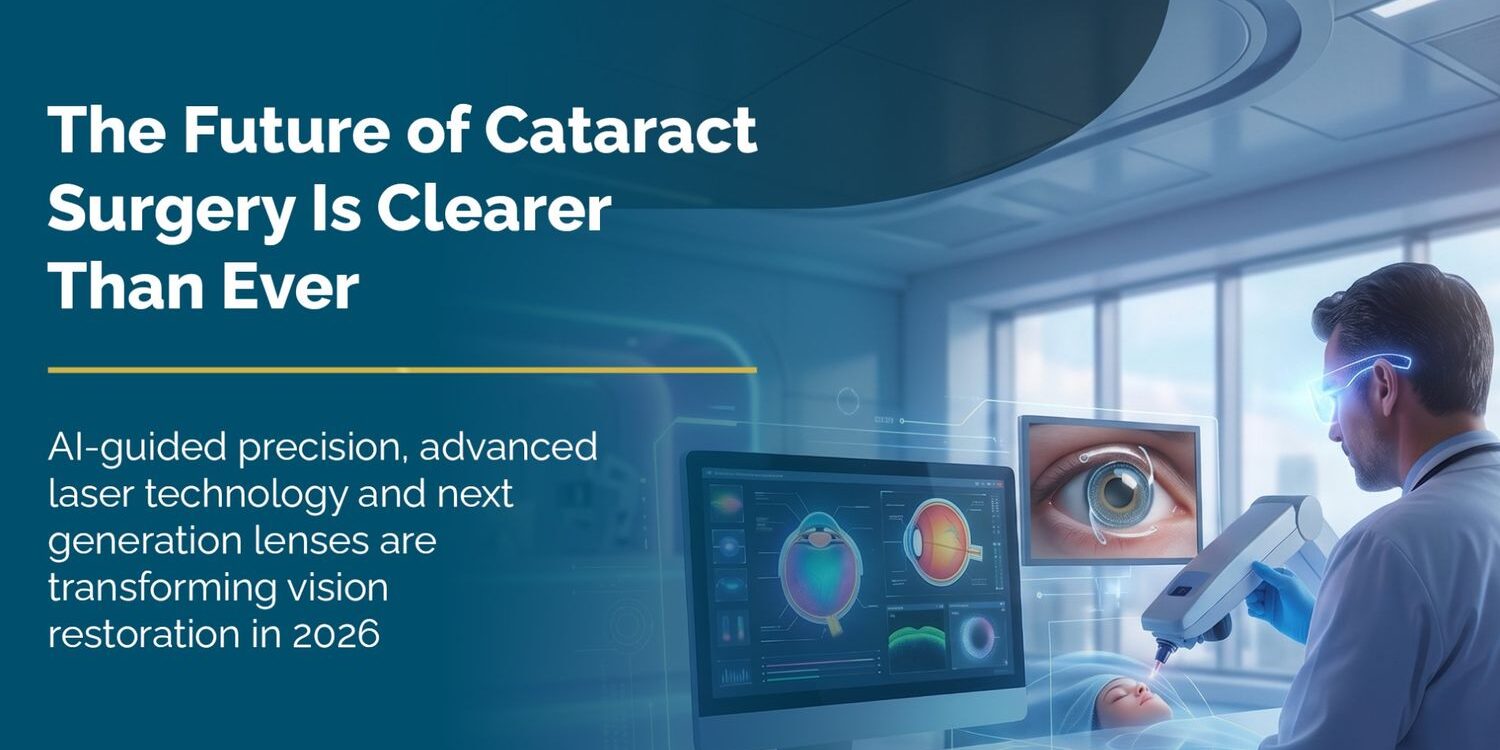
Advancements such as femtosecond laser surgery, artificial intelligence–assisted planning, digital imaging systems, and next-generation intraocular lenses (IOLs) are transforming surgical precision and visual outcomes.
This guide explains the latest cataract surgery technologies used by modern ophthalmologists in 2026, how they work, and what patients should realistically expect before choosing treatment.
What Is a Cataract?
A cataract develops when the natural crystalline lens of the eye becomes progressively opaque, preventing light from reaching the retina clearly. The lens normally functions like a camera lens, focusing light to create sharp images.
Over time, protein structures within the lens degrade and aggregate, causing the lens to become cloudy.
According to the American Academy of Ophthalmology (AAO):
- More than 50% of adults over age 80 either have cataracts or have undergone cataract surgery.
- Cataract surgery is the most commonly performed surgical procedure in the world, with over 28 million procedures performed annually.
Common Causes of Cataracts
Clinically, cataracts are most commonly associated with:
- Age-related lens degeneration
- Diabetes mellitus
- Chronic UV exposure
- Smoking
- Eye trauma
- Long-term corticosteroid use
- Genetic predisposition
Common symptoms include:
- Persistent blurred or cloudy vision
- Increased glare from headlights or sunlight
- Difficulty driving at night
- Double vision in one eye
- Frequent prescription changes
- Faded or yellowish color perception
Traditional Cataract Surgery: The Current Standard
The most widely used technique remains phacoemulsification cataract surgery.
- Extensive clinical track record
- Lower cost compared to laser surgery
- Covered by many insurance plans
- Widely available in eye hospitals and clinics
Procedure:
- 1. A micro-incision (2–3 mm) is created in the cornea.
- 2. Ultrasound breaks the cloudy lens into fragments.
- 3. The fragments are removed.
- 4. A foldable intraocular lens (IOL) is implanted.
The surgery typically lasts 10–20 minutes and is performed under local anesthesia.
Latest Innovations in Cataract Surgery Technology
Femtosecond Laser-Assisted Cataract Surgery (FLACS)
Femtosecond lasers allow surgeons to automate key surgical steps including:
- Corneal incisions
- Capsulotomy
- Lens fragmentation
Advantages:
- Higher precision
- Reduced ultrasound energy
- Better lens positioning
Advanced Phacoemulsification Systems
Modern phaco systems use active fluidics technology to stabilize intraocular pressure during surgery.
Benefits:
- Improved chamber stability
- Reduced corneal damage
- Faster lens removal
Image-Guided Cataract Surgery
Image-guided systems project digital markers during surgery to guide accurate lens placement and astigmatism correction.
Artificial Intelligence in Cataract Surgery Planning
AI systems analyze eye scans and historical surgical data to assist with:
- Cataract detection
- Lens power calculations
- Outcome prediction
Multifocal and Trifocal IOLs
These lenses provide clear vision at near, intermediate, and distance ranges.
Extended Depth of Focus (EDOF) Lenses
EDOF lenses create a continuous range of focus with fewer visual disturbances.
Light Adjustable Lens (LAL)
This lens can be adjusted after surgery using UV light treatments to fine‑tune vision.
Benefits of Modern Cataract Surgery
- Higher surgical precision
- Faster recovery
- Reduced dependence on glasses
- Personalized vision correction
Risks and Considerations
Although cataract surgery is extremely safe, potential complications include:
- Infection
- Inflammation
- Retinal detachment
- Lens displacement
Serious complications occur in fewer than 1–2% of procedures.
Future of Cataract Surgery
Emerging technologies include:
- Smart intraocular lenses
- Nanotechnology surgical tools
- Gene therapy for cataract prevention
Conclusion
Cataract surgery has evolved into one of the most advanced procedures in modern medicine. Innovations such as femtosecond laser technology, AI‑assisted surgical planning, and premium intraocular lenses allow ophthalmologists to restore vision with exceptional precision.
Patients experiencing cataract symptoms should consult an experienced ophthalmologist to explore the latest treatment options and determine the best surgical approach.