What Happens If Cataracts Are Left Untreated? Symptoms, Risks & Treatment
Written by

Dr. Anitha C Kamarthy
Sr. Cataract & Glaucoma Surgeon
22+ Years Experience
Published on : 22 May 2026
Cataracts are one of the most common causes of vision loss worldwide, particularly among adults over age 60. According to the World Health Organization (WHO), cataracts account for approximately 51% of global blindness, affecting more than 65 million people worldwide.
Although cataracts typically develop slowly, delaying treatment can lead to progressive vision impairment, increased accident risk, and in advanced cases, permanent vision damage.
What Are Cataracts?
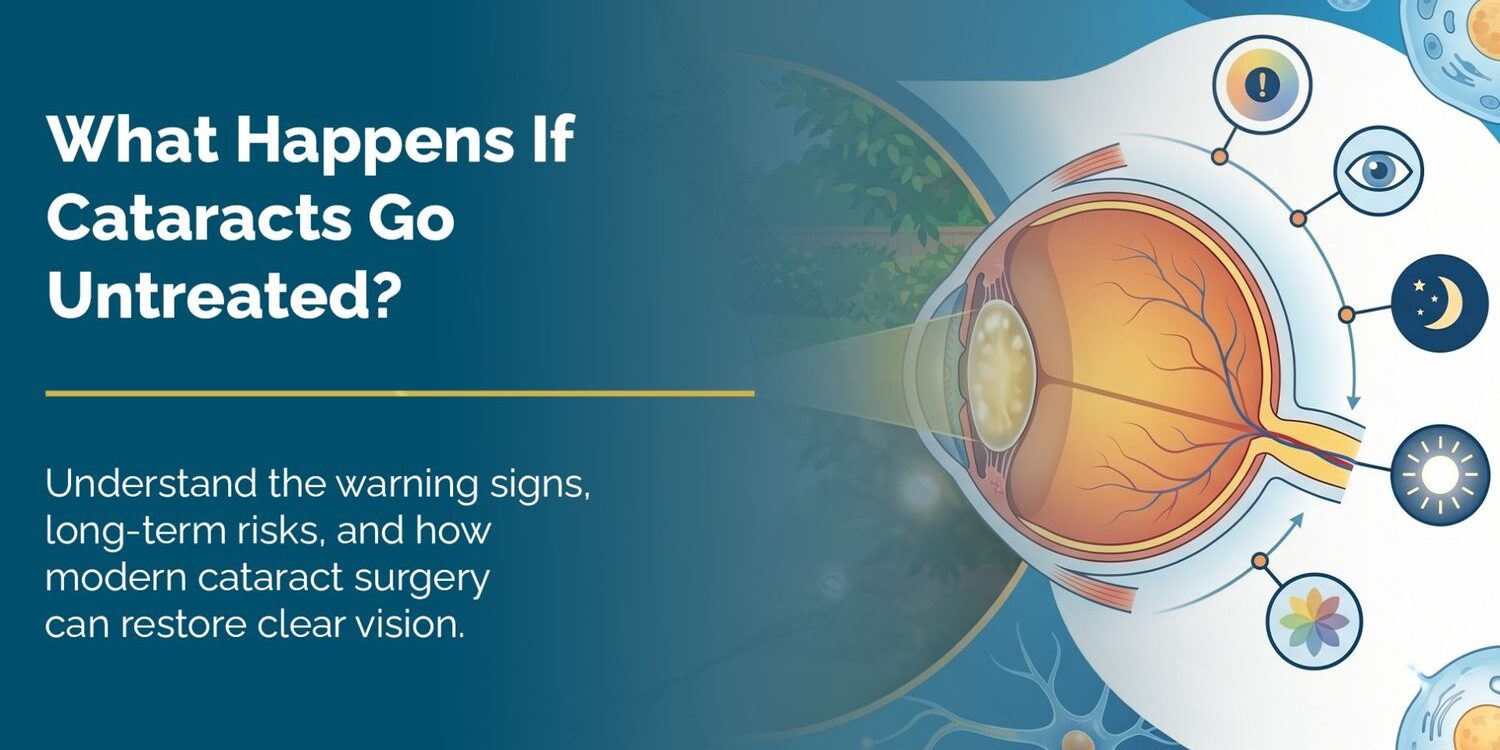
A cataract occurs when the eye’s natural lens becomes cloudy, preventing light from passing clearly through the lens to the retina.
The lens normally functions like the focusing element of a camera, directing light onto the retina to create a sharp image. With cataracts, the lens gradually loses its transparency.
From a biological standpoint, cataracts develop when lens proteins (crystallins) break down and aggregate, disrupting the precise structure required for light transmission.
This results in:
- Progressive clouding of the lens
- Scattered light entering the eye
- Blurred or distorted visual signals reaching the retina
How Cataracts Form in the Eye
The human lens is composed primarily of water and structural proteins arranged in a highly organized pattern.
With aging and environmental stress, several biochemical changes occur:
- Protein oxidation
- Ultraviolet radiation damage
- Decreased antioxidant protection
- Accumulation of protein aggregates
These changes lead to opacities within the lens, commonly referred to as cataracts.
What Happens If Cataracts Are Left Untreated?
Cataracts do not resolve on their own. Without treatment, they typically worsen over time.
Progressive Vision Loss
Early symptoms may include
- Mild blurred vision
- Difficulty reading small text
- Increased need for bright lighting
As cataracts progress, people may struggle with recognizing faces, reading signs, and performing daily activities.
Vision Quality With Monofocal Lenses
Common complaints include:
- Halos around lights
- Difficulty driving at night
- Sensitivity to bright sunlight
Double Vision in One Eye
Cataracts may cause monocular double vision due to irregular lens refraction.
Color Fading and Yellowing Vision
The cloudy lens acts like a filter, causing colors to appear dull or yellowish.
Long-Term Complications of Untreated Cataracts
Severe Vision Impairment or Blindness
Cataracts remain the leading cause of reversible blindness globally.
Increased Risk of Falls and Injuries
Vision loss significantly increases fall risk among older adults.
Lens Swelling and Secondary Glaucoma
Advanced cataracts may increase eye pressure and lead to secondary glaucoma.
Hyper-Mature Cataracts
Untreated cataracts can become extremely dense, making surgery more difficult.
Treatment Options for Cataracts
The only definitive treatment is cataract surgery, where the cloudy lens is replaced with an artificial intraocular lens (IOL).
The procedure typically:
• Takes 15–30 minutes
• Is performed under local anesthesia
• Allows same-day discharge
Types of Intraocular Lenses
Monofocal lenses – correct vision at one distance.
Multifocal lenses – allow vision at multiple distances.
Toric lenses – correct astigmatism.
Recovery and Success Rates
Cataract surgery has a success rate above 95%. Most patients notice improved vision within days and full recovery within 4–6 weeks.
The Bottom Line
Cataracts are common with aging, but leaving them untreated can lead to progressive vision loss, increased accident risk, and serious eye complications.
Fortunately, cataract surgery is safe and highly effective, restoring vision for millions of people every year.