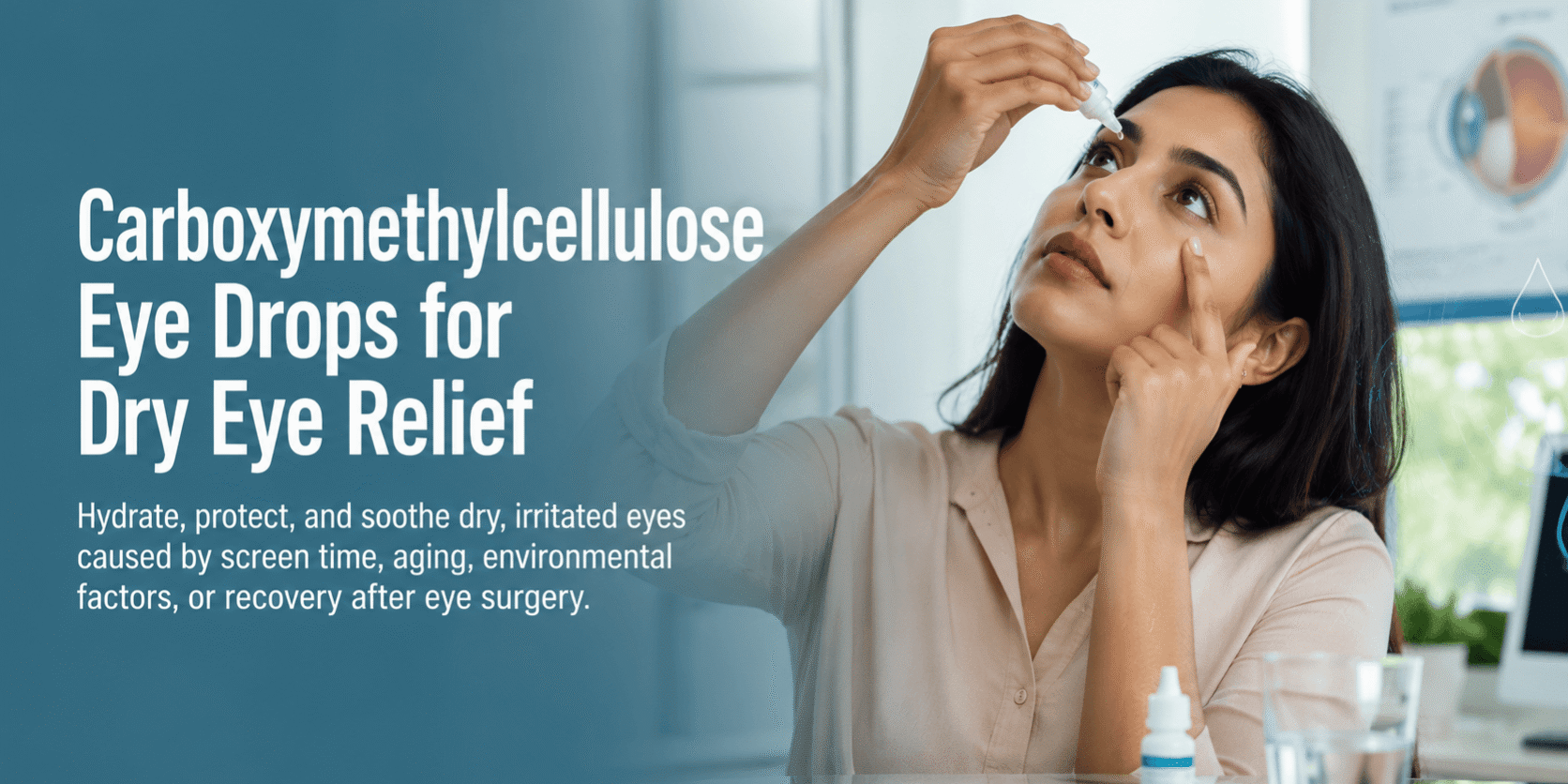
What Are Carboxymethylcellulose Eye Drops Used For? Benefits, Uses, Side Effects and How They Work
If your eyes often feel dry, irritated, or gritty, carboxymethylcellulose (CMC) eye drops may provide temporary relief. These lubricating eye drops—commonly known as artificial tears—help moisturize the surface of the eye, stabilize the natural tear film, and reduce discomfort caused by dry eye syndrome, prolonged screen use, environmental factors, or recovery after certain eye surgeries. While they relieve symptoms, they do not treat infections or cure the underlying cause of chronic dry eye disease.
What Are Carboxymethylcellulose Eye Drops?
Carboxymethylcellulose eye drops are a type of artificial tear designed to lubricate and protect the surface of the eyes. Their active ingredient, carboxymethylcellulose sodium, is a water-retaining polymer that mimics the lubricating properties of natural tears.
When applied, the drops form a protective layer over the eye, helping retain moisture and reduce friction caused by blinking. This makes them one of the most commonly recommended over-the-counter treatments for mild to moderate dry eye symptoms.
Unlike medicated eye drops that contain antibiotics or steroids, carboxymethylcellulose eye drops work by improving moisture and comfort rather than treating infections or inflammation.
What Are Carboxymethylcellulose Eye Drops Used For?
Carboxymethylcellulose eye drops are primarily used to relieve symptoms associated with dry or irritated eyes.
1. Dry Eye Syndrome
The most common use is managing dry eye syndrome, a condition in which the eyes do not produce enough tears or the tears evaporate too quickly.
Symptoms include:
- Dryness
- Grittiness
- Burning
- Itching
- Foreign body sensation
- Mild blurred vision that improves after blinking
By supplementing the natural tear film, CMC eye drops help keep the eye surface hydrated and more comfortable.
2. Eye Irritation
These drops can temporarily relieve irritation caused by:
- Dust
- Smoke
- Wind
- Air conditioning
- Dry climates
- Indoor heating
They soothe the eye surface by replacing lost moisture and reducing friction.
3. Digital Eye Strain
People who spend long hours using computers, smartphones, or tablets blink less frequently, which can lead to tear evaporation and dryness.
Carboxymethylcellulose eye drops help relieve:
- Dryness after screen time
- Eye fatigue
- Burning sensation
- Temporary discomfort during prolonged digital device use
4. Contact Lens-Related Dryness
Some people experience dryness while wearing contact lenses. Depending on the product’s labeling, certain preservative-free CMC eye drops may be suitable for use with contact lenses, while others require lenses to be removed before application. Always follow the manufacturer’s instructions or your eye care professional’s advice.
5. Recovery After Eye Surgery
Eye care professionals may recommend lubricating eye drops after procedures such as:
- LASIK
- PRK
- Cataract surgery
These drops help maintain moisture on the eye’s surface during the healing process. Use them only as directed by your surgeon.
6. Age-Related Dry Eyes
As people age, tear production often decreases naturally. Older adults frequently benefit from lubricating eye drops to reduce discomfort associated with chronic dryness.
7. Autoimmune Conditions
Individuals with conditions such as Sjögren syndrome or rheumatoid arthritis may experience chronic dry eyes. Artificial tears like CMC eye drops are often included as part of a broader management plan recommended by an eye care professional.
How Do Carboxymethylcellulose Eye Drops Work?
Healthy tears consist of three layers:
- Lipid (oil) layer
- Aqueous (water) layer
- Mucin layer
Together, these layers keep the eyes smooth, moist, and protected.
Carboxymethylcellulose works by:
- Increasing moisture retention on the eye surface
- Improving tear film stability
- Reducing friction during blinking
- Protecting the cornea from dryness-related irritation
- Providing longer-lasting lubrication compared with plain saline
Although the drops do not increase tear production, they supplement natural tears and improve comfort.
Who Can Benefit from Carboxymethylcellulose Eye Drops?
These eye drops may be helpful for:
- Office workers
- Students
- Frequent computer users
- Seniors
- Contact lens wearers (when compatible with the product)
- Travelers on long flights
- People living in dry climates
- Individuals recovering from certain eye surgeries
- People experiencing mild to moderate dry eye symptoms
How to Use Carboxymethylcellulose Eye Drops Correctly
Proper application helps maximize effectiveness while reducing the risk of contamination.
Step 1
Wash your hands thoroughly.
Step 2
Tilt your head back slightly.
Step 3
Pull down the lower eyelid to create a small pocket.
Step 4
Hold the bottle above the eye without touching the eye, eyelid, or eyelashes.
Step 5
Instil the recommended number of drops.
Step 6
Close your eyes gently for one to two minutes. Avoid excessive blinking immediately after application.
Step 7
Replace the cap securely.
How Often Can You Use Them?
Follow the instructions on the product label or your healthcare provider’s advice. Many lubricating eye drops can be used several times a day as needed, but frequent use of preserved formulations may not be ideal for everyone. If you require eye drops very frequently, ask an eye care professional whether a preservative-free option is more appropriate.
Possible Side Effects
Carboxymethylcellulose eye drops are generally well tolerated, but mild side effects can occur.
Common side effects include:
- Temporary blurred vision
- Mild stinging
- Slight burning
- Temporary eye irritation
These effects usually resolve within a few minutes.
Serious Side Effects
Seek prompt medical attention if you experience:
- Severe eye pain
- Persistent redness
- Eye swelling
- Thick discharge
- Significant vision changes
- Symptoms that worsen instead of improving
- Signs of an allergic reaction, such as swelling of the face or difficulty breathing
Who Should Avoid These Eye Drops?
Carboxymethylcellulose eye drops may not be suitable for everyone.
Talk to your healthcare provider if you have:
- A known allergy to any ingredient in the product
- An active eye infection
- A recent eye injury
- Persistent unexplained eye pain
- Sudden vision loss
- Ongoing severe redness
Lubricating eye drops are not a substitute for medical evaluation when serious eye symptoms are present.
Carboxymethylcellulose vs Other Artificial Tears
| Type | Best For | Features |
| Carboxymethylcellulose | Mild to moderate dry eye | Long-lasting lubrication |
| Hyaluronic Acid | Moderate to severe dry eye | Excellent moisture retention |
| Polyethylene Glycol | Dryness and irritation | Often combined with other lubricants |
| Glycerin | Mild dryness | Lightweight lubrication |
| Hydroxypropyl Methylcellulose | Occasional dry eyes | Traditional artificial tear ingredient |
Each formulation has advantages, and the best choice depends on your symptoms, lifestyle, and your eye care professional’s recommendations.
Preservative-Free vs Preserved Eye Drops
Both options can be effective, but each has different benefits.
Preserved Eye Drops
Advantages:
- Convenient multi-dose bottles
- Cost-effective
- Suitable for occasional use
Potential drawbacks:
- Preservatives may irritate sensitive eyes with frequent use.
Preservative-Free Eye Drops
Advantages:
- Better for sensitive eyes
- Often preferred for frequent daily use
- Lower risk of preservative-related irritation
Potential drawbacks:
- Usually packaged in single-use vials
- May cost more than preserved products
Common Myths About Carboxymethylcellulose Eye Drops
Myth: They cure dry eye disease.
Fact: They relieve symptoms but may not address the underlying cause of chronic dry eye.
Myth: More drops provide better results.
Fact: Using more than recommended generally does not improve effectiveness and may increase waste or temporary blurred vision.
Myth: They treat eye infections.
Fact: Lubricating eye drops do not contain antibiotics and should not be used to treat bacterial, viral, or fungal eye infections.
Myth: All eye drops are the same.
Fact: Different eye drops are formulated for different purposes, such as lubrication, allergy relief, glaucoma treatment, infection management, or inflammation control.
When Should You See an Eye Doctor?
Although occasional dry eyes are common, professional evaluation is recommended if:
- Symptoms last for several weeks despite regular use of artificial tears
- Eye pain develops
- Vision becomes persistently blurry
- Light sensitivity increases
- Thick discharge is present
- Only one eye is severely affected
- Dryness significantly interferes with daily activities
An eye care professional can determine whether an underlying condition requires additional treatment.
Key Takeaways
Carboxymethylcellulose eye drops are among the most widely used artificial tears for relieving dry, irritated eyes. They work by lubricating the eye surface, stabilizing the tear film, and reducing discomfort caused by environmental conditions, prolonged screen use, aging, and certain medical conditions. While generally safe for most users, they do not treat infections or cure chronic dry eye disease. If symptoms persist, worsen, or are accompanied by severe pain or vision changes, seek evaluation from an eye care professional.
Medical Disclaimer: This content is for informational purposes only and is not a substitute for professional medical advice, diagnosis, or treatment. Always consult a qualified eye care professional or healthcare provider for personalized advice regarding your eye health.