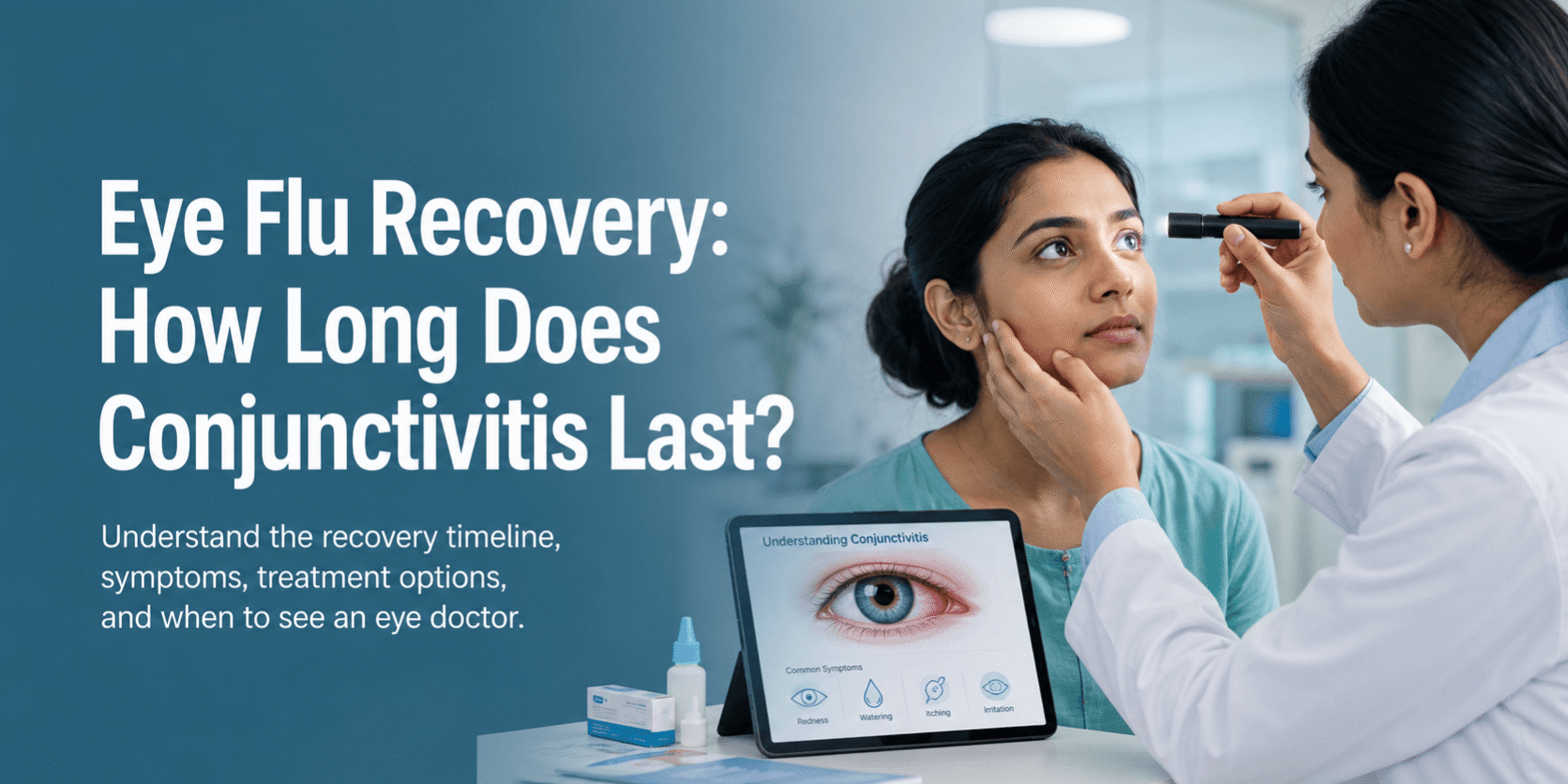
How Much Time Does Eye Flu Take to Recover? Recovery Timeline, Treatment and Prevention
Eye flu, medically known as conjunctivitis or pink eye, is one of the most common eye conditions affecting people of all ages. It causes redness, watering, irritation, and sometimes discharge from the eyes. During seasonal outbreaks, many people ask the same question:
How much time does eye flu take to recover?
For most people, the answer depends on the underlying cause.
- Viral conjunctivitis (the most common type): usually improves within 7–14 days, although some cases may take 2–3 weeks or longer to resolve completely.
- Bacterial conjunctivitis: often improves within 2–5 days, but complete recovery can take up to 2 weeks.
- Allergic conjunctivitis: symptoms generally improve once the allergen is avoided and appropriate treatment is started.
Most cases resolve without permanent vision loss, but prompt medical evaluation is important if symptoms are severe or unusual.
What Is Eye Flu?
“Eye flu” is a common term used to describe conjunctivitis, an inflammation of the conjunctiva—the thin, transparent membrane covering the white part of the eye and the inside of the eyelids.
Several conditions can cause conjunctivitis:
- Viral infections
- Bacterial infections
- Allergies
- Chemical or environmental irritants
Among these, viral conjunctivitis is the most common and spreads easily through direct contact with infected tears, contaminated hands, towels, or surfaces.
Eye Flu Recovery Timeline
The following timeline reflects the typical course of uncomplicated viral conjunctivitis.
Days 1–3
Symptoms often begin suddenly and may include:
- Redness
- Watery eyes
- Mild swelling
- Burning or gritty sensation
- Excessive tearing
One eye is commonly affected first, with the second eye becoming involved within a few days.
Days 4–7
Symptoms may peak during this period.
You may notice:
- Increased watering
- Morning stickiness
- Mild eyelid swelling
- Light sensitivity
- Eye discomfort
Although symptoms may appear worse before improving, this can be part of the normal course.
Days 7–14
Many people begin to recover.
Typical improvements include:
- Reduced redness
- Less irritation
- Decreased tearing
- Improved comfort
Weeks 2–3
Most viral infections resolve during this stage.
However, some people—particularly those with more severe adenoviral infections—may continue to experience mild redness, dryness, or blurred vision for several weeks. If symptoms persist or worsen, an eye examination is recommended.
Recovery Time by Type of Conjunctivitis
| Type | Typical Recovery |
| Viral conjunctivitis | 7–14 days (sometimes 2–3 weeks or longer) |
| Bacterial conjunctivitis | Often improves in 2–5 days; complete recovery may take up to 2 weeks |
| Allergic conjunctivitis | Improves after allergen removal and treatment |
| Irritant conjunctivitis | Usually resolves once the irritant is removed |
Correct diagnosis matters because treatment differs depending on the cause.
Symptoms During Recovery
As your eye heals, you may notice:
- Gradually decreasing redness
- Less watering
- Reduced swelling
- Fewer secretions
- Less irritation
Some symptoms may linger briefly, including:
- Mild dryness
- Temporary blurred vision that clears with blinking or lubrication
- Sensitivity to bright light
- Feeling that something is in the eye
These symptoms often improve as inflammation settles.
Factors That Affect Recovery Time
Recovery varies from person to person.
Common factors include:
1. Type of Infection
Viral infections generally take longer than bacterial infections.
2. Immune Response
People with weakened immune systems may recover more slowly.
3. Early Medical Care
Timely assessment can help identify bacterial infection, contact lens–related complications, or more serious eye diseases.
4. Hygiene
Frequent handwashing, avoiding eye rubbing, and not sharing towels help prevent reinfection and transmission.
5. Contact Lens Use
People who wear contact lenses should stop wearing them until their eye doctor advises it is safe to resume.
How Is Eye Flu Treated?
Treatment depends on the cause.
Viral Conjunctivitis
Most viral cases do not require antibiotics.
Treatment focuses on symptom relief:
- Artificial tears
- Cold compresses
- Good eye hygiene
- Rest
Antiviral medication is reserved for certain viral infections, such as herpes simplex virus, under medical supervision.
Bacterial Conjunctivitis
A healthcare professional may prescribe antibiotic eye drops or ointment when bacterial infection is suspected. Antibiotics can shorten the illness in appropriate cases but are not necessary for every mild infection.
Allergic Conjunctivitis
Management includes:
- Avoiding allergens
- Antihistamine eye drops (when appropriate)
- Artificial tears
- Cold compresses
Home Care Tips That May Help
While home care cannot cure a viral infection, it can improve comfort.
Helpful measures include:
- Wash hands frequently.
- Clean discharge gently with a clean, damp cloth.
- Use a separate towel and pillowcase.
- Apply a cool compress for several minutes at a time.
- Use preservative-free artificial tears if recommended.
- Avoid rubbing your eyes.
- Do not wear contact lenses until you have recovered.
- Avoid sharing eye makeup and replace contaminated products.
Is Eye Flu Contagious?
Yes—viral and bacterial conjunctivitis can spread easily.
You are generally most contagious while you have:
- Red eyes
- Watery or purulent discharge
- Active symptoms
To reduce spread:
- Wash hands regularly.
- Avoid touching your eyes.
- Do not share towels, cosmetics, or pillows.
- Clean frequently touched surfaces.
- Follow your clinician’s advice about returning to work or school, especially if drainage cannot be controlled.
Can You Speed Up Recovery?
There is no proven way to dramatically shorten recovery from viral conjunctivitis, but you can support healing by:
- Getting enough sleep
- Staying hydrated
- Using prescribed medications correctly
- Following hygiene measures
- Avoiding contact lenses until cleared
- Avoiding unnecessary eye rubbing
Using antibiotics without a bacterial infection does not speed recovery and should only be done if prescribed.
When Should You See a Doctor?
Seek prompt medical attention if you experience:
- Severe eye pain
- Sensitivity to light that is significant
- Blurred vision that does not improve after wiping away discharge
- Vision loss
- Intense redness
- Symptoms that worsen or fail to improve
- Eye injury or chemical exposure
- A weakened immune system
- Contact lens use with a painful red eye
- Symptoms in a newborn infant
These symptoms may indicate a more serious eye condition requiring urgent evaluation.
Can Children Go to School?
Many children can return to school once they feel well enough and appropriate hygiene measures are in place, but recommendations vary depending on the cause of conjunctivitis and local school policies. If drainage is difficult to control or the child has systemic illness, staying home may be appropriate. Follow the advice of your healthcare provider.
Prevention Tips
You can reduce your risk of catching or spreading eye flu by:
- Washing hands frequently
- Avoiding touching your eyes
- Not sharing towels, pillowcases, or cosmetics
- Cleaning frequently touched surfaces
- Replacing eye makeup after infection
- Following contact lens hygiene instructions carefully
Key Takeaways
- Viral eye flu usually improves within 7–14 days, although recovery may take 2–3 weeks or longer in some cases.
- Bacterial conjunctivitis often improves within a few days but may take up to two weeks to resolve completely.
- Antibiotics do not treat viral conjunctivitis.
- Artificial tears, cold compresses, and good hygiene are the mainstays of supportive care for viral infections.
- Seek urgent medical attention if you develop severe pain, worsening redness, significant light sensitivity, or changes in vision.
- Most people recover fully without long-term complications when they receive appropriate care and follow good hygiene practices.
Medical Disclaimer: This content is for informational purposes only and is not a substitute for professional medical advice, diagnosis, or treatment. Always consult a qualified eye care professional or healthcare provider for personalized advice regarding your eye health.