What Causes Lazy Eye (Amblyopia) in Children?
Lazy eye, medically known as amblyopia, is a condition in which vision does not develop normally in one eye, and sometimes both eyes, during childhood. It happens when the brain and the eye do not work together properly, causing the brain to favor the eye with clearer vision.
Understanding the causes of a lazy eye is important because early detection and treatment can help prevent long-term vision problems.
What Causes a Lazy Eye?
Lazy eye usually develops during infancy or childhood when the visual system is still developing. Several eye conditions can interfere with normal visual development.
1. Misaligned Eyes (Strabismus)
Strabismus occurs when the eyes do not point in the same direction. One eye may turn inward, outward, upward, or downward.
When the eyes are misaligned, the brain may receive two different images. To avoid confusion or double vision, the brain may begin ignoring information from one eye. Over time, this can lead to amblyopia.
2. Different Glasses Prescriptions Between the Eyes
A significant difference in vision between the two eyes can also cause lazy eye. This may happen because one eye is much more nearsighted, farsighted, or astigmatic than the other.
Even if the eyes look normal, the brain may consistently receive a clearer image from one eye and rely on it more. This type of amblyopia is sometimes called refractive amblyopia.
3. High Refractive Errors in Both Eyes
In some children, both eyes have a significant uncorrected refractive error, such as severe farsightedness or astigmatism. If the visual images remain blurry while the brain is developing, normal vision may not develop properly in either eye.
4. Childhood Cataracts or Other Conditions That Block Vision
Anything that prevents clear visual information from reaching the brain during early childhood can potentially cause amblyopia.
For example, a cataract present in infancy or childhood can cloud the eye’s lens and interfere with vision. A drooping eyelid, known as ptosis, may also block the visual axis in some children.
What are the Risk Factors for Lazy Eye?
Some children have a higher risk of developing amblyopia. Risk factors include:
- Premature birth
- Low birth weight
- A family history of amblyopia or certain childhood eye conditions
- Strabismus
- Significant refractive errors
- Childhood cataracts or other conditions that interfere with vision
- Certain developmental conditions
A child may have amblyopia without obvious symptoms. Squinting, closing one eye, tilting the head, or difficulty judging distances can sometimes be signs. However, many children do not realise that one eye is seeing less clearly.
How is Lazy Eye Diagnosed?
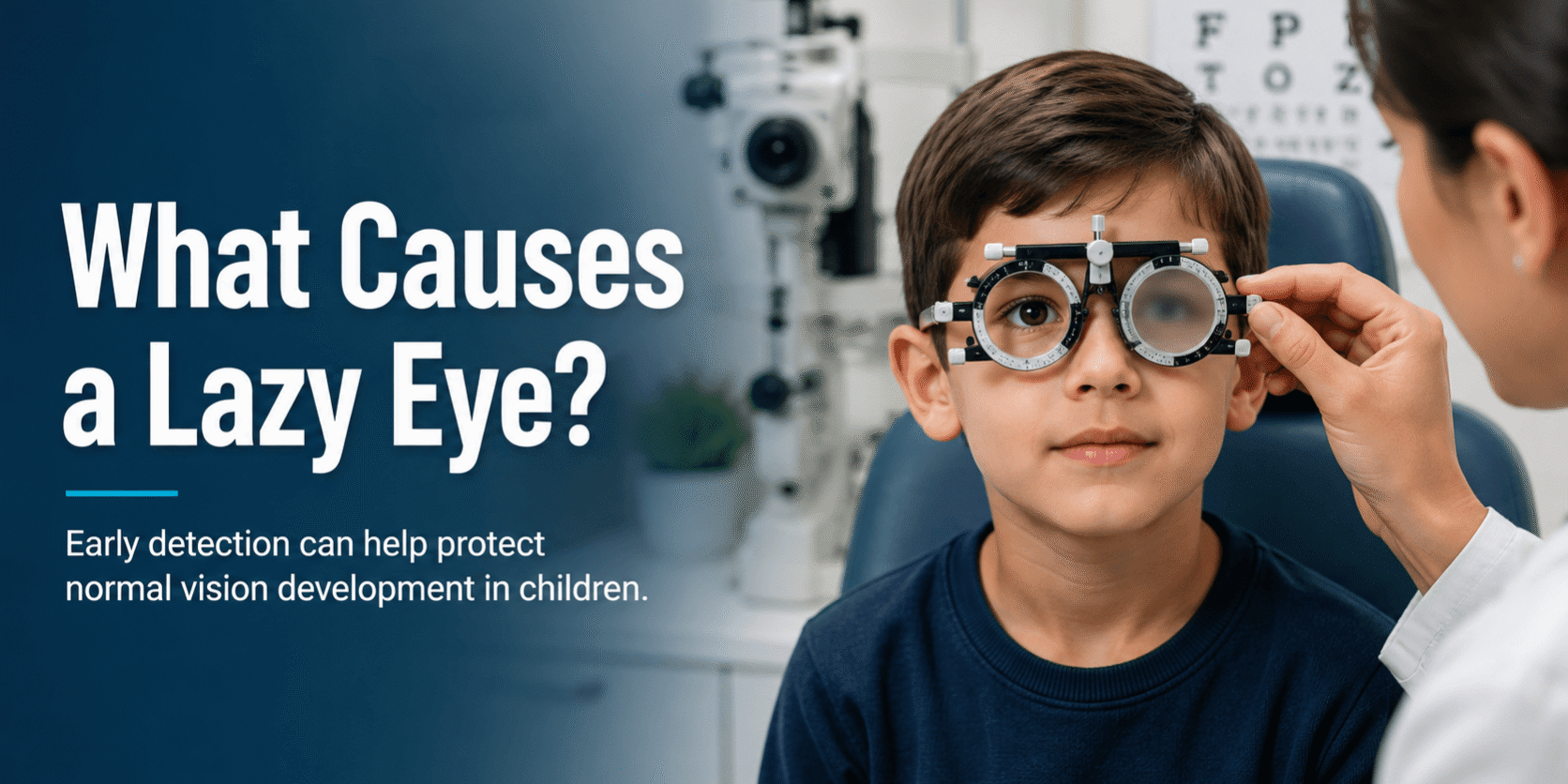
An eye specialist can diagnose amblyopia through a comprehensive eye examination. The evaluation may include checking visual acuity, eye alignment, focusing ability, and eye health.
Vision screening during childhood is important because lazy eye may not be obvious to parents or caregivers. The National Eye Institute recommends that children have their vision checked at least once between ages 3 and 5.
Can Lazy Eye Be Treated?
Treatment depends on the underlying cause and the child’s age. The first step may be correcting the problem affecting vision, such as prescribing glasses or treating a cataract.
Doctors may then recommend treatments designed to encourage the brain to use the weaker eye. These can include wearing an eye patch over the stronger eye or using prescribed atropine eye drops to temporarily blur vision in that eye.
Treatment is generally more effective when amblyopia is identified early, while the visual system is still developing.
Key Takeaways
- Lazy eye, or amblyopia, usually develops during childhood.
- Strabismus, or misaligned eyes, is a common cause.
- Significant differences in glasses prescriptions between the eyes can cause amblyopia.
- Childhood cataracts and other conditions that block clear vision can also contribute.
- Lazy eye may have few noticeable symptoms, making childhood vision screening important.
- Early diagnosis and appropriate treatment can improve the chances of developing better vision.
Conclusion
Knowing what causes lazy eye can help parents recognize potential risk factors and seek an eye examination when needed. Amblyopia is usually related to abnormal or unequal visual input during childhood, including misaligned eyes, significant refractive errors, or conditions that interfere with clear vision.
If you notice that a child’s eyes do not align properly, one eye appears weaker, or the child frequently closes one eye or tilts their head, consult a qualified ophthalmologist for an evaluation. Early assessment is important because treatment is generally more effective when started during childhood.