Is LASIK Painful? What to Expect During & After Surgery
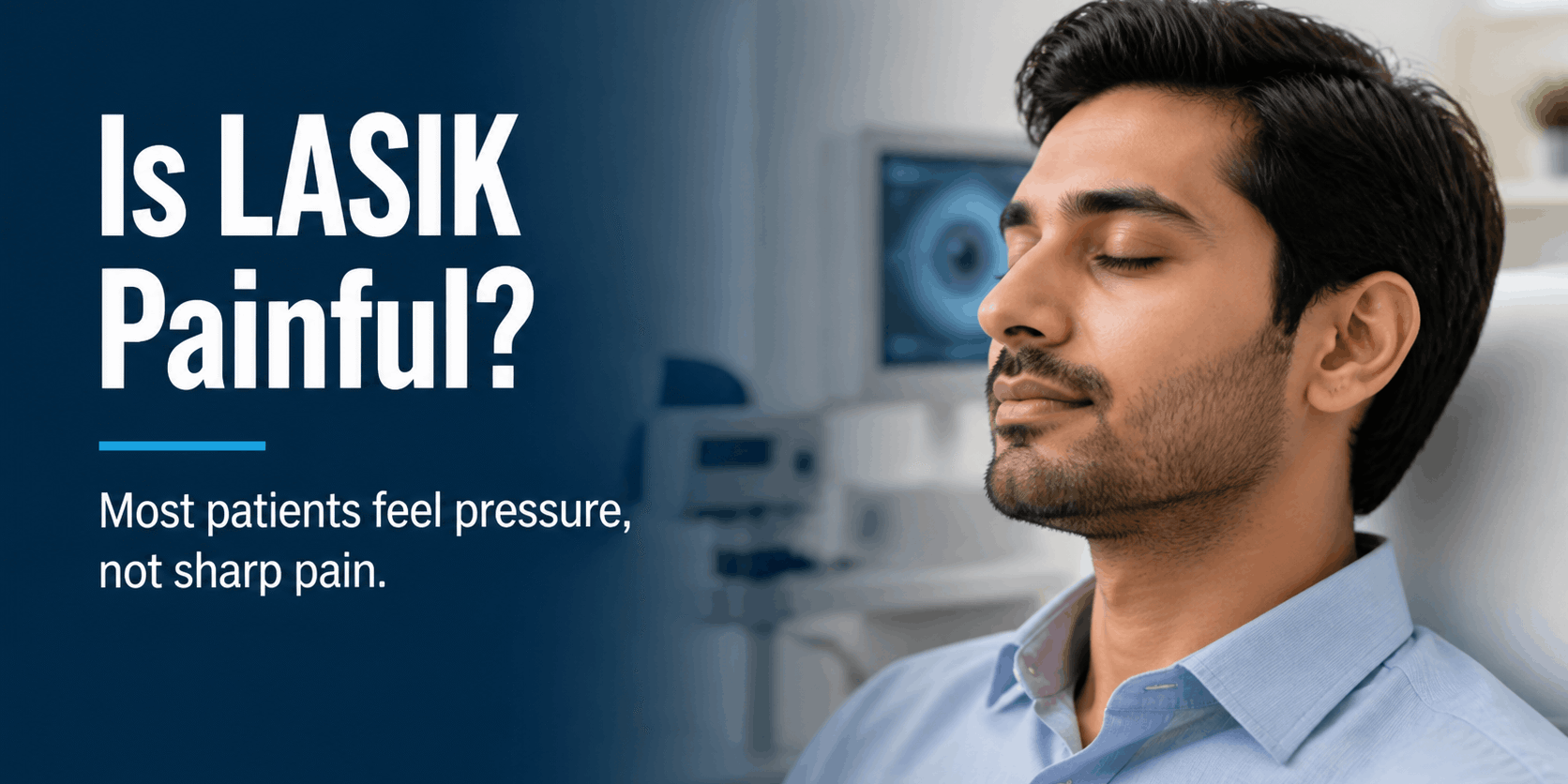
Is LASIK painful? For most patients, no, not in the way you’d expect. You’ll feel pressure and mild discomfort rather than sharp pain, since numbing drops are used throughout the procedure. Some grittiness, dryness, or light sensitivity is common for the first few days afterwards.
Key takeaways:
- Is LASIK painful during the procedure? Most patients feel pressure, not pain
- Mild burning or watery eyes are common for 24 to 48 hours after surgery
- Most people return to light activities like phone use within a day
- Severe pain, sudden vision loss, or discharge are warning signs, not normal side effects
Disclaimer: This article is for general information only and isn’t a substitute for professional medical advice. Please consult an eye specialist to discuss your specific condition and treatment options.
A burning sensation in the eyes. A gritty, sandy feeling. Some people also experience soreness or a foreign-body sensation during the first few hours after LASIK. These symptoms usually improve as the eye heals.
If you are considering laser eye surgery, you have likely wondered, “Is LASIK painful?” This is a completely natural concern, as the thought of any medical procedure involving your eyes can feel intimidating. However, understanding what happens during the LASIK treatment can help ease your anxiety.
Here’s what actually happens during and after the procedure, so you know what to expect instead of guessing.
Is LASIK Painful? The Short Answer
For most patients, LASIK itself is not significantly painful because numbing eye drops are applied before the procedure. However, you may notice pressure, a sensation of touch or movement, bright lights, or other unusual sensations during the surgery.
You may feel pressure, a slight pulling sensation, and maybe some mild stinging once the numbing wears off. Is LASIK eye surgery painful enough to dread? For most patients, the main issue is short-term discomfort rather than severe pain, although individual experiences vary.
Does LASIK eye surgery hurt more for some people than others? Yes. The amount of postoperative discomfort can vary between patients and may also depend on factors such as the condition of the ocular surface and individual healing.
What Happens During LASIK Eye Surgery
Knowing “how is LASIK eye surgery done” ahead of time makes the whole thing feel far less daunting.
Before the Procedure
Numbing drops go in first, followed by a device that holds your eyelids open so you don’t blink. You’ll be awake and aware, but you won’t feel pain.
During the Procedure
The surgeon creates a thin corneal flap, then reshapes the tissue underneath with a laser. Most patients describe pressure and a faint clicking sound, nothing more. LASIK surgery takes roughly 10 to 15 minutes per eye, from start to finish.
Immediately After Surgery
Vision is blurry at first, and your eyes may water or feel gritty. Most people rest with their eyes closed for a few hours. This is a normal part of post lasik surgery recovery.
What Does LASIK Feel Like During and After Surgery
During the procedure, most patients feel pressure rather than pain, with a strange awareness of light and sound. Afterwards, the sensation shifts to dryness, mild burning, or a gritty feeling. It’s similar to having an eyelash stuck in your eye.
Is laser eye surgery painful once the numbing wears off? For most people, it’s uncomfortable rather than painful. Eye drops help manage it.
LASIK Recovery Timeline
Recovery moves faster than most people expect, though everyone heals at a slightly different pace.
First 24 Hours
Expect blurry vision, light sensitivity, and watery eyes. Irritation, grittiness, burning, or mild discomfort may also occur. Most people rest for several hours after surgery and should arrange for someone to drive them home.
First Week
Vision sharpens considerably, though some haze or glare at night is common. Most patients return to work within two to three days.
First Month
Dryness and minor fluctuations in vision can continue for several weeks. Full stabilisation usually takes around one month, sometimes a little longer.
LASIK Aftercare Tips
A few habits make LASIK surgery aftercare easier in the first week.
- Avoid rubbing your eyes, even if they feel itchy or gritty
- Wear the protective eyewear provided, especially while sleeping
- Skip swimming, hot tubs, and eye makeup for about a week
- Use prescribed lubricating drops regularly, not just when eyes feel dry
Common Side Effects vs Warning Signs
Most LASIK surgery side effects are mild and temporary. A smaller set of symptoms need urgent attention.
Common and temporary:
- Dryness, grittiness, or mild burning
- Glare, halos, or light sensitivity at night
- Watery eyes for the first day or two
Warning signs, not normal:
- Severe or worsening pain
- Sudden vision loss or a sharp drop in clarity
- Discharge, redness, or swelling that gets worse instead of better
The National Eye Institute notes that persistent dry eye after refractive surgery is common and usually treatable.
Who May Experience More Discomfort?
People with a history of dry eye, certain autoimmune conditions, or low pain tolerance sometimes report more discomfort than average. Anxious patients also tend to notice more sensation, simply because they’re paying closer attention to it.
Both eyes usually heal at a similar pace. It’s common for one eye to feel slightly drier or clearer than the other for a few days.
When to Consult an Eye Specialist
Book a follow-up sooner than scheduled if pain worsens instead of easing, or if your vision suddenly drops. Unusual or worsening symptoms after LASIK should always be checked promptly.
Conclusion: Is LASIK Painful?
Is LASIK painful? For nearly all patients, the honest answer is: not really, just uncomfortable for a short window. Pressure during the procedure, mild dryness and grittiness afterwards, and it settles within days for most people.