How to Test Eye Power at Home: What You Can and Cannot Check
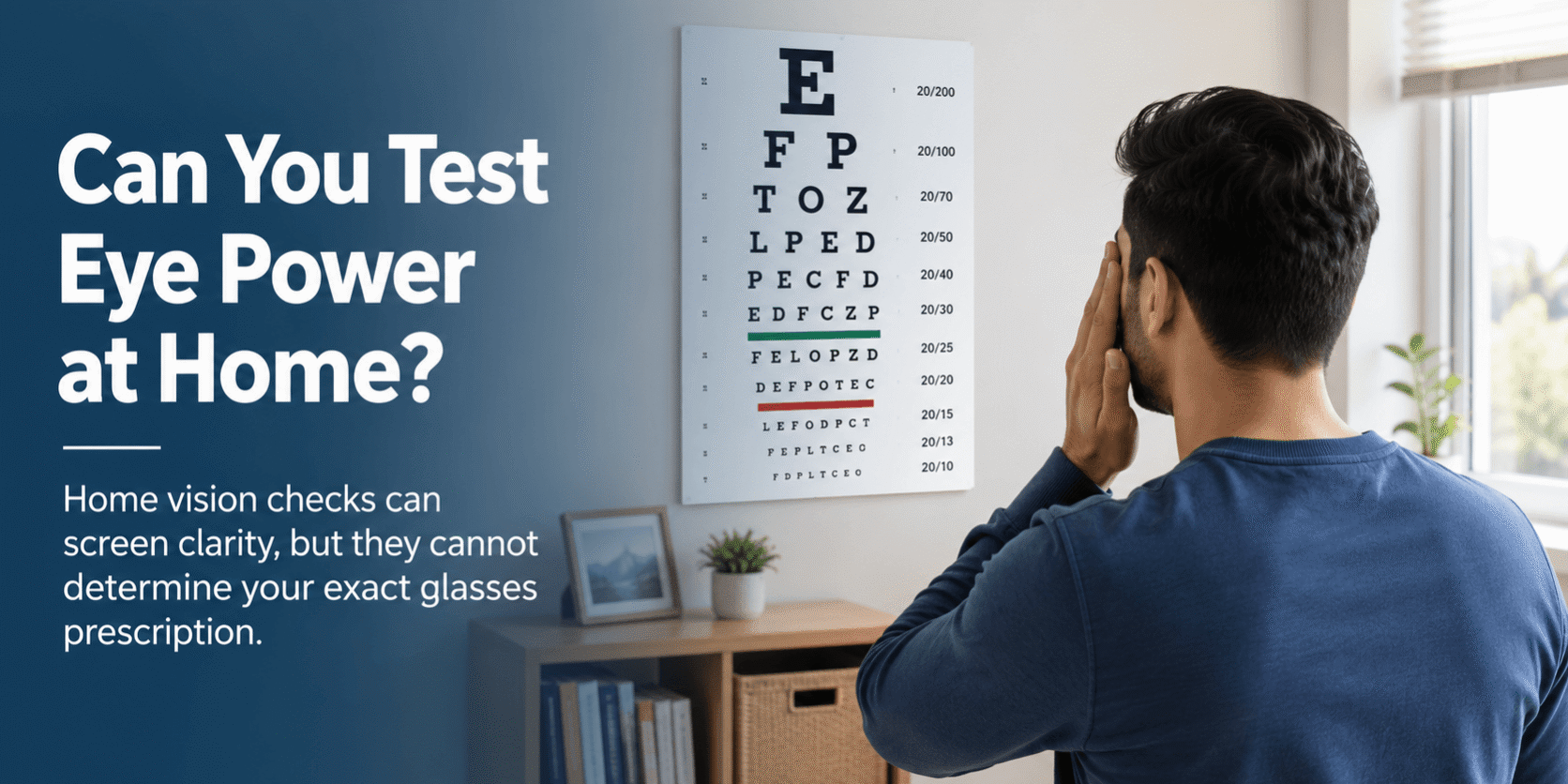
If you notice blurred vision, headaches, eye strain, or difficulty seeing distant objects, you may wonder how to test eye power at home. Online vision tests and printable eye charts can give you a rough idea of how clearly you see, but they cannot accurately determine your prescription for glasses.
“Eye power” usually refers to a refractive error such as short-sightedness (myopia), long-sightedness (hyperopia), or astigmatism. Finding the correct prescription requires a proper eye examination and, when needed, refraction testing by an eye-care professional.
Can You Test Eye Power at Home?
You can perform a simple vision screening at home, but it should not be considered a substitute for a comprehensive eye examination.
A home vision check can help you notice whether your distance or near vision appears reduced. However, it cannot reliably tell you the exact lens power you need.
How to Check Your Vision at Home
If you want to perform a basic screening:
- Use a reliable visual acuity chart designed for home testing.
- Place the chart at the distance specified by the chart instructions. The distance must be measured rather than estimated.
- Make sure the room has adequate, even lighting.
- Cover one eye gently without pressing on it.
- Read the smallest line of letters you can see clearly.
- Repeat the test with the other eye.
- If you normally wear glasses or contact lenses, you can compare your vision with and without them, but do not use a home test to change your prescription.
The result can indicate whether your vision may need further evaluation, but it does not provide an accurate prescription for glasses.
Why Home Tests Cannot Measure Your Exact Eye Power
A proper refraction test involves more than reading letters from a chart. An eye-care professional assesses how your eyes focus light and determines the lens strength that gives you clear, comfortable vision.
A comprehensive eye examination may also check:
- Distance and near visual acuity
- Refraction and focusing ability
- Eye alignment and movement
- The front and back of the eye
- Eye pressure when clinically indicated
- Signs of eye disease or other abnormalities
This is important because blurred vision is not always caused by a change in the power of glasses. Conditions such as dry eye, cataract, corneal problems, or other eye disorders can also affect vision.
What Are the Signs That Your Eye Power May Have Changed?
You may need an eye examination if you experience:
- Difficulty seeing distant objects clearly
- Trouble reading or seeing things up close
- Frequent squinting
- Headaches after reading or screen use
- Eye strain or tired eyes
- Blurred or fluctuating vision
- Difficulty seeing clearly at night
- Holding books or screens unusually close or far away
These symptoms do not necessarily mean that you need stronger glasses. An examination is needed to identify the actual cause.
When Should You See an Eye Specialist?
A home vision test can be useful as a basic screening tool, but consider scheduling a professional eye examination if your vision is consistently blurry, your current glasses no longer seem effective, or you are experiencing new visual symptoms.
Seek urgent medical attention for sudden loss of vision, sudden double vision, severe eye pain, significant eye injury, or new flashes and a sudden increase in floaters, particularly if accompanied by a dark curtain or shadow in your vision.
Children should also have age-appropriate vision screening because they may not recognise or report that one eye is not seeing clearly.
Key Takeaways
- A home vision test can screen how clearly you see but cannot accurately determine your glasses power.
- Printable or online eye charts should not be used to prescribe or change glasses.
- The correct prescription requires professional refraction and an eye examination.
- Blurred vision can have causes other than refractive error.
- Persistent or changing vision problems should be evaluated by a qualified eye-care professional.
- Sudden vision loss, severe eye pain, or other serious visual symptoms require prompt medical attention.
Conclusion
Knowing how to test eye power at home can help you perform a basic vision screening, but a home test cannot replace a professional eye examination. If you notice persistent blurred vision or feel that your glasses are no longer giving you clear vision, an eye specialist can determine whether your prescription has changed and check for other possible causes.
For accurate eye power measurement and overall eye health, a professional examination remains the safest and most reliable approach.