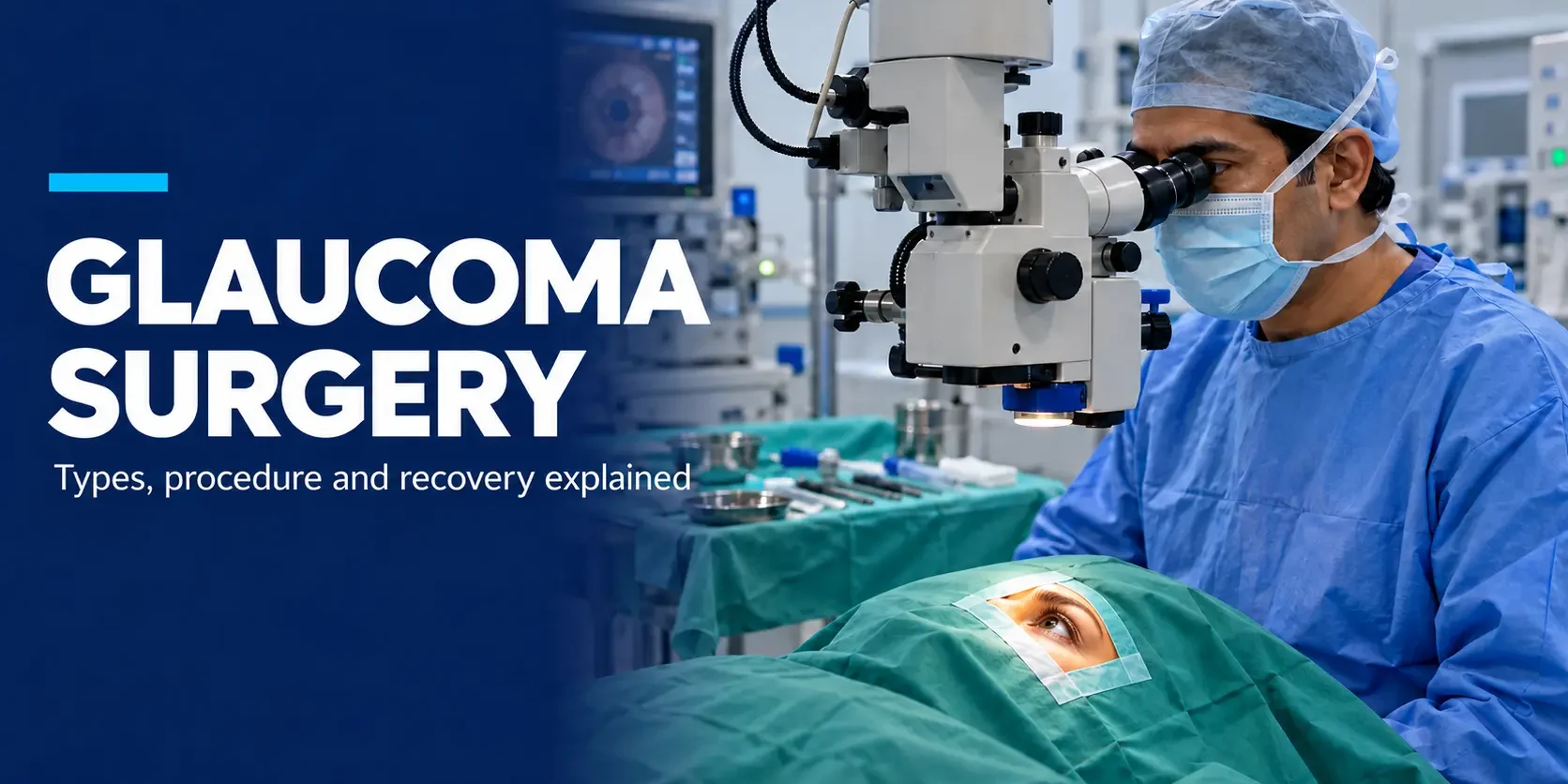
Quick Overview
Glaucoma surgery lowers eye pressure to protect the optic nerve when drops alone are not enough. Options range from quick laser treatments to operations that create a new drainage route. Surgery cannot restore lost vision, but it can help slow further damage.
- Laser trabeculoplasty and laser iridotomy usually take a few minutes and are performed in an outpatient setting.
- Trabeculectomy usually takes less than an hour, while tube shunt surgery may take one to two hours.
- Most people can resume normal activities the day after laser treatment, while incisional surgery may require activity restrictions for several weeks.
- Regular follow-up is needed after every procedure
Introduction
At a routine review, an ophthalmologist may find that eye pressure remains above target despite regular use of prescribed drops. In other cases, scans show the optic nerve is still changing. At this stage, glaucoma surgery is often discussed as the next step in care.
Glaucoma damages the optic nerve, which carries visual signals to the brain. Raised intraocular pressure (the pressure of the fluid inside the eye) is a major risk factor, although glaucoma can also develop when eye pressure is within the normal range. Surgery lowers that pressure by improving natural drainage or creating a new outflow route.
When Glaucoma Surgery is Needed
Laser treatment or incisional surgery may be considered when eye pressure remains above the target despite medication, when glaucoma progresses, or when the existing treatment plan is unsuitable. An eye specialist may recommend it when:
- Eye pressure stays above target despite medication
- Visual field tests or optic nerve scans show progression
- Drops cause side effects or are difficult to use daily
- A narrow drainage angle raises the risk of a sudden pressure rise
Laser treatment is not always a last resort. Selective laser trabeculoplasty (SLT) can be used as an initial treatment for selected people with open-angle glaucoma.
Glaucoma Surgery Types and How They Differ
Procedures fall into two broad groups. Laser treatments use focused light in a clinic room. Incisional procedures involve small surgical openings in an operating theatre. Yet all forms of glaucoma eye surgery share one goal: safer eye pressure.
| Procedure | Commonly used for | Setting | Usual recovery |
|---|---|---|---|
| Laser trabeculoplasty | Open-angle glaucoma | Clinic, minutes | About a day |
| Laser iridotomy | Narrow or closed angles | Clinic, minutes | About a day |
| Trabeculectomy | Moderate to advanced glaucoma | Theatre, up to an hour | Several weeks; often 4–6 weeks for recovery |
| Tube shunt | Complex or previously operated eyes | Theatre, up to an hour | Several weeks; varies by case |
| MIGS | Mild to moderate glaucoma | Theatre, usually shorter | Generally faster than traditional glaucoma surgery |
Laser Trabeculoplasty for Open-Angle Glaucoma
In open-angle glaucoma, the trabecular meshwork (the eye’s natural drainage filter) works less efficiently. Laser trabeculoplasty uses gentle laser energy to improve outflow through this meshwork.
Selective laser trabeculoplasty (SLT) is a commonly used form of laser trabeculoplasty. Its pressure-lowering effect develops over several weeks and may diminish over time. The procedure can often be repeated if needed.
Iridotomy and YAG Peripheral Iridotomy for Angle-Closure Risk
An iridotomy creates a tiny opening in the iris, the coloured part of the eye. This allows aqueous humour to pass through the iris, helping relieve pupillary block and keep the drainage angle open.
A YAG peripheral iridotomy uses a neodymium-doped yttrium aluminium garnet (Nd: YAG) laser to create this opening. Laser iridotomy can treat angle-closure glaucoma and help prevent an acute attack in people at risk because of narrow drainage angles. One or both eyes may need treatment, depending on the ophthalmologist’s assessment.
Trabeculectomy Procedure for Stronger Pressure Control
A trabeculectomy creates a new drainage opening in the sclera, the white outer wall of the eye. Fluid passes through this opening beneath the conjunctiva, forming a small, blister-like reservoir called a bleb, usually under the upper eyelid.
Anti-scarring medication is often used to reduce scarring and help keep the drainage opening functioning. Trabeculectomy can substantially lower eye pressure and may be recommended when more intensive pressure control is needed, particularly in moderate to advanced glaucoma.
Tube Shunts and Drainage Implants
A tube shunt is an implant that directs fluid from inside the eye through a small tube to a plate positioned beneath the conjunctiva. The surrounding tissue absorbs the fluid.
Tube shunts may be recommended when previous glaucoma surgery has failed, when scarring makes trabeculectomy less likely to succeed, or when the type and severity of glaucoma favour a drainage implant.
Minimally Invasive Glaucoma Surgery (MIGS)
MIGS uses microscopic devices placed through very small incisions. It is commonly combined with cataract surgery.
MIGS is commonly considered for selected patients with mild to moderate glaucoma. Recovery is generally quicker than after traditional glaucoma surgery, although the degree of pressure reduction varies by procedure and may be more modest than with trabeculectomy or tube shunt surgery.
Glaucoma Laser Surgery: What to Expect
Laser trabeculoplasty and laser iridotomy are usually outpatient procedures that take a few minutes per eye. Numbing eye drops are applied, and a special contact lens helps the ophthalmologist focus the laser.
Patients may notice bright flashes and mild discomfort during treatment. Eye pressure is checked afterwards because it can rise temporarily. Patients should continue their prescribed glaucoma medication unless their ophthalmologist advises otherwise and use any additional drops as directed. Vision may be blurry for a few hours, but most people can resume normal activities the next day.
The Glaucoma Operation Process
A glaucoma operation such as trabeculectomy, a tube shunt, or MIGS usually follows this sequence.
- Assessment: the specialist checks eye pressure and the optic nerve. Mention all medicines, especially blood thinners.
- Anaesthesia: the surgeon may use numbing eye drops or a local anaesthetic injection, sometimes with sedation. General anaesthesia may be needed in selected cases.
- Procedure: the surgeon creates the drainage route or places the device.
- Protection: a shield covers the eye, and most patients go home the same day.
- Follow-up: the first review is usually the next day.
Glaucoma Operation Recovery Time
Recovery time after glaucoma surgery depends on the procedure. Laser patients usually resume routines within a day. MIGS generally allows faster recovery than traditional surgery.
After trabeculectomy or tube shunt surgery, vision may remain blurred during recovery, sometimes for several weeks. Heavy lifting and strenuous activities may need to be avoided for two to four weeks or longer, depending on the procedure and the surgeon’s advice. During follow-up, the surgeon may adjust treatment or, in some cases, the stitches.
First 24 Hours After Surgery
The first day is about protecting the eye. Some soreness and blurring are expected.
- Keep the eye shield on as advised, especially while sleeping
- Use prescribed drops exactly as directed
- Avoid rubbing the eye, and follow your surgeon’s instructions about washing your face, showering and keeping the operated eye dry.
- Avoid bending and heavy lifting
- Arrange a driver if sedation was given
Risks, Side Effects and Success Expectations
Every procedure carries some risk. Most side effects are temporary and manageable with timely follow-up.
- A temporary rise in eye pressure after laser treatment
- Eye pressure becoming too low, which may affect vision
- Bleeding, inflammation or infection, including late bleb infection
- Cataract development or progression
- Scarring that reduces the effect over time
Glaucoma surgery aims to lower eye pressure and reduce the risk of further vision loss. It cannot reverse existing optic nerve damage. Some patients still need medication or additional procedures, so regular, lifelong monitoring remains essential.
Glaucoma Surgery Cost
The cost depends on the procedure type, whether it’s one or both eyes, any implant used, and follow-up care. Laser procedures generally cost less than incisional surgery. A reliable estimate usually follows a full eye examination.
Glaucoma Surgery Cost in India: What Patients Should Ask
Glaucoma surgery costs in India also vary by city, hospital, and insurance coverage. Useful questions include:
- Which procedure is recommended, and why?
- Does the estimate include implants, medicines and follow-up?
- Are both eyes charged separately?
- Is cashless insurance cover available?
When to Seek Specialist Care Quickly
Contact your eye specialist the same day if you notice severe pain, sudden vision loss or increasing redness. Discharge or light sensitivity can signal infection, even months after trabeculectomy.
People with narrow angles should know the signs of acute angle closure. These include sudden eye pain, headache, nausea and coloured halos around lights. This needs emergency care.
Conclusion
Glaucoma surgery offers several ways to lower eye pressure when drops alone fall short. Laser options are quick, while trabeculectomy, tube shunts and MIGS balance pressure control against recovery differently.
None restores lost vision. That is why early detection and regular check-ups matter. If drops are difficult to use or pressure stays high, discuss surgical options at your next review.
Disclaimer: This article is for general information only and is not a substitute for professional medical advice. Please consult an eye specialist about your diagnosis and suitable treatment options.
FAQs
Is Glaucoma Surgery Serious or a Major Surgery?
It depends on the procedure. Laser treatments are minor, while trabeculectomy and tube shunts are more involved operations, usually with same-day discharge.
Is Glaucoma Surgery Painful?
It is not usually painful, as numbing drops or local anaesthesia are used. Mild soreness or grittiness may follow for a few days. Severe pain is not expected and should be reported promptly.
Can Glaucoma Be Cured by Surgery?
No. Surgery helps control eye pressure and slow damage, but it cannot reverse vision already lost. Glaucoma needs lifelong monitoring, even after surgery.
How Many Years Does a Trabeculectomy Last?
There is no fixed lifespan. Many control pressure for years, but scarring can gradually reduce its effect. Some patients later need drops, a revision or a different procedure.
Is Laser Surgery Effective for Glaucoma?
Yes, for the right type of glaucoma. Laser trabeculoplasty lowers pressure in open-angle glaucoma, while laser iridotomy reduces the risk of angle closure. The effect of trabeculoplasty may lessen over time, so you may need to repeat the treatment.