Quick Overview
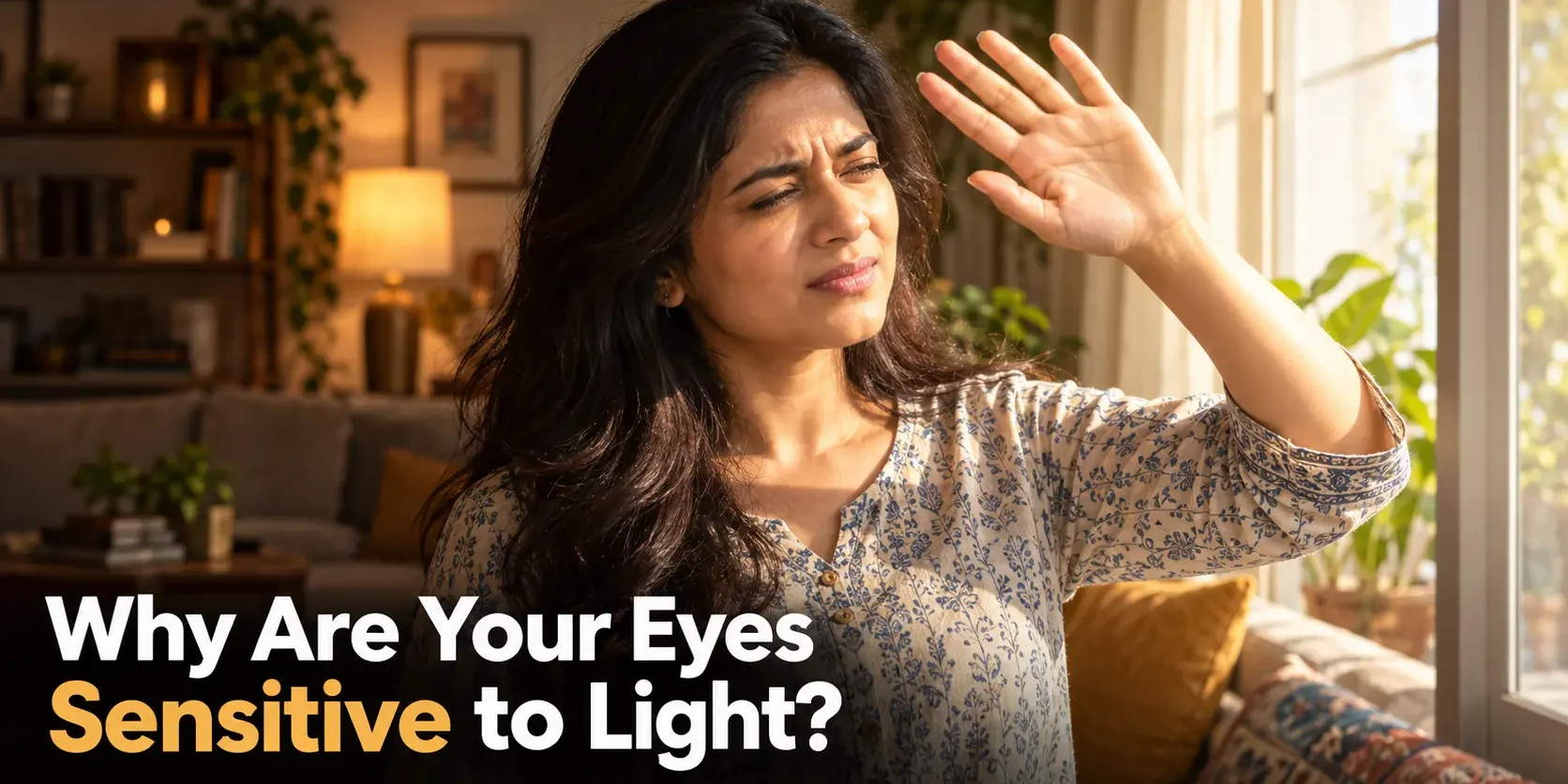
Light sensitivity is discomfort or pain in the eyes caused by light that most people find comfortable. It is a symptom, not a condition. Common photophobia causes include dry eye, migraine and eye inflammation, and treatment depends on the underlying cause.
- Dry eye is one of the most common eye-related causes of light sensitivity
- Migraine frequently brings sensitivity to both light and sound
- Sudden light sensitivity with a severe headache, fever or stiff neck requires urgent medical assessment.
- Sunglasses outdoors and adjusted screen brightness can ease day-to-day discomfort
Introduction
Light sensitivity is a frequent reason patients report difficulty with everyday tasks. Driving, reading a screen or stepping outdoors can become uncomfortable. Some notice it gradually over months, while others experience it suddenly alongside pain or redness. The word photophobia literally means “fear of light”, but in medicine, it refers to abnormal sensitivity to light that can cause discomfort or pain.
Photophobia can range from mild discomfort to pain that interferes with daily activities. Identifying its possible causes and associated symptoms can help determine whether medical assessment is needed.
What is Photophobia?
It is an increased sensitivity to light that causes discomfort, squinting or eye pain. It is not a disease in itself. Instead, it signals that something in the eye, nervous system or general health needs attention.
Light signals travel from the retina to the brain through the visual pathways. These pathways interact with neural circuits involved in pain perception. Changes in these pathways, along with certain eye conditions, can make ordinary light uncomfortable or painful.
People may describe photophobia as eye photosensitivity. However, photosensitivity also commonly refers to skin reactions to sunlight, so photophobia, or light sensitivity, is more precise for discomfort caused by light.
Photophobia Symptoms and Warning Signs
Light sensitivity symptoms vary from mild discomfort to sharp pain. Common signs include:
- Squinting or frequent blinking in bright light
- Shielding the eyes or preferring dim rooms
- Eye pain, ache or a gritty feeling
- Watering eyes when exposed to light
- Headache that worsens in bright settings
Symptoms may affect one eye or both. Mild light sensitivity can occur with conditions such as dry eye or migraine. However, sensitivity accompanied by eye pain, redness, reduced vision or a severe headache requires prompt medical assessment.
Light Sensitivity Causes by Category
Light sensitivity causes generally fall into three groups. Knowing the category helps an eye specialist decide which tests are needed.
Eye Conditions
- Dry eye, one of the most common causes
- Conjunctivitis (inflammation of the eye’s outer membrane)
- Corneal scratches, infections or ulcers
- Uveitis (inflammation inside the eye)
- Acute angle-closure glaucoma (a sudden blockage of fluid drainage that can rapidly increase eye pressure)
- Recent eye surgery, such as cataract surgery or LASIK (Laser-Assisted In Situ Keratomileusis)
- Inherited conditions affecting eye pigment, such as albinism
Neurological Conditions
Migraine is a common neurological cause of light sensitivity. Symptoms may occur before, during or after an attack and can sometimes persist between attacks. Light sensitivity can also follow a concussion or other head injury and may last for weeks in some people. Less commonly, it can occur with serious conditions such as meningitis or bleeding around the brain, which require urgent medical assessment.
Medicines and Other Factors
Certain medicines can contribute to light sensitivity, including some sedatives and antimalarial drugs. Eye-dilating drops used during examinations can also cause temporary sensitivity. Anxiety, depression and chronic fatigue have been associated with photophobia, although the relationship varies. Reduced pigmentation in the eye, as occurs in albinism, can increase sensitivity to light; eye colour alone does not establish the cause of symptoms.
Cleveland Clinic identifies medication effects, mental health conditions, chronic fatigue syndrome and albinism among the conditions associated with photophobia.
Common Triggers That Make Photophobia Worse
Even when the cause is known, everyday factors can make symptoms flare. Identifying personal triggers is often the first practical step towards relief. Common triggers include:
- Bright sunlight, especially reflected off water, snow or wet roads
- Fluorescent lighting and flickering lights
- Screens set at high brightness
- Oncoming headlights at night
- Lack of sleep or stress
- Dry, air-conditioned environments
- Wearing contact lenses for too long
When to Worry About Photophobia
Light sensitivity needs same-day medical attention when it appears suddenly or comes with other concerning symptoms. Seek emergency care if it occurs with:
- A sudden, severe headache unlike any before
- Fever, a stiff neck or confusion
- Severe eye pain with redness and blurred vision
- Nausea or vomiting with eye pain, blurred vision or coloured halos around lights
- An eye injury or chemical splash, which may require immediate treatment
- A painful red eye in a contact lens wearer
New sensitivity that is steadily worsening should also be assessed by an eye specialist, even without pain.
Photophobia and Phonophobia
Phonophobia means sensitivity to everyday sounds. The two often occur together, most commonly during a migraine attack.
They can also appear after a concussion. Both reflect a temporary oversensitivity of the brain to sensory input. Keeping a short diary of attacks, lighting conditions and noise exposure can help a doctor identify patterns.
Headache Caused by Light: What It May Mean
A headache triggered or worsened by light can occur with migraine, which commonly involves light sensitivity. Bright or flickering light may trigger an attack or worsen existing headache pain in susceptible people.
Prolonged screen use and uncorrected refractive errors, such as short-sightedness or astigmatism, may contribute to visual discomfort and headaches. A new or changing headache pattern should be assessed by a clinician, particularly in people over 50 or when other warning signs are present.
How Photophobia is Diagnosed
Diagnosis starts with a detailed history of when symptoms began, what triggers them and any related symptoms. An eye specialist then examines the eye.
- Vision testing to check clarity and refractive error
- Slit-lamp examination, using a magnifying microscope to inspect the front of the eye
- Fluorescein staining, where a harmless dye highlights corneal scratches or dryness
- Dilated eye examination to assess the retina and optic nerve
- Tear film tests if dry eye is suspected
Eye pressure may also be measured, particularly when pain or halos are reported. If a neurological cause is suspected, the patient may be referred for further assessment or brain imaging.
Photophobia Treatment Options
Treatment focuses on the underlying cause rather than the sensitivity alone. Once the cause is managed, light sensitivity often eases.
- Dry eye: lubricating drops or other dry eye treatments
- Infections: treatment depends on the cause and may include prescribed antibiotics or antiviral medicines.
- Uveitis: anti-inflammatory eye drops under specialist supervision
- Migraine: preventive and acute treatment guided by a doctor
- Medicine-related sensitivity: review of medicines by the prescribing doctor
- Refractive error: updated glasses or contact lenses
Never stop a prescribed medicine without medical advice, even if it seems linked to symptoms.
Day-to-day Relief for Light Sensitivity
Simple changes can make daily life more comfortable while the cause is being treated.
- Wear sunglasses with UV protection and a wide-brimmed hat outdoors
- Lower screen brightness and use warmer display settings
- Choose soft, indirect lighting over harsh overhead lights
- Take regular screen breaks to rest the eyes
- Use a humidifier or lubricating drops if dry air worsens symptoms
Avoid relying on dark sunglasses indoors for prolonged periods unless your clinician advises it, as extended use may increase sensitivity when you return to normal lighting. Some people with migraine find specially tinted lenses helpful, although the evidence varies. An eye specialist can help determine whether tinted lenses are appropriate for your symptoms.
Conclusion
Photophobia is a symptom with many possible causes, from dry eye and migraine to inflammation inside the eye. Most cases improve once the underlying condition is identified and treated. Simple daily adjustments can also reduce discomfort in the meantime.
Sudden sensitivity with severe headache, pain or vision changes needs urgent care. For milder, persistent symptoms, a comprehensive eye examination is the most reliable first step.
Disclaimer: This article is for general information only and is not a substitute for professional medical advice. Please consult an eye specialist to discuss your specific symptoms.
FAQs
Can Anxiety Cause Light Sensitivity?
Yes. Anxiety is associated with increased light sensitivity, possibly because heightened stress responses make the senses more reactive. Managing stress may ease symptoms, but other causes should still be ruled out through an eye examination.
Does Photophobia Need Glasses?
Not always. Glasses help when uncorrected vision contributes, and tinted or photochromic lenses can improve comfort. The underlying cause still needs treatment, so an eye examination comes first.
Why Do My Eyes Take So Long to Adjust to Light?
Moving between dark and bright settings requires the pupils and retina to adapt. This naturally slows with age. Cataract, retinal conditions or dry eye can also delay adjustment.
What is the Difference Between Glare and Photophobia?
Glare is scattered light that reduces visual comfort for almost everyone. Light sensitivity, by contrast, is an abnormal discomfort or pain response to light levels most people tolerate.
Why are My Eyes More Sensitive to Light When I Wear Contacts?
Contact lenses can dry the eye’s surface and reduce oxygen to the cornea. Overwear, deposits or infection can increase sensitivity. A painful red eye while wearing lenses needs urgent review.
References
Cleveland Clinic. (2023, April 10). Photophobia (light sensitivity): Symptoms, causes & treatment. https://my.clevelandclinic.org/health/symptoms/photophobia
Digre, K. B., & Brennan, K. C. (2012). Shedding light on photophobia. Journal of Neuro-Ophthalmology, 32(1), 68–81. https://pmc.ncbi.nlm.nih.gov/articles/PMC3485070/