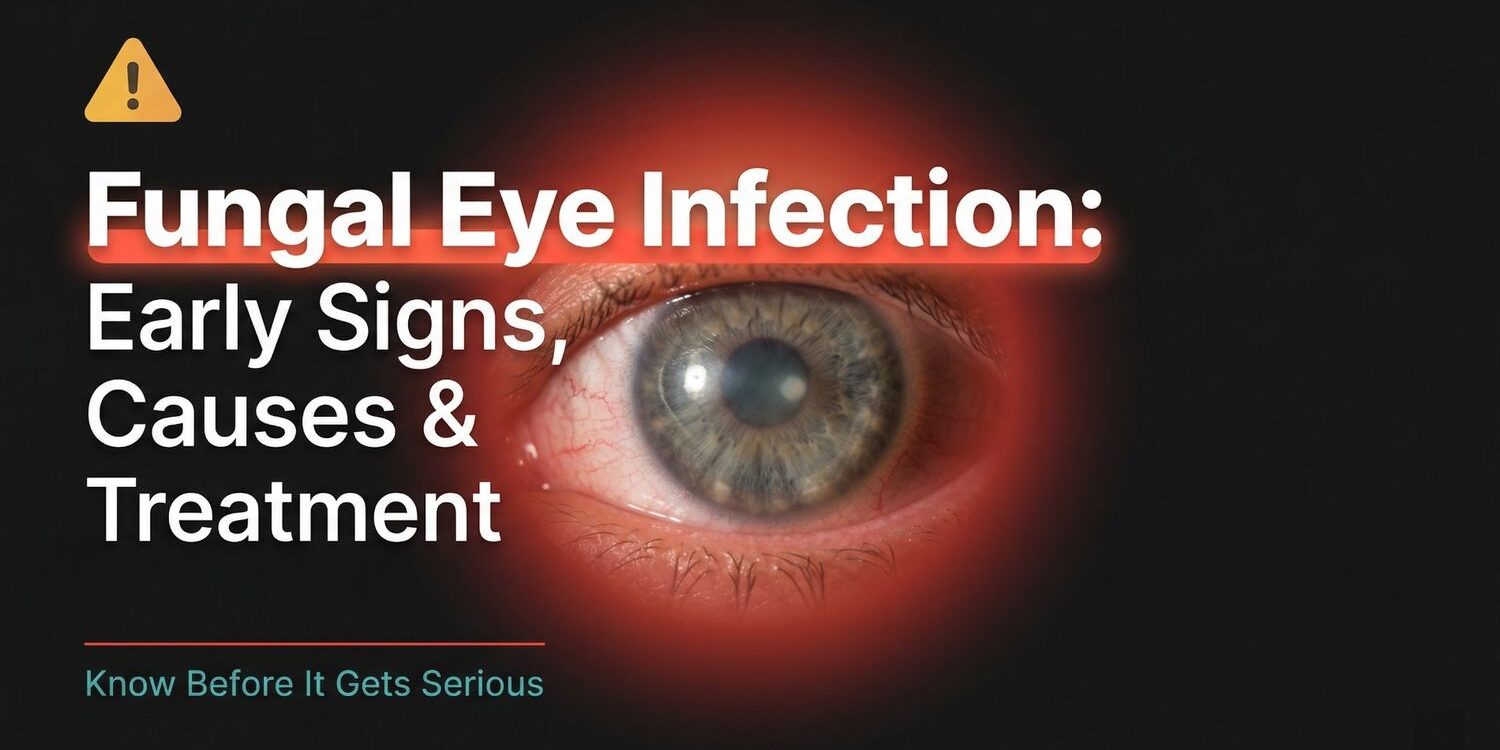
Fungal Eye Infection: Early Signs, Causes and Treatment Guide
A common conception is that only bacteria or viruses are the main reasons for an eye infection. But fungal infections can also affect the eyes. Many people keep ignoring symptoms at the early stage of fungal eye infection, thinking this is just an irritation or dust in their eye. But a fungal can cause visual loss. As the patient doesn’t become symptomatic or have distress.
What Is a Fungal Eye Infection and How Does It Develop?
When fungi enter the eye, they start growing inside the layer of the eye. This causes a fungal eye infection.
Soil, plants, dust, and even air naturally have fungi in them. When fungal spores reach the eye through injury, contaminated water, or unclean hands, they may infect the eye. This infection can even spread through the bloodstream in people who already have compromised immunity.
Farm workers, gardeners, and people who live in humid climates are at a little more risk of these infections.
Types of Fungal Eye Infections
Each type of fungal eye infection may show slightly different symptoms.
Fungal Keratitis (Corneal Infection)
This type of fungal eye infection affects the cornea, the clear front layer of the eye.
It often happens after an eye injury caused by plant material, wood splinters, or soil particles. Farmers sometimes develop this infection when crop dust or plant debris enters the eye.
Symptoms usually include eye pain, redness, watering, blurred vision, and sensitivity to light.
Fungal Endophthalmitis
This is a rare but severe infection affecting the inner parts of the eye. People with weakened immune systems are more at risk.
Symptoms of this fungal eye infection may include severe eye pain, swelling, redness, and a sudden decrease in vision. Immediate treatment is required to prevent permanent damage.
Fungal Infection Around the Eyes and Eyelids
These infections are usually caused by skin fungi that grow in warm and moist areas.
Symptoms of this fungal eye infection include itching, redness, scaling, or rash around the eyelids and under the eyes.
Fungal Infection on the Eyelid (Fungal Blepharitis)
Blepharitis refers to inflammation of the eyelids. While it is commonly caused by bacteria, fungi can also cause this condition. Symptoms include itching, burning sensation, or excessive watering.
In fungal blepharitis, the eyelids may appear red, swollen, and itchy. Some people notice crusting near the eyelashes or a burning sensation.
Good eyelid hygiene and medical treatment usually help control the infection.
Common Causes of Fungal Eye Infection
Fungi can enter the eye due to many reasons and cause infection.
Eye injuries caused by plant leaves, wood, soil particles, or dust can introduce fungal spores.
Contact lens misuse for long hours, using contaminated lens solution, or sleeping with lenses may lead to infection.
Contaminated water exposure, such as swimming in dirty water, can also allow fungi to enter the eye.
A weak immune system makes a person more vulnerable. People with diabetes, long-term steroid use, or other health conditions may face a higher risk.
Eye surgery complications may also lead to fungal infection in rare cases.
Fungal Infection in Eye: Symptoms and Clinical Presentation
Common symptoms of fungal eye infections include:
- Eye pain and redness
- Blurred or reduced eyesight
- Watery eyes
- Discharge from the eye
- Sensitivity to light
- White patch or ulcer on the cornea
- Eyelids swelling
In severe cases, people may experience a strong pain and sudden vision changes. Early diagnosis makes treatment of fungal eye infection much easier.
How Is a Fungal Eye Infection Diagnosed?
The doctor may use a slit lamp microscope to closely examine eye structures.
Sometimes, an eye specialist can take a small sample from the infected area. This sample is tested in a laboratory to know the type of fungus causing the infection. Imaging tests may be done in serious infections affecting deeper eye structures.
Diagnosis helps doctors select the correct antifungal medicine.
Fungal Eye Infection: Treatment Options
Treatment of fungal eye infection mainly depends on how severe the problem is and where the infection is located. Doctors usually prescribe antifungal eye drops. These medicines help stop fungal growth and control the infection.
In moderate to severe infections, doctors may give oral antifungal medicines. Sometimes, they give antifungal injections inside the eye in serious cases.
For fungal keratitis with severe corneal damage, a corneal transplant may be required to restore vision. Fungal eye infection treatment may continue for several weeks because fungal infections usually respond slowly compared to bacterial infections.
Patients should follow the fungal eye infection treatment exactly as advised and avoid stopping medicines early.
Can a Fungal Eye Infection Be Treated at Home?
Home remedies cannot cure fungal eye infections. Some people try washing the eye with salt water, herbal liquids, or rose water. These methods may actually worsen the infection or introduce more germs.
If someone suspects a fungal infection, medical treatment is necessary. Basic care at home can help support recovery, such as:
- Avoid touching or rubbing the eyes
- Wash your hands before applying eye drops
- Avoid contact lens use during infection
- Keep eyes clean
But antifungal medicines prescribed by a doctor remain the mainstream .
Preventing Fungal Eye Infections and Protecting Your Vision
Many fungal infections can be avoided with simple precautions.
- People at higher risk should wear protective eyewear.
- Contact lens users should maintain good hygiene.
- Avoid swimming in contaminated water when wearing lenses.
- Avoid swimHands should always be clean before touching the eyes.ming in contaminated water when wearing lenses.
- Regular eye checkups are important to detect problems early.
When Should You Consult an Eye Doctor for a Fungal Eye Infection?
Contact your eye doctor if these eye symptoms appear:
- Persistent eye redness
- Eye pain lasting more than a day
- Seeing blurred suddenly
- White spot on the eye surface
- Eye injury followed by irritation or redness
- Increased light sensitivity
Conclusion: About Fingal Eye Infection
Fungal eye infections may start with mild irritation, but they can become serious if ignored. Early diagnosis and proper antifungal treatment are important to protect vision. If any unusual eye symptoms occur, then it is always safer to consult an eye specialist instead of waiting or trying home remedies.
FAQ
What causes a fungal infection in the eye?
Fungal infections usually occur when fungal spores enter the eye through injury, contaminated water, or unclean contact lenses.
Is a fungal eye infection contagious?
Most fungal eye infections are not contagious. They usually develop after exposure to environmental fungi rather than spreading from person to person.
What are the early symptoms of fungal keratitis?
Early symptoms of fungal keratitis include redness, eye pain, watering, sensitivity to light, and blurred vision.
How long does treatment for a fungal eye infection take?
Fungal eye infection treatment may last several weeks because they generally respond a little slower than bacterial infections.
Can a fungal infection on the eyelid spread to the eye?
In some cases, an untreated fungal infection around the eyelid may spread to nearby eye tissues.
How to remove an eye infection at home?
Home remedies cannot remove fungal eye infections. Basic hygiene and avoiding eye rubbing may help support recovery.
What is the best antifungal for the eyes?
Doctors usually prescribe antifungal eye drops, depending on the type of fungus and the severity of infection.
No self medication is recommended.