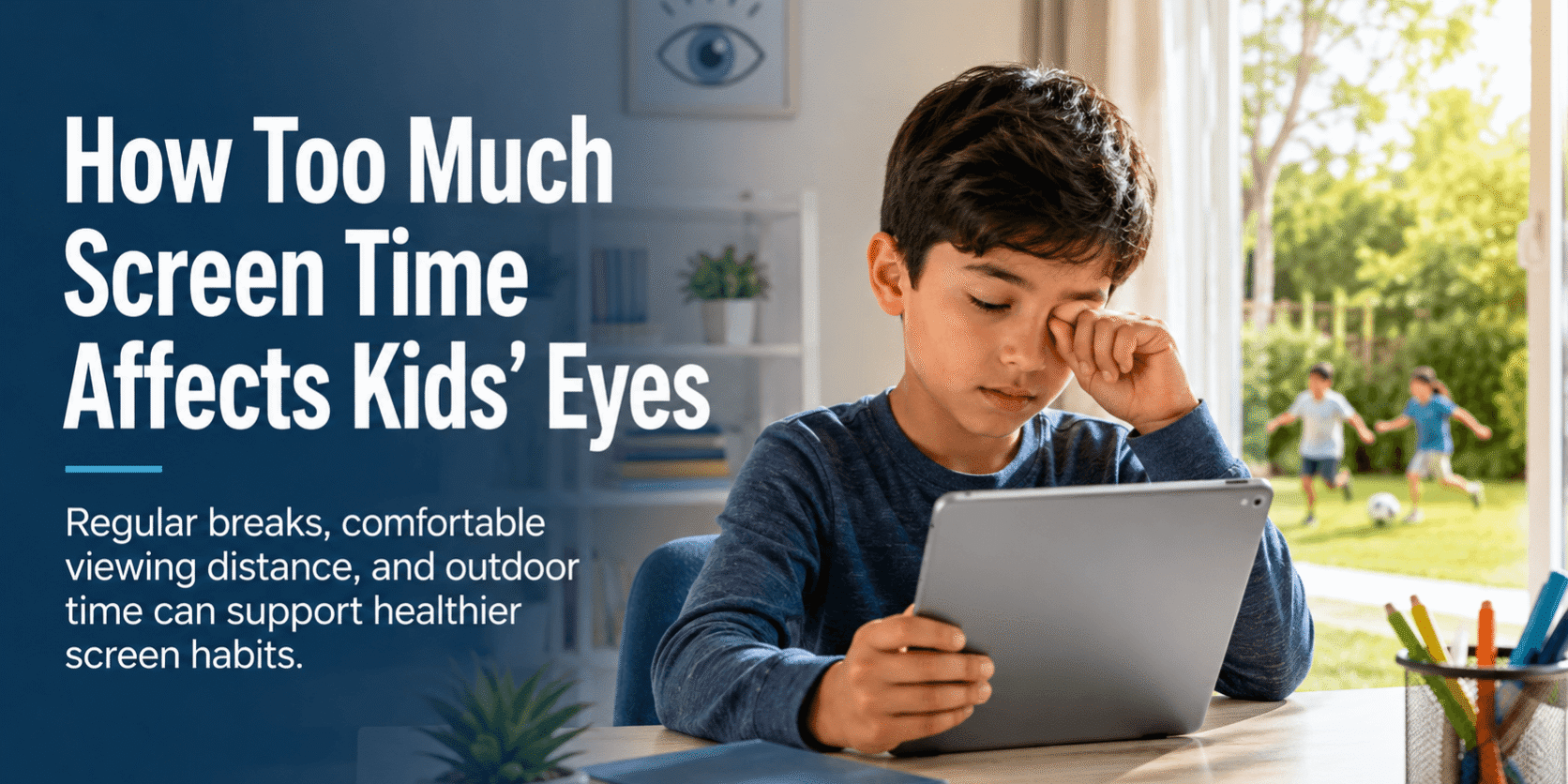
How Too Much Screen Time Affects Kids’ Eyes
Screens are now a regular part of childhood. Children use smartphones, tablets, computers, televisions, and gaming devices for school, communication, and entertainment. But parents often ask how too much screen time affects kids’ eyes and whether prolonged device use can harm their vision.
Extended screen use can contribute to digital eye strain, dryness, headaches, and temporary blurred vision. There is also concern about the relationship among prolonged near work, limited outdoor time, and childhood myopia (nearsightedness).
How Excessive Screen Time Affects Children’s Eye Health
When children look at a screen for a long period, their eyes continuously focus on a nearby object. They may also blink less frequently, which can cause the eyes to become dry and irritated.
Common effects of prolonged screen use include:
- Tired or strained eyes
- Dry, burning, or irritated eyes
- Redness
- Temporary blurred vision
- Headaches
- Difficulty changing focus from near to far
- Increased sensitivity or discomfort around the eyes
These symptoms are generally associated with digital eye strain and may improve when children take regular breaks from screens.
Can Screen Time Cause Myopia in Children?
Myopia occurs when distant objects appear blurry because the eye focuses light in front of the retina rather than directly on it.
Research suggests that childhood myopia has multiple contributing factors, including genetics and environmental influences. Prolonged near activities have been studied in relation to myopia, but the relationship is complex. Importantly, spending more time outdoors is associated with a lower risk of developing or progressing myopia in children.
This means that managing screen use should not simply be about removing devices. Children should also have regular opportunities for outdoor activity and distance viewing.
How Can Parents Protect Children’s Eyes?
A few simple habits can make screen use more comfortable:
Follow the 20-20-20 Rule
Encourage your child to look at something about 20 feet away for at least 20 seconds every 20 minutes of continuous screen use. This gives the eyes a chance to relax.
Encourage Outdoor Time
Balance screen-based activities with outdoor play and physical activity. Regular time outdoors may help reduce the risk of childhood myopia.
Maintain a Comfortable Viewing Distance
Children should avoid holding phones or tablets extremely close to their faces. A comfortable viewing distance and appropriate screen positioning can reduce visual discomfort.
Reduce Glare and Adjust Lighting
Make sure the room has comfortable lighting and avoid strong reflections on the screen. Screen brightness should be comfortable for the surrounding environment.
Encourage Screen Breaks
Break up long periods of continuous screen use. Children should also avoid using screens close to bedtime when possible, as nighttime screen use can interfere with healthy sleep habits.
When Should a Child See an Eye Specialist?
Parents should arrange an eye examination if a child frequently complains of headaches, blurred vision, eye discomfort, or difficulty seeing clearly. Other warning signs include frequent squinting, sitting very close to the television, holding objects unusually close, or difficulty seeing the classroom board.
Regular childhood vision screening is important because some eye problems may not cause obvious symptoms. Early detection allows appropriate evaluation and treatment when needed.
Key Takeaways
- Too much screen use can contribute to digital eye strain, dryness, irritation, headaches, and temporary blurred vision.
- Prolonged near activities may be associated with childhood myopia, although myopia has multiple causes.
- Regular outdoor time is beneficial for children’s eye health and may help reduce the risk of myopia.
- The 20-20-20 rule can help reduce discomfort during prolonged screen use.
- Children should take regular breaks and maintain a comfortable viewing distance.
- Persistent vision problems or concerning symptoms should be evaluated by an eye specialist.
Conclusion
Understanding how excessive screen time affects kids’ eyes can help parents foster healthier digital habits without unnecessarily eliminating technology. Encourage regular breaks, comfortable viewing distances, outdoor activity, and good screen habits. If your child develops persistent eye strain, headaches, blurred vision, or difficulty seeing clearly, consult a qualified eye specialist for an appropriate evaluation.