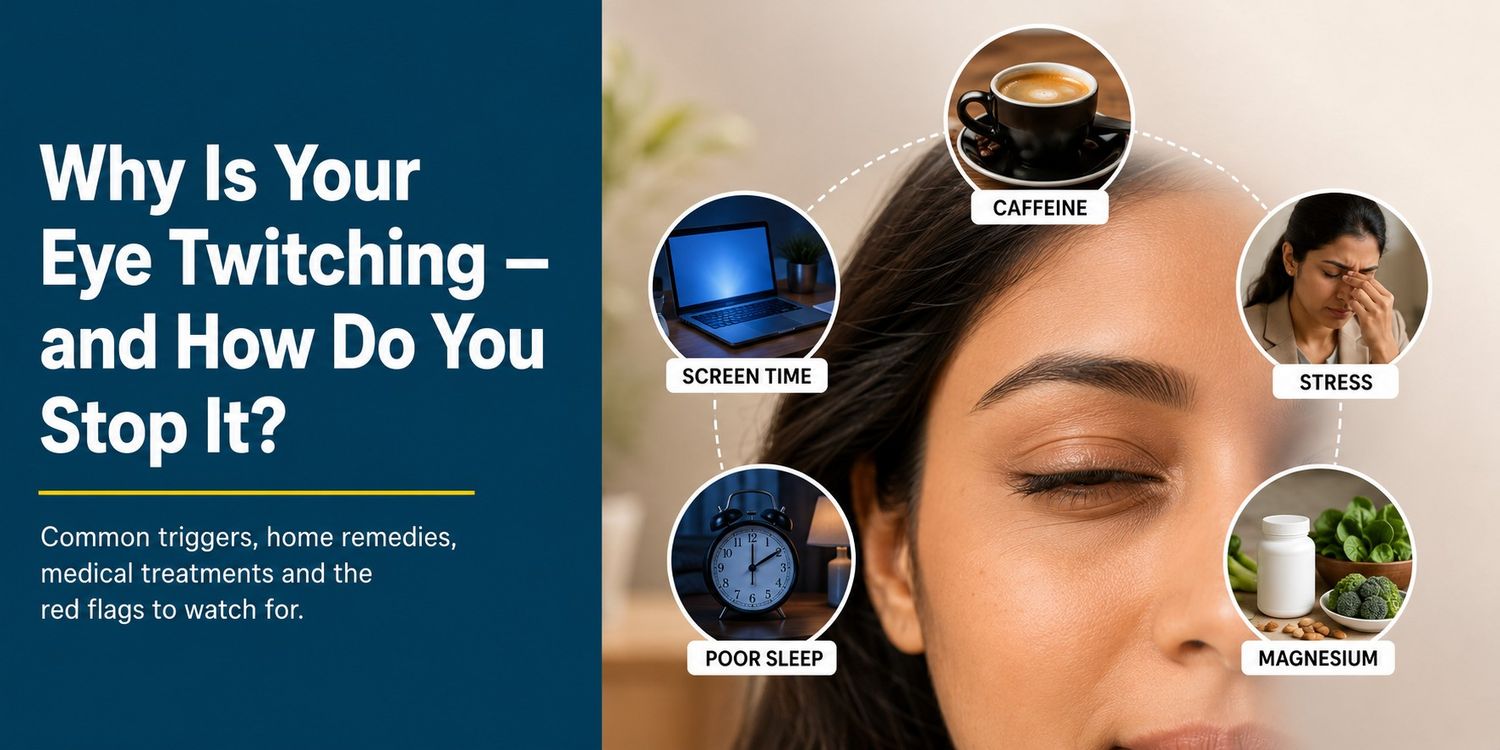
How to Stop Eye Twitching: Causes, Effective Remedies, Medical Treatments & When to See a Doctor
An eye twitch can feel distracting, irritating, and sometimes worrying, especially when it keeps returning. While it often feels like a significant movement to you, most eyelid ripples are actually invisible to others.
What Is Eye Twitching?
Eye twitching is simply an involuntary spasm in the muscles of your eyelid. These tiny contractions are quick and occur without you wanting them to. You might find that the twitch comes and goes throughout the day.
The symptoms of eye twitching normally involve fluttering of the lower or upper eyelid, intermittent eyelid blinking or a tightening feeling briefly around the eye. Vision is in most cases, totally normal, and pain is absent.
What Does Eye Twitching or Blinking Feel Like?
For most people, it feels like a gentle, rhythmic tugging or a faint pulse. Some patients describe it as a light tapping sensation against the eye. While it can feel quite intense to the person experiencing it, the movement is usually very subtle.
At times, the twitch might get worse when there is fatigue or concentration, reading books or working on screens.
Is Eye Twitching Common or a Serious Condition?
It is incredibly common to experience this at least once in your life. Most cases are mild and do not signal a serious underlying health problem. Nevertheless, recurrent or chronic twitching may sometimes represent a neurological or eye disease and hence the need to know when it is necessary to be concerned about twitching in the eye.
Why Is My Eye Twitching?
Common Causes Explained:
- Stress and Anxiety as a Major Eye Twitching Reason: Stress is arguably the most frequent cause of eyelid spasms. When you are under pressure, your nervous system can become overactive, causing muscles to misfire.
- Lack of Sleep and Fatigue: Your eyes rely on rest just as much as the rest of your body does. When you are exhausted, the delicate muscles around the eyes are often the first to show signs of fatigue.
- Excess Caffeine or Alcohol Intake: Stimulants like caffeine and alcohol can make your muscles jumpy, including those in your eyelids. If you have been drinking more coffee, tea, or drinks than usual, this could be the culprit.
- Eye Strain from Screens and Digital Devices: In our modern world, you might think, “Why is my eye twitching often?” It often comes down to digital eye strain as a common factor. Spending hours looking at phones or computers forces your eye muscles to work incredibly hard. This constant effort can lead to fatigue and involuntary movements.
- Dry Eyes, Irritation, or Allergies: When the surface of your eye is dry or irritated, it can cause the lid to twitch. Allergies often release histamines that make the eye area sensitive and prone to twitching.
Additional causes might involve nutritional imbalances, especially low magnesium contribution, some drugs, as well as bright lights and wind.
Once the causes are clear, you might wonder if the location matters.
Why Is My Right or Left Eye Twitching?
Patients often ask if the side of the twitch has a specific meaning. From a medical perspective, the cause is generally the same regardless of which eye is affected.
Right Eye vs Left Eye Twitching Reasons
There is no medical difference between a twitch on the right or left side. While various cultures have myths about left eye twitching meaning, it’s purely physical in a clinical setting. Both eyes respond to the same triggers, like stress, caffeine, or strain.
When twitching does not decrease on both sides but occurs on a regular basis, a health check might be required to span out nerve cases.
Types of Eye Twitching Conditions
While most twitches are harmless, doctors categorise them into three main types. Understanding which one you have helps us determine if you need professional intervention.
- Eyelid Myokymia (Most Common Twitching Eye Reason): Ocular myokymia simply means small muscle spasms in the lid. It is not a disease and does not affect your vision.
- Blepharospasm (Frequent or Forceful Blinking): It involves more forceful blinking and, in some cases, the eyes may close involuntarily. It is a neurological issue that requires a specialist's diagnosis.
- Hemifacial Spasm (One-Sided Facial Twitching): This involves more than just the eyelid; it affects the muscles on one side of the face.
The condition should be properly identified since the therapy to be administered when the person has a twitching eye differs drastically depending on the causative agent.
How to Stop Eye Twitching Naturally?
These steps focus on relaxing the body and resting the eyes.
- Improve Sleep and Eye Rest: Try to get a consistent seven to eight hours of sleep each night. This gives your eye muscles the time they need to recover from the day's strain.
- Reduce Caffeine and Alcohol: Try limiting your intake of coffee, tea, and soda for a few days. Avoiding alcohol can also help your nervous system settle down.
- Manage Stress and Screen Time: Try to find moments of relaxation throughout your day. Short periods of deep breathing can lower your stress levels significantly.
- Use Warm Compresses for Eye Relief: A warm compress is a very soothing method to stop eye twitching. Simply hold a warm, damp cloth over your closed eyes for five minutes
When Medical Treatment for Eye Twitching Is Needed?
If the twitch does not go away after two weeks of home care, it is time to see a specialist for a proper eye twitching treatment. Medicated eye drops may be used to manage underlying dryness or inflammation.In other instances, the physician can prescribe oral drugs or corrective glasses in case eye strain is one of the factors.
When Should You See a Doctor for Eye Twitching?
It is important to know when to worry about eye twitching. It is advisable to see a healthcare provider if:
- The twitch lasts longer than two consecutive weeks.
- Your eyelid closes completely during the spasm.
- The twitching spreads to other parts of your face.
- Your eye appears red, swollen, or has discharge.
- One of your eyelids begins to droop.
Conclusion: How to Stop Eye Twitching
Learning how to stop eye twitching is usually a matter of listening to your body. In most cases, it is a simple reminder to rest, de-stress, and hydrate. Constant eye twitching symptoms, though, cannot be overlooked, and proper treatment for eye twitching can be guaranteed through early assessment and avoidance of complications.
FAQ
How to stop eye twitching during pregnancy?
Prioritise rest and stay very well hydrated. Pregnancy can sometimes affect your mineral levels, so speak with your doctor about your diet.
How long does eye twitching usually last?
Most twitches last only a few hours or days. Occasionally, they can linger for a week or two. If the twitch continues beyond fourteen days, a professional check-up is recommended.
Can stress or anxiety cause eye twitching?
Yes, stress is a primary trigger for eyelid spasms. It causes your nerves to become hyper-sensitive and reactive.
Is eye twitching a serious problem?
Generally, it is a harmless sign that you need more rest. It is very rarely a symptom of a serious neurological disorder. However, persistent or spreading twitches should always be evaluated by a doctor.
How can I stop eye twitching naturally?
The best method to stop eye twitching is rest. Combine better sleep with reduced caffeine and warm compresses.
When should I see a doctor for eye twitching?
Seek medical treatment for eye twitching if the twitch is chronic or affects your vision. If your eyes close involuntarily or your face feels weak, visit a doctor.
How do doctors stop eye twitching?
- Initial management typically involves lubricating or anti-inflammatory eye drops. In more refractory cases, botulinum toxin injections may be considered to temporarily reduce muscle overactivity.
- Treatment for eye twitching is dependent on diagnosis, and doctors would be able to treat eye twitching based on what causes the eye twitching and not the symptom itself.