10 Signs You May Need Cataract Surgery Soon
Written by

Dr. Vivek M Singh
Sr. Cataract & Refractive Surgeon
12+ Years Experience
Published on : 22 April 2026
Cataracts remain the leading cause of reversible blindness worldwide, affecting millions of adults each year. The World Health Organization (WHO) estimates that over 94 million people globally have vision impairment caused by cataracts, with prevalence increasing significantly after age 60.
From a clinical standpoint, cataracts develop when the natural crystalline lens of the eye becomes progressively opaque, disrupting the normal transmission and focusing of light onto the retina. Early cataracts may cause only mild visual changes, but as the clouding progresses, vision can deteriorate enough to interfere with daily activities.
Modern cataract surgery is among the most successful surgical procedures in medicine, with success rates exceeding 95–98% in uncomplicated cases according to the American Academy of Ophthalmology.
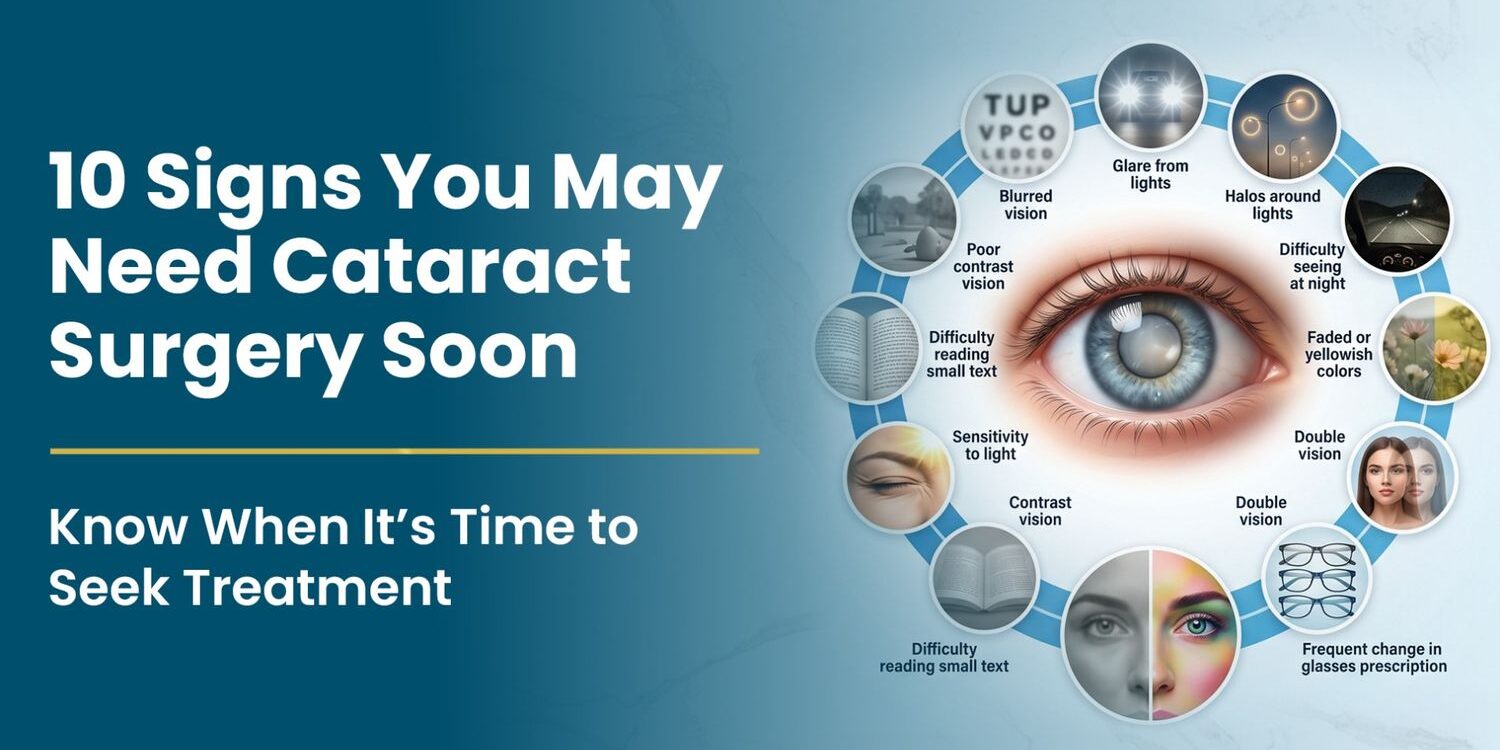
10 Signs You May Need Cataract Surgery Soon
1. Persistent Blurry or Cloudy Vision
Objects may appear hazy, dim, or less detailed even with updated glasses.
2. Increased Sensitivity to Light
Patients may experience discomfort in bright sunlight or glare from indoor lighting.
3. Difficulty Seeing at Night
Reduced contrast sensitivity can make night driving unsafe.
4. Halos Around Lights
Streetlights or headlights may appear surrounded by halos or starbursts.
5. Frequent Changes in Eyeglass Prescription
Frequent prescription changes with minimal improvement can indicate cataract progression.
6. Colors Appear Faded or Yellow
A yellow tint in the lens can cause colors to appear dull or washed out.
7. Double Vision in One Eye
Light distortion from the cloudy lens may produce monocular double vision.
8. Trouble Reading Small Print
Patients often require brighter lighting or magnifiers.
9. Difficulty Driving
Glare sensitivity and poor contrast can increase driving risks.
10. Vision Problems Affect Daily Life
Difficulty performing everyday tasks such as reading, cooking, or recognizing faces.
Patients should discuss the following with their ophthalmologist:
Cataracts are a common part of aging, but modern surgical techniques make them highly treatable. Recognizing early warning signs and seeking professional eye care can help restore vision and improve quality of life.
What is glaucoma, and how does it affect the eyes?
Glaucoma is optic nerve damage, often due to high eye pressure. It gradually reduces vision.
Can glaucoma occur without symptoms?
Yes. Many people do not notice early glaucoma.
What are the early symptoms of glaucoma?
Peripheral vision loss is often the earliest symptom of glaucoma.
What causes glaucoma to develop?
Poor drainage of eye fluid, genetics, age and other health issues can cause glaucoma.
How is eye pressure related to glaucoma?
High eye pressure contributes to optic nerve damage.
What is normal eye pressure, and when is it considered high?
Normal range is about 10–21 mmHg. Higher than this may be considered elevated.
What are the different types of glaucoma?
Open angle, normal‑tension, secondary, congenital and pigmentary are the main types.
Can glaucoma be prevented or slowed down?
Regular check-ups and the management of risk factors can slow the progression of glaucoma.
What are the treatment options for glaucoma?
Medication, laser therapy and surgery are primary treatments.
Does glaucoma surgery cure the condition?
Surgery controls high eye pressure but does not restore lost vision.