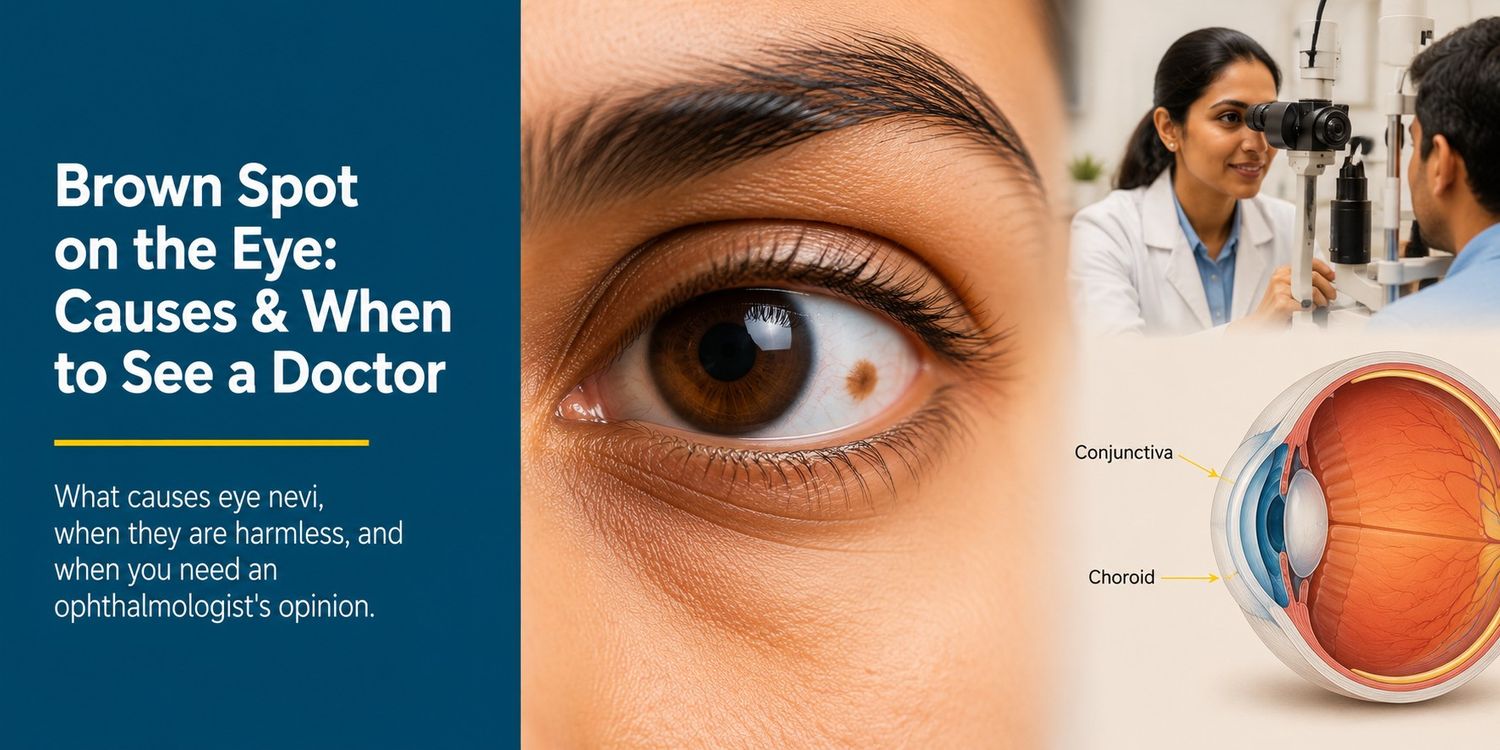
Brown Spot on Eye: Causes, Symptoms & Treatment
A brown spot on the eye is considered serious and, in many cases, alarming, especially if you notice them yourself or if the spots are identified during a routine eye examination. A brown spot on the eye can develop in different parts of the eye, including the white portion of the eye, also known as the sclera; the colored iris; and the retina. Knowing the causes, symptoms, and treatments of brown spots on the eye is vital for maintaining excellent eye health.
Protect Your Vision – Get a Trusted Second Opinion Today
What Is a Brown Spot on the Eye?
A brown spot on the eye refers to a colored spot that has formed due to the accumulation of melanin in the eye on the white part of the eye (sclera), the colored part of the eye (iris), or the surface layer of the eye (conjunctiva).
Other names for the condition are the following:
- Eye freckle
- Ocular nevus
- Pigmented eye lesion
Most brown spots on the eyeball are harmless and do not interfere with vision. Some people are born with them, while others develop them later in life. However, if the spot changes in size, shape, or colour, it is critical to consult an eye specialist.
Causes of Brown Spots on the Eye
There are many reasons for the formation of a brown spot on the eye.
- Natural Melanin and Genetics : You might have naturally high levels of melanin. If there is a history of eye freckles in your family, then you might end up having one too.
- Sun Exposure: Excessive exposure to the sun can lead to an increase in melanin production and result in brown spots on the eyes.
- Ageing: With time and ageing, brown spots can slowly start to form on the eyes.
- Inflammation or Medications: Eye infections and certain medications can cause brown spots on the eyes.
- Rare Abnormal Cell Growth :A brown spot in the eye can be caused by ocular melanoma, a type of eye cancer.
Symptoms of a Brown Spot on the Eye
Understanding the symptoms of a brown spot on the eye is important for identifying any underlying condition and seeking timely medical advice. While many symptoms or changes are harmless, some may indicate the need for an eye examination.
ally the same regardless of which eye is affected.
Normal Signs (Usually Harmless)
- 1. Small and flat brown spot
- 2. Absence of pain
- 3. Vision is not affected
- 4. Lesion has not changed
Warning Symptoms
- 1. Increase in size of the lesion
- 2. Alteration in colour and/or irregular borders
- 3. Raised and/or thickening of the lesion
- 4. Redness, itching, and/or blurred vision
- 5. Bleeding spots
The importance of regular eye check-ups is particularly significant for individuals with a brown spot on the eye, as only a trained ophthalmologist can, through clinical examination and imaging, determine whether the spot is a harmless conjunctival nevus or an early sign of dangerous ocular melanoma.
Is a Brown Spot on the Eye Dangerous?
While it is natural to wonder whether a brown spot on the eye is dangerous, in most cases it is a benign conjunctival nevus that poses no immediate threat, similar to a mole on the skin. However, in a small percentage of people, it could be a symptom of melanoma of the eye, especially if it enlarges, changes colour, or interferes with vision. It is always a good idea to seek a doctor’s periodic evaluation of a brown spot on the eyeball.
Treatment Options for Brown Spots on the Eye
The approach to brown-spot-on-eye treatment depends entirely on the diagnosis. Treatment may not be necessary for benign lesions, but careful observation is essential.
Observation and Monitoring
For stable conjunctival nevi or harmless pigmentation, ophthalmologists typically recommend periodic observation. Photographic documentation helps track any changes over time.
Surgical Removal
If the lesion exhibits suspicious features or continues to grow, it is recommended that it be surgically removed. Histopathology is then performed on the excised tissue to confirm whether it is benign or malignant.
Cryotherapy
In some instances, cryotherapy may be employed in conjunction with surgery in order to prevent the recurrence of abnormal pigmented cells.
Advanced Oncology Management
In the case of a diagnosis of conjunctival melanoma, specialised ocular oncology management may be necessary. This may include surgery and cryotherapy, depending on the lesion’s condition.
Early diagnosis ensures that the necessary treatment is initiated before the condition becomes complicated.
Brown Spot vs Ocular Melanoma
There are cells in the eye that produce pigment, and their clustering can result in a brown spot on the eyeball, which may be a harmless conjunctival nevus, similar to a freckle on the skin. However, in rare cases, the same cells may also be cancerous and may develop into ocular melanoma, a dangerous cancer that may metastasise to other parts of the body without symptoms. A spot on the eye may be examined by an eye specialist because the two conditions can appear identical at first glance.
Characteristics | Brown Spot (Conjunctival Nevus) | Ocular Melanoma (Malignant) |
Nature | Benign pigmented lesion | Malignant tumor (cancerous) Not Sure About Your Diagnosis? Book Your Appointment Now! |
Location | Conjunctiva or iris surface | Uvea, choroid, iris, ciliary body |
Appearance | Flat, well-defined, stable colour | Raised, irregular, changing colour |
Symptoms | Usually none | Vision loss, floaters, eye pain |
Growth | Slow or no change over the years | Grows rapidly, can spread (metastasis) |
Risk level | Low, like a skin mole | High—requires urgent treatment |
Treatment | Monitor with regular eye exams | Surgery, radiation, or enucleation |
The critical importance of understanding the distinction between a eye freckle vs ocular melanoma cannot be overstated, as whereas a brown spot is a benign, non-changing pigmented lesion that only needs to be periodically checked, melanoma is a potentially fatal tumor that grows rapidly, interferes with vision, and has the capability of spreading to vital organs such as the liver, making professional eye evaluation the only reliable method to distinguish between the two.
When to See a Doctor?
If you notice a brown spot on your eye, it is best that you consult your doctor or eye care team as soon as possible. If the brown spot is an eye freckle, the eye care team will closely monitor it. While it is extremely rare for a brown spot to be ocular melanoma, an eye freckle can become cancerous in the future.
If the eye freckle is diagnosed as cancerous, your doctor can help you develop a plan of action.
Never underestimate the importance of routine eye check-ups if you have a brown spot on the eye, because periodic monitoring allows the ophthalmologist to track any changes in size, shape, or colour over time, ensuring early intervention and preventing potentially life-threatening complications.
Still Have Questions? Speak to Our Experts Instantly!
FAQ
Can a brown spot on the eye go away?
In most cases, a brown spot or conjunctival nevus on the eye will not go away by itself, but instead will remain the same or slowly change over time. In a few cases, the spot may even fade slightly, but it is uncommon for it to go away completely, and even if it changes noticeably, it should be checked by a doctor.
Can it affect vision?
A simple brown spot, also known as a conjunctival nevus, is usually located on the surface of the eye and does not usually cause any problems with vision because it is located on the conjunctiva. However, if it grows, changes position, or is associated with ocular melanoma, it can cause vision problems, including blurred vision and even vision loss.
How is it treated?
A benign brown spot on the eye needs no treatment, just periodic monitoring with routine eye exams to watch for any changes in size, shape, or colour. If it shows signs of malignancy (ocular melanoma), treatment may include surgical removal, radiation therapy, laser treatment, or, in severe cases, enucleation (removal of the eye).