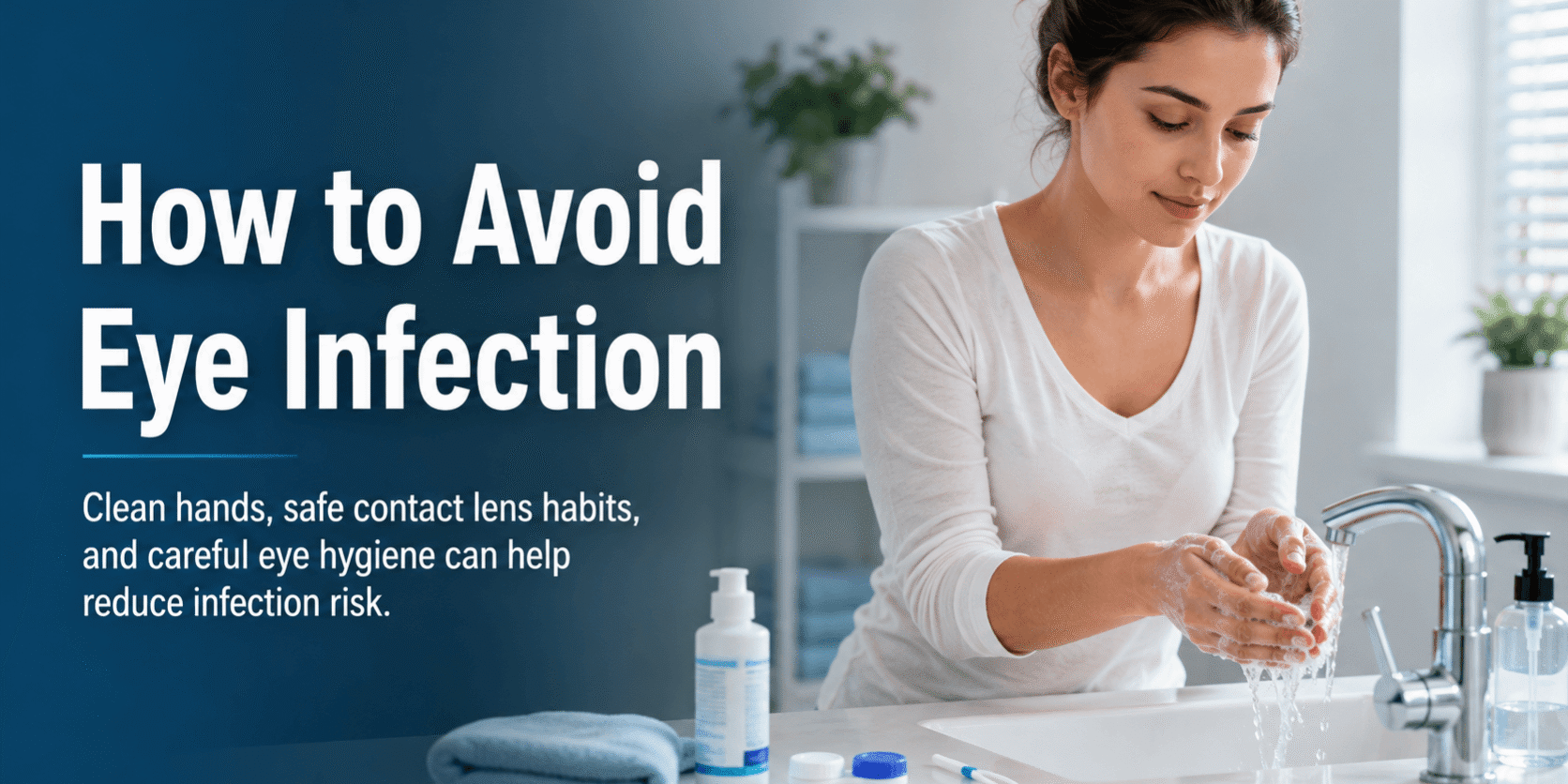
How to Avoid Eye Infection: Simple Tips to Protect Your Eyes
Eye infections can cause redness, irritation, watering, discharge, swelling, and discomfort. Some infections, such as viral or bacterial conjunctivitis, can also spread easily from person to person. The good news is that several simple hygiene and eye-care habits can help reduce your risk.
If you want to know how to avoid eye infection, start with clean hands, good contact lens hygiene, and avoiding unnecessary contact with your eyes.
How to Avoid Eye Infection
1. Wash Your Hands Regularly
Your hands can carry bacteria and viruses that may enter the eyes when you touch or rub them. Wash your hands thoroughly with soap and water, particularly before touching your eyes, applying eye drops, or handling contact lenses.
Avoid touching or rubbing your eyes with unwashed hands.
2. Follow Good Contact Lens Hygiene
Contact lens wearers need to take extra care because improper lens use can increase the risk of corneal infections.
Follow these precautions:
- Wash and dry your hands before handling lenses.
- Clean and store lenses according to your eye care professional’s instructions.
- Never clean contact lenses with tap water.
- Do not sleep in contact lenses unless specifically advised by your eye doctor.
- Remove contact lenses before swimming, showering, or using a hot tub.
- Replace lenses and storage cases as recommended.
Never use contact lenses that have not been properly prescribed and fitted by a qualified eye care professional.
3. Do Not Share Personal Eye-Care Items
Sharing items that come into contact with the eyes or face can increase the risk of spreading infection. Avoid sharing:
- Towels and washcloths
- Eye makeup and makeup brushes
- Eye drops
- Contact lenses and lens cases
- Eyeglasses
These precautions are especially important when someone in your household has conjunctivitis or another contagious eye infection.
4. Keep Eye Makeup Clean
Contaminated cosmetics can contribute to eye infections. Remove eye makeup before bed and avoid using products that are old, contaminated, or that irritate your eyes.
Do not share mascara, eyeliner, or other eye cosmetics with other people.
5. Avoid Touching or Rubbing Your Eyes
Rubbing your eyes with dirty hands can transfer germs to the eye. It can also irritate the eye’s surface and potentially worsen an existing problem.
If something gets into your eye, avoid rubbing it. If irritation continues or you develop pain, redness, light sensitivity, or blurred vision, seek advice from an eye specialist.
6. Protect Your Eyes From Injury
Eye injuries can damage the eye’s protective surface and increase the risk of infection. Wear appropriate protective eyewear during activities where dust, chemicals, flying particles, or other objects could enter the eye.
Protective eyewear is particularly important during certain sports, industrial work, construction, and home improvement activities.
7. Take Extra Care Around Someone With an Eye Infection
If someone at home has infectious conjunctivitis, wash your hands frequently and avoid sharing towels, bedding, cosmetics, eye drops, and other personal items.
Clean towels, pillowcases, and washcloths regularly, and avoid touching your eyes after contact with potentially contaminated items.
When to See an Eye Specialist
Not every red or irritated eye is caused by an infection. However, you should seek prompt medical attention if you develop:
- Significant eye pain
- Blurred or reduced vision
- Strong sensitivity to light
- Intense eye redness
- Significant discharge or swelling
- Symptoms that are getting worse or not improving
- Eye symptoms while wearing contact lenses
Contact lens-related corneal infections can progress quickly and may threaten vision, so contact lens wearers with concerning symptoms should seek prompt evaluation.
Key Takeaways
- Wash your hands before touching your eyes or handling contact lenses.
- Avoid rubbing your eyes with unwashed hands.
- Follow proper contact lens cleaning, replacement, and wearing instructions.
- Never use tap water to clean contact lenses.
- Do not share towels, eye makeup, eye drops, contact lenses, or lens cases.
- Seek professional eye care for pain, vision changes, severe redness, or worsening symptoms.
Conclusion
Knowing how to avoid eye infection starts with simple daily habits. Regular handwashing, careful contact lens use, clean eye-care products, and avoiding shared personal items can help reduce exposure to germs and lower the risk of infection.
If you develop persistent redness, pain, discharge, light sensitivity, or changes in vision, do not rely on home remedies alone. A qualified ophthalmologist can examine your eyes, determine the likely cause of your symptoms, and recommend appropriate care.