How to Clean Dry Eyes: Simple Steps for Relief and Eye Comfort
If your eyes feel dry, gritty, burning, or irritated, you may wonder how to clean dry eyes safely. Dry eyes are usually not caused by dirt that needs to be washed away. Instead, they occur when your eyes do not produce enough tears or when the tears do not work properly to keep the eye surface moist.
Gentle eyelid cleaning can be helpful, particularly when dry eye is associated with crusting, blocked oil glands, or blepharitis. However, it is important to clean the eyelids and eyelashes rather than repeatedly washing or rubbing the eye surface.
How to Clean Dry Eyes Safely
1. Wash your hands first.
Always wash your hands thoroughly with soap and water before touching your eyes or applying eye drops. This reduces the chance of transferring dirt or germs to the eye.
2. Use a warm compress.
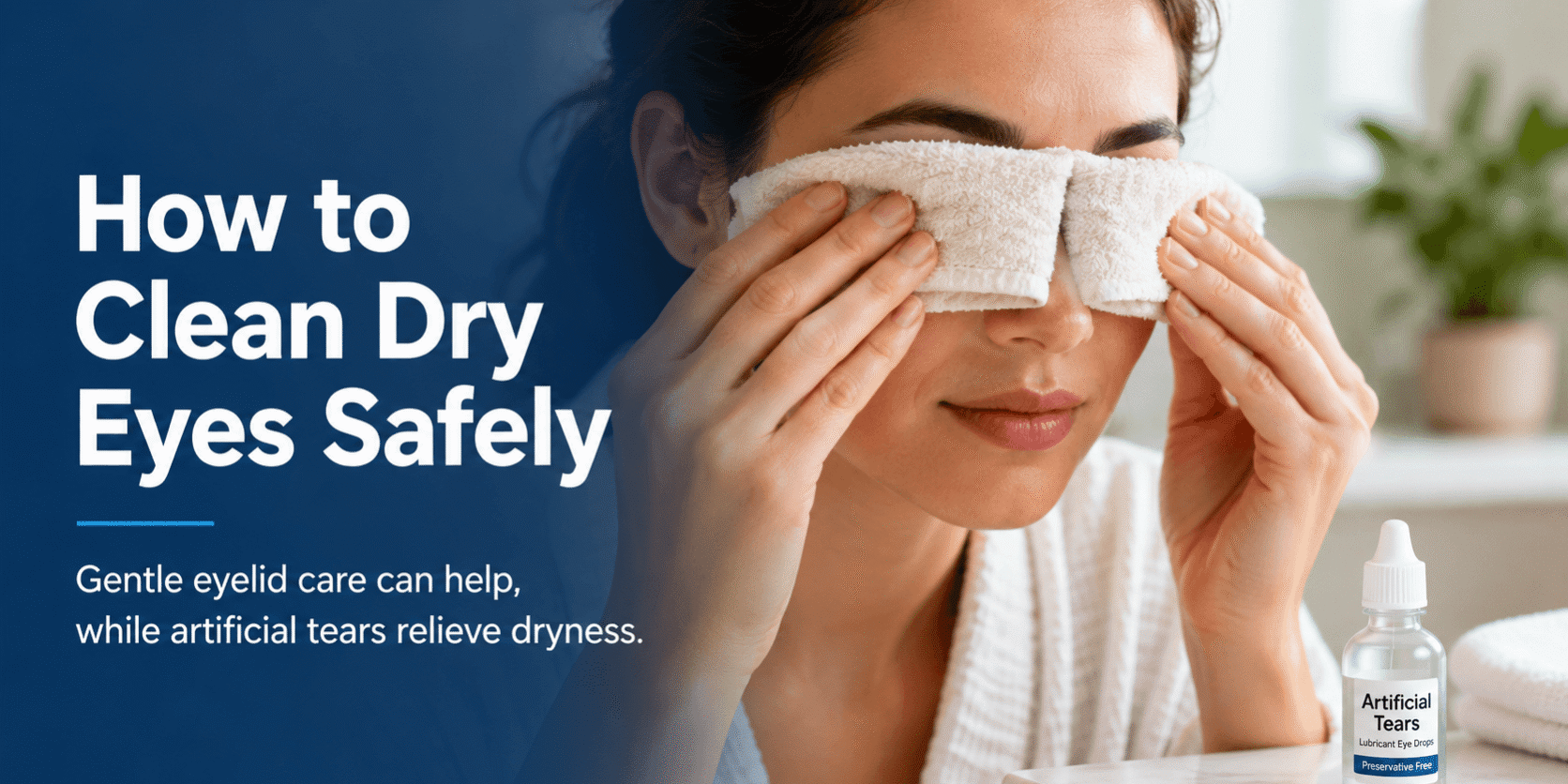
Place a clean, soft washcloth soaked in comfortably warm water over your closed eyes for several minutes. A warm compress can help loosen crusts around the eyelashes and may help soften oils in the eyelid glands.
The water should be warm, not hot. Avoid applying excessive heat because the delicate skin around the eyes can be easily irritated.
3. Gently clean the eyelids and eyelashes.
After using the warm compress, gently clean the base of your eyelashes and the edges of your eyelids with a clean, soft cloth or an eye-safe eyelid cleanser recommended by your eye doctor.
Do not scrub aggressively or press hard on your eyes. If you have significant crusting or eyelid inflammation, an ophthalmologist can recommend an appropriate eyelid hygiene routine. Regular eyelid cleaning is an important part of managing conditions such as blepharitis.
4. Rinse gently when needed.
If you use a cleanser around the eyelids, follow the product instructions carefully and avoid getting any product directly into the eye unless it is specifically designed for ophthalmic use.
Never use household soaps, disinfectants, shampoos, or other non-eye products directly inside your eyes.
5. Use artificial tears for dryness.
Cleaning your eyelids does not replace the tears your eyes need. Artificial tears can help lubricate the eye surface and temporarily relieve dry eye symptoms. If you need lubricating drops frequently, preservative-free artificial tears may be preferable for some people.
When applying eye drops, wash your hands first and avoid allowing the bottle tip to touch your eye or eyelashes.
What Should You Avoid When Cleaning Dry Eyes?
Avoid rubbing your eyes, especially when they feel itchy or irritated. Frequent rubbing can further irritate the eye surface.
You should also avoid:
- Using very hot water or heating devices directly on your eyes
- Scrubbing the eyelids forcefully
- Putting soap or homemade solutions directly into the eyes
- Sharing towels or eye-cleaning materials
- Using someone else’s eye drops
- Using redness-relieving drops repeatedly without medical advice
If something such as dust or another foreign particle actually enters your eye, do not rub it. Rinsing the eye with clean water may help remove loose particles. Persistent pain, vision changes, or a sensation that something remains in the eye should be evaluated by an eye specialist.
Can Cleaning Your Eyes Cure Dry Eye?
Cleaning the eyelids can improve eyelid hygiene and may help when eyelid inflammation or blocked oil glands contribute to dry eye. However, it does not cure every type of dry eye.
Dry eye can have many causes, including reduced tear production, excessive tear evaporation, certain medications, medical conditions, and problems affecting the eyelid oil glands.
An ophthalmologist can examine your eyes and determine whether you have dry eye and what may be contributing to your symptoms. Tests may include evaluation of the tear film and measurements of tear production.
When Should You See an Eye Specialist?
See an ophthalmologist if your dry eye symptoms are persistent, severe, or affecting your daily activities or vision.
You should seek prompt professional evaluation if you develop:
- Significant eye pain
- Sudden or persistent changes in vision
- Marked redness or swelling
- Light sensitivity
- Significant discharge
- Symptoms that do not improve with basic eye care
These symptoms may indicate a problem other than simple dry eye and should not be self-treated without appropriate evaluation.
Key Takeaways
- How to clean dry eyes usually means gently cleaning the eyelids and eyelashes, not repeatedly washing the eye itself.
- A warm compress can help loosen eyelid crusts and support eyelid hygiene.
- Avoid rubbing your eyes or using harsh products around them.
- Artificial tears can provide temporary relief from dry eye symptoms.
- Persistent or severe symptoms should be evaluated by an ophthalmologist.
- The right treatment depends on the underlying cause of dry eye.
Conclusion
Knowing how to clean dry eyes can help you maintain healthy eyelids and reduce irritation, particularly when eyelid debris or inflammation contributes to your symptoms. Gentle warm compresses, careful eyelid cleaning, and appropriate artificial tears may provide relief for some people.
However, dry eye has several possible causes, so cleaning alone may not address the underlying problem. If symptoms continue, worsen, or affect your vision, consult a qualified ophthalmologist for an eye examination and personalized treatment.