Overview
Darkness under the eyes is very common and, in most cases, not a sign of a serious medical concern. Understanding the underlying causes is essential for selecting the most appropriate management approach, whether lifestyle modification, cosmetic care, or medical treatment.
If you frequently wonder why dark circles appear or how to reduce them, identifying the contributing factors is the first and most important step toward effective management.
What Are Dark Circles Under the Eyes?
Dark circles refer to persistent discolouration or shadowing beneath the lower eyelids. In hereditary cases, lifestyle measures alone may offer limited improvement. Targeted under-eye-pigmentation treatments, such as depigmenting therapies or medical aesthetic procedures, may be considered.
What Causes Dark Circles Under the Eyes?
Genetics and Skin Type
Some individuals naturally have thinner under-eye skin or higher melanin levels, leading to persistent under-eye-pigmentation and hereditary dark circles. If your family members have a history of dark circles, you might notice them at a young age, making you wonder, “Why do I have dark circles?”, even though you sleep well and take care of your skin.
Lack of Sleep, Fatigue, and Eye Strain
Poor sleep is one of the most common causes of dark circles. Sleep deprivation dilates blood vessels under thin skin, producing bluish discolouration typical of vascular dark circles. There are several ways to reduce dark circles caused by late nights or screen time. Adequate rest, hydration, and an appropriate eye cream for dark circles can significantly improve mild cases.
Ageing and Volume Loss
With ageing, collagen and fat beneath the eyes decline, creating hollows that cast shadows and contribute to structural dark circles. These are not purely pigment-related but often require advanced under-eye dark-circle treatments, such as fillers or PRP, rather than simple home remedies.
Sun Exposure and Hyperpigmentation
Exposure to ultraviolet triggers the production of melanin. This causes pigmentation under the eyes and leads to brownish circles. Regular sun protection prevents dark circle of the eyes in people who are at high risk of hyperpigmentation
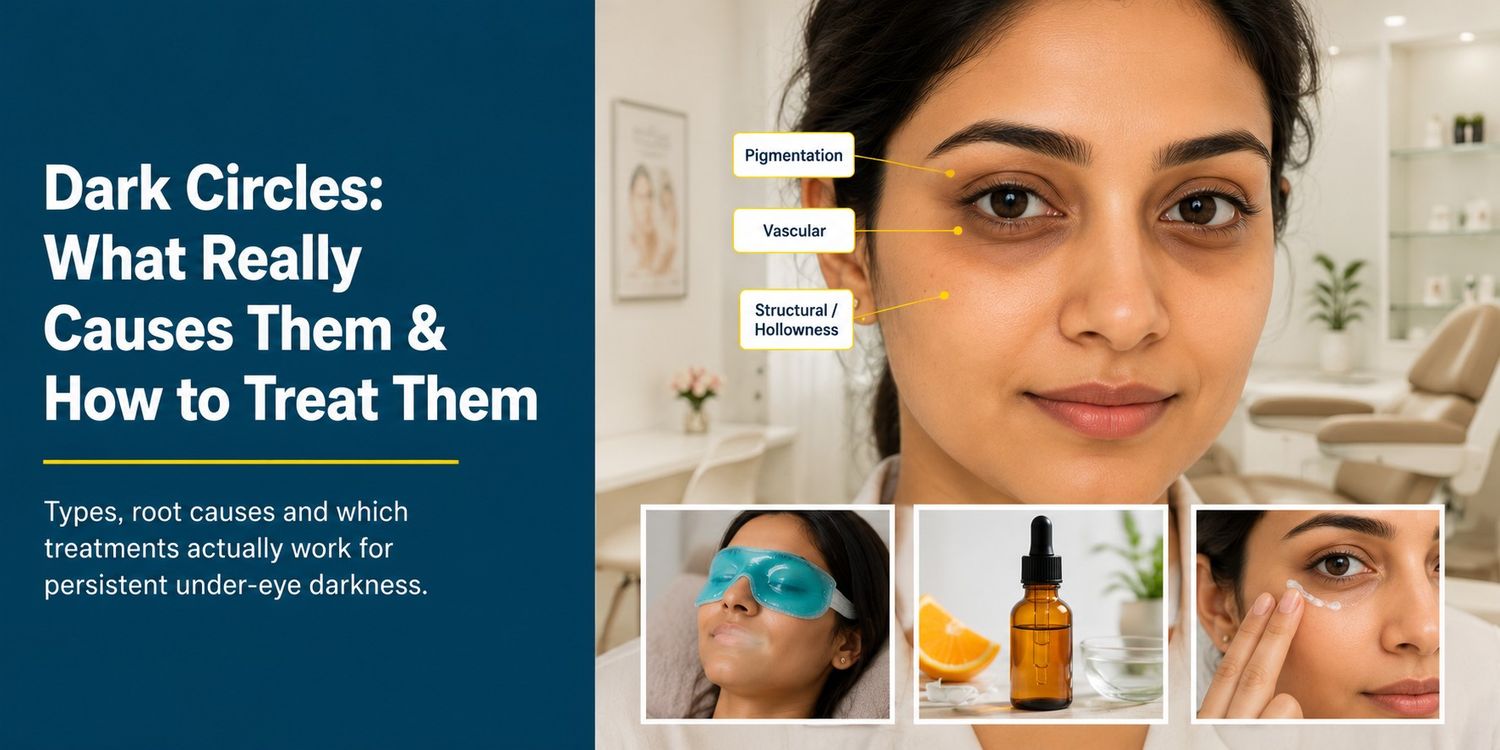
Types of Dark Circles Under the Eyes
Identifying the type helps determine the most effective dark circles remedy.
Pigmented Dark Circles
These appear as brown or dark grey discolouration due to excess melanin production. They can and frequently occur in a family and are more evident in darker skin complexion. They often run in families and are more noticeable in darker skin tones. Manage them with consistent skincare, targeted under-eye self-care routines, or expert-prescribed pigmentation treatments when needed.
Vascular (Bluish or Purple) Dark Circles
These show up as blue or purple hues when visible blood vessels shine through thin under-eye skin. Fatigue, dehydration, and allergies often worsen them. Improve them with better sleep, proper hydration, circulation-boosting habits, and caffeine-infused under-eye creams. Persistent cases may need professional medical intervention.
Structural or Hollow Under-Eye Circles
The hollows under the eyes can create shadows that make the area look darker. These structural dark circles often benefit most from professional treatments.
How to Reduce Dark Circles Under Eyes Naturally
Dark Circles Removal Tips You Can Do at Home
To keep under-eye skin healthy and reduce dark circles, get enough sleep, stay hydrated, use cold compresses, take screen breaks, apply gentle skincare, and protect the area from direct sunlight.
Effective Home Remedies for Dark Circles
To reduce mild dark circles, simple at-home remedies can make a noticeable difference, supporting healthier under-eye skin.
Cold Compress Therapy
Cold compresses are a tried-and-true way to reduce puffiness and improve circulation under the eyes. They can also temporarily tighten the skin and make dark circles less noticeable.
- Apply a cold cloth, ice pack, or chilled spoon for 10 minutes.
- Use once or twice daily for best results.
Cucumber, Potato, or Tea Bags
Cucumber and potato slices soothe the skin and provide mild cooling effects. Tea bags contain antioxidants that reduce puffiness and refresh tired eyes.
- Chill slices or used tea bags before applying.
- Place gently over the eyes for 10–15 minutes.
Skincare Solutions for Eye Dark Circles Removal
Alongside home remedies, following a consistent skincare routine can help make dark circles less noticeable over time and prevent them from worsening.
Sunscreen and Under-Eye Protection
Put on a pair of sunglasses to protect your eyes from the UV rays. Sunlight exposure should be avoided, especially during peak periods.
- Apply a gentle, mineral sunscreen around the eyes.
- Wear sunglasses to shield the area from UV rays.
- Avoid prolonged sun exposure, especially during peak hours.
Ingredients That Help Reduce Dark Circles
Vitamin C, Retinol, Hyaluronic Acid, and Caffeine could be used as eye creams to brighten, hydrate, and firm the under-eye area, reduce puffiness, and help correct the appearance of dark circles.
Medical Treatments for Under Eye Dark Circles
When home remedies or skincare are not enough, medical treatment for dark circles offers effective solutions.
Chemical Peels for Pigmentation
Chemical peels target excess melanin, reducing the dark circles and improving pigmentation under eyes.
Laser Treatment for Dark Circles
Laser therapy helps remove dark circles under the eyes by targeting both pigmentation and visible blood vessels. It also stimulates collagen production, thickening thin under-eye skin.
PRP Therapy for Under-Eye Rejuvenation
Platelet-rich plasma improves skin quality, thickness, and volume, making it a valuable medical treatment for dark circles, particularly structural types.
How to Prevent Dark Circles from Coming Back?
Maintain good sleep, stay hydrated, protect eyes from the sun, limit screen time, manage allergies, and follow a gentle daily under-eye skincare routine.
When Should You See an Eye Specialist or Dermatologist?
You should consult a specialist if:
- Dark circles worsen suddenly or appear only under one eye.
- Swelling, pain, or redness develops.
Conclusion
Dark circles are very common and, most of the time, manageable. The key to treating under-eye dark circles is identifying the cause, whether pigmentation, visible blood vessels, structural shadowing, or lifestyle factors.
Even though most individuals can get better with natural methods for removing dark circles, some persistent cases may require specific dermatological treatments. The tailored solution would deliver the best results for long-term removal of dark circles under the eyes and healthier-looking skin.