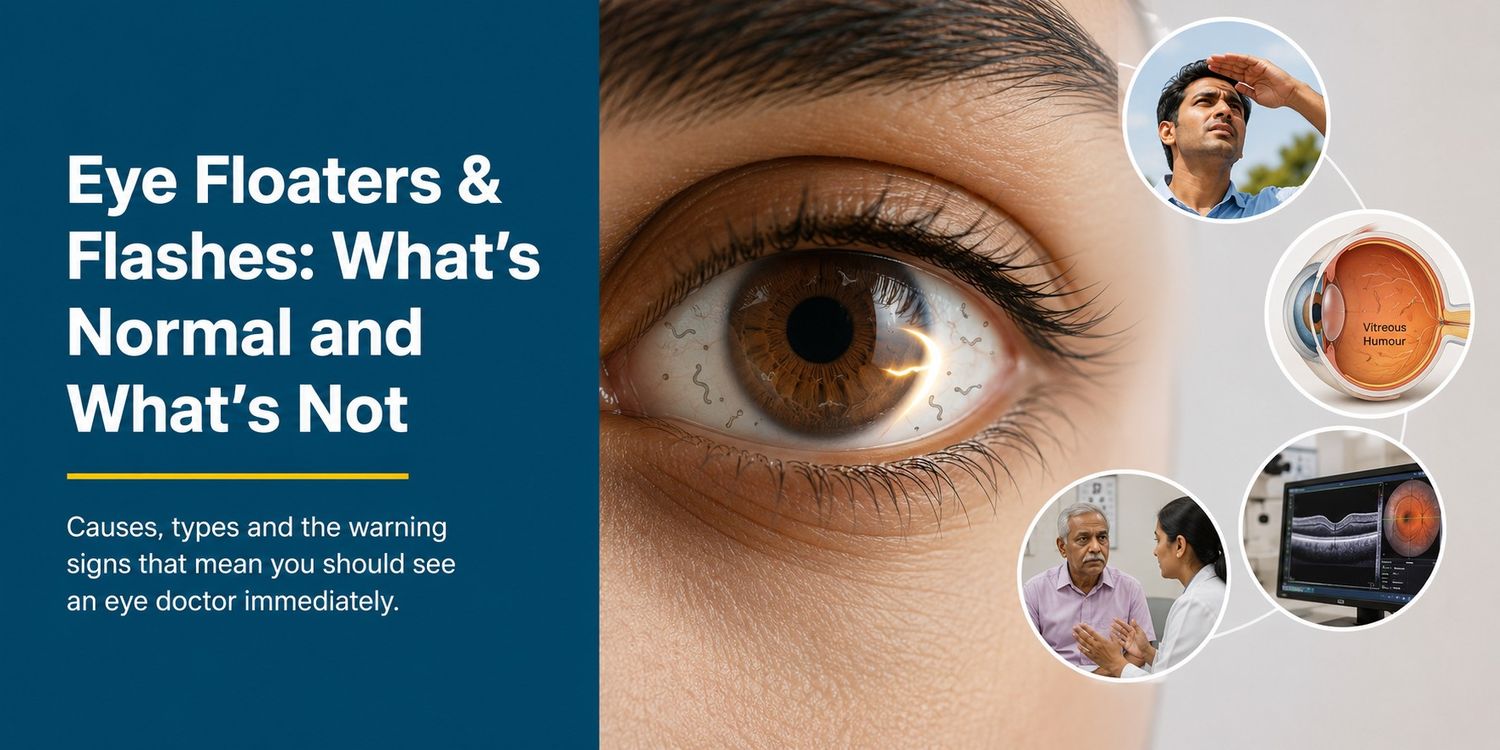
Eye Floaters & Flashes: When Are They Dangerous and What Can You Do?
Eye floaters and eye flashes are among the most common vision problems that almost everyone experiences. Eye floaters are spots and lines that appear in your field of vision. Eye flashes are spots of light in your field of vision. Eye floaters and eye flashes are harmless but can indicate an underlying health issue. Understanding their causes, types, and warning signs helps you know when to seek medical attention.
What Are Eye Floaters? Understanding Those Drifting Shapes
Eye floaters are specks that move across your field of vision, especially when looking at a bright object, such as a wall or the sky. They move when your eyes move and tend to dart away when you try to look at them. This is caused by a gel-like substance found in the eye called vitreous. While most eye floaters are harmless, a sudden onset of many floaters in one eye is a medical emergency requiring prompt attention.
How to Wear Contact Lenses Correctly: Step-by-Step Guide
Learning how to use contact lenses correctly is a fundamental requirement for all new and experienced contact lens wearers to ensure that they maintain eye health. The proper approach helps ensure your eyes are comfortable with the lenses, without irritation or infection. The following are the steps to wear a contact lens correctly:
Types of Eye Floaters: What Do They Look Like?
Eye floaters get their name from the fact that they float inside your eyes. They seem to move away when you try to focus on them. There are several different forms that floaters take, and the eye floater types are
- Black or grey dots
- Squiggly or wavy lines
- Threadlike strands, which may be knobby and almost see-through
- Cobwebs
- Rings
Once you develop eye floaters, they will not disappear, but you will become less aware of them over time.
Fibrous Strand Floaters
Fibrous strand floaters have a thread-like or cobweb appearance, and they float in the front of the eyes as strands of cobwebs. Fibrous strand floaters result from the clumping of collagen in the vitreous, which occurs commonly in old age.
Cobweb and Cloud-Like Floaters
Cobweb and cloud floaters have a hazy, web-like, or shadowy appearance. Cobweb and cloud floaters result from vitreous degeneration, which involves clumping of proteins in the eye’s gel.
Weiss Ring Floaters
What Causes Eye Floaters? Common Reasons Explained
The most common cause of eye floaters is age. For many people, eye floaters are a natural part of the ageing process. Eye floaters may be annoying at first; however, they will become less noticeable over time. You may think they have disappeared, but they are permanent. Below are some of the most common causes for eye floaters:
- The natural ageing process
- Inflammation
- Bleeding
- Tears in the retina, and
- Changes after eye surgery or laser procedures
Ageing and Posterior Vitreous Detachment (PVD
As we get older, the vitreous becomes thinner and pulls away from the retina, which is the most common reason for eye floaters. This normal alteration, known as posterior vitreous detachment (PVD), is the most common cause of floaters after age 50. Many patients observe a few additional floaters as PVD settles over the course of several days or weeks.
Myopia, Diabetes and Other Risk Factors
Myopia, diabetes mellitus, and other conditions can increase the likelihood of getting eye floaters. High myopia stretches the retina and vitreous, and diabetes can cause vitreous alterations or haemorrhage. Age, eye damage, and inflammation can lead to vitreous degeneration and floaters.
What Are Eye Flashes and Flashing Lights in Eyes?
Eye flashes might appear as flashing lights in the eyes or lightning streaks in your field of vision. Some people describe them as seeing “stars” after being banged on the head. You may see flashing lights in your eyes on and off for weeks or even months. Eye flashes occur when the vitreous scratches or pulls on your retina. Eyelashes become more prominent as people get older.
Eye Floaters Symptoms: How to Recognise Them
Eye floaters can be identified as small, moving spots, threads, rings, or cobweb-like shadows in the field of vision. The symptoms of eye floaters may be:
- Small shapes that are seen in your line of vision that look like dark specks or a knobby, transparent string of floating material.
- Spots that move when your eyes move, but it is impossible to look at the spot as it moves quickly out of your line of vision.
- Spots that are most visible when looking at a plain, bright object, such as the blue sky or a white wall.
- Small shapes that eventually settle down and move out of your line of vision.
Eye Floaters Treatment: Medical and Surgical Options
The most common treatment for eye floaters is observation without treatment. Eye floaters can be irritating and bothersome, but they are usually harmless. They normally move out of your field of vision, and you stop recognising them over time. However, there are instances when they could be a sign of a serious condition. The following are instances when you should call an ophthalmologist immediately:
- If you see a lot of floaters
- If you see a lot of flashes
- If you see a shadow in your peripheral (side) vision
- If you see a grey curtain over part of your vision
All of these floaters and eye flashes could be a sign of a torn or detached retina at the back of your eye. This is a serious condition that needs treatment.
Laser Vitreolysis
Vitrectomy is one treatment for eye floaters that removes the vitreous gel (including the floaters). It replaces it with a clear solution, which can provide the most dependable relief in severe, life-threatening conditions. Though effective, a vitrectomy may not always eliminate eye floaters. They can potentially form again, especially if the surgery causes any bleeding or damage.
Vitrectomy for Persistent Floaters
Eye floaters treatment includes laser vitreolysis, in which a laser is used to break up a large floater into smaller, less bothersome pieces. The best results are achieved when the floater is far from the lens and retina and has been stable for some months. The laser may improve symptoms but may not completely relieve them. Possible disadvantages include inflammation, an increase in floaters, or a sudden rise in pressure.
How to Get Rid of Eye Floaters Naturally: Do Home Remedies Work?
Natural changes in the vitreous usually cause eye floaters, and there is no proven way to totally get rid of eye floaters using home remedies. Drinking plenty of water, consuming a healthy diet rich in antioxidants, and avoiding eye strain are some measures that may serve as a natural remedy for eye floaters. Eye floaters tend to be less noticeable over time as the brain becomes accustomed to them. If eye floaters are acute or worsening, eye specialists should be consulted immediately, and prompt treatment is necessary.
How to Prevent Eye Floaters: Tips for Long-Term Eye Health
If you are wondering how to treat eye floaters, simple steps like staying hydrated and reducing screen time can help. Good eye health will help you prevent eye floaters over time. Regular eye checkups, especially for myopia and diabetes mellitus, are important. Eye protection from UV and a healthy diet rich in antioxidants are important. Eye strain management and immediate attention to any change in vision are important.
FAQ
What causes eye floaters to suddenly appear?
Sudden eye floaters are caused by posterior vitreous detachment (PVD), in which the vitreous gel separates from the retina. They can also be caused by retinal tears, haemorrhage, or inflammation inside the eye, which require immediate attention.
Can eye floaters go away on their own?
Yes, eye floaters sometimes appear to fade away on their own as they settle or your brain learns to ignore them. However, they do not completely disappear, and if they suddenly intensify or appear with flashes, an eye exam is required.
Are natural remedies effective for eye floaters?
Natural changes in the vitreous usually cause eye floaters, and there is no proven way to prevent them with home remedies completely. Drinking plenty of water, consuming a healthy diet rich in antioxidants, and avoiding eye strain are some measures that may help to maintain healthy eyes.
When should you see a doctor for eye floaters and flashes?
If you detect a rapid rise in floaters or the emergence of new flashes of light, you should consult a doctor right away. If you notice a shadow, a curtain, or a loss of peripheral vision, it may be due to retinal detachment. Seek immediate medical attention. Following an injury, blurred vision, eye pain, or floaters must be evaluated promptly. Early detection is critical for preventing severe and irreversible vision loss.
Can eye floaters be a sign of retinal detachment?
Yes, it can be a sign of retinal detachment. A rapid increase in floaters, particularly those accompanied by flashes of light or a curtain-like shadow in vision, is cause for alarm.
These symptoms necessitate a quick eye examination to prevent permanent vision loss.
How to get rid of floaters without surgery?
There is no established method to eliminate eye floaters without surgery completely; however, they can be effectively managed. Most floaters become less obvious over time as the brain adjusts to them. Staying hydrated, eating antioxidant-rich foods, and decreasing eye strain may all improve general eye health.