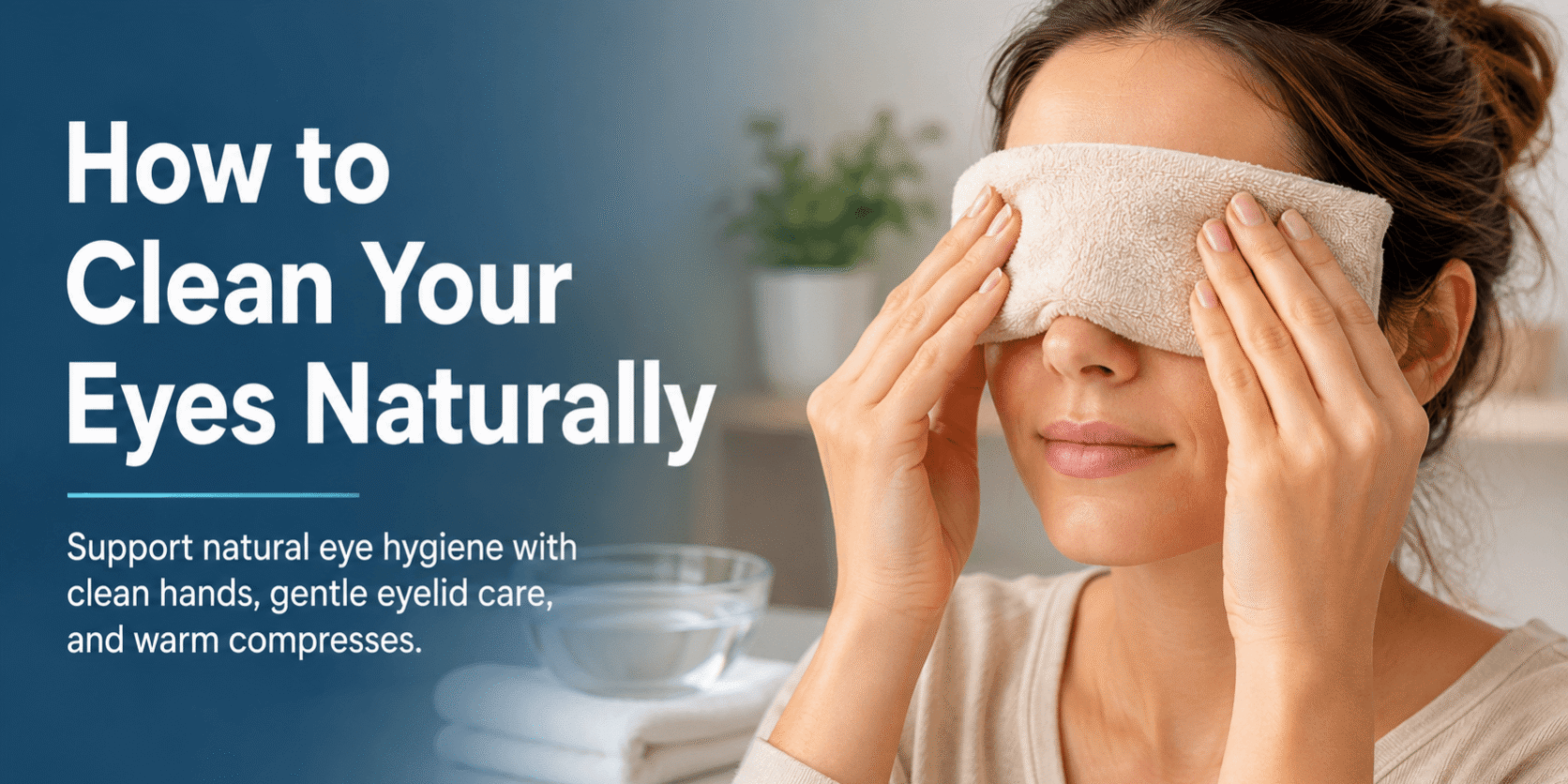
How to Clean Our Eyes Naturally: Safe and Simple Eye Hygiene Tips
Many people search for how to clean our eyes naturally, especially when their eyes feel tired, dusty, sticky, or irritated. In most healthy people, the eyes already have a natural cleaning system. Tears continuously lubricate the eye surface and help wash away small particles.
However, keeping the eyelids and the area around the eyes clean can support good eye hygiene. Safe habits such as washing your hands, gently cleaning the eyelids, and using a warm compress can be helpful. It is important to avoid putting unsterile household ingredients directly into the eyes.
How Do Eyes Clean Themselves Naturally?
Your eyes naturally produce tears that keep the surface moist and help remove small particles. Blinking spreads the tear film across the eye and helps move debris toward the inner corner.
Because of this natural process, healthy eyes generally do not need to be “detoxed” or deeply cleaned. The goal of natural eye hygiene is mainly to keep the eyelids, eyelashes, and surrounding skin clean.
How to Clean Our Eyes Naturally
1. Wash Your Hands First
Always wash your hands thoroughly with soap and water before touching your eyes or eyelids. This helps reduce the chance of transferring dirt and germs to the eye.
2. Gently Clean the Eyelids
If there is crusting or debris around your eyelashes, use a clean cloth or cotton pad moistened with clean, warm water. With your eyes closed, gently wipe the eyelid and lash area.
Avoid rubbing the eyes, as vigorous rubbing can irritate the delicate eye surface.
3. Use a Warm Compress
A warm compress can be useful when the eyelids feel crusty, irritated, or uncomfortable. Soak a clean cloth in warm, not hot, water, wring it out, and place it gently over your closed eyes for several minutes.
Warm compresses can help soften oils and debris around the eyelids and are commonly used as part of eyelid hygiene, particularly for conditions such as blepharitis.
4. Keep Your Eyelashes and Eyelids Clean
Regular eyelid hygiene may help remove accumulated oils, flakes, and debris around the eyelashes. If you have persistent crusting, redness, or irritation, an ophthalmologist can recommend an appropriate eyelid-cleaning method.
5. Give Your Eyes Regular Breaks
Prolonged screen use can contribute to dry or tired eyes. Take regular breaks, blink frequently, and avoid staring at a screen continuously. Keeping your environment comfortably humid can also help if the air is very dry.
What Should You Not Put in Your Eyes?
Natural does not always mean safe for the eyes. Avoid putting household substances such as lemon juice, raw honey, essential oils, or homemade herbal preparations directly into the eyes. These substances may irritate the eye or introduce microorganisms.
Do not use tap water or homemade saline solutions to clean contact lenses. Contact lens wearers should follow their eye-care professional’s instructions and use appropriate contact lens solutions. Hands should be washed and dried before handling lenses.
When Should You See an Eye Specialist?
Eye cleaning should not be used to treat unexplained eye symptoms. Consult an ophthalmologist if you have persistent redness, pain, swelling, discharge, recurring irritation, or changes in vision.
Contact lens wearers should seek prompt professional advice if they develop a painful or red eye, particularly when accompanied by blurred vision.
Seek urgent medical attention for severe eye pain, significant vision changes, light sensitivity, a serious eye injury, or something stuck in the eye.
Key Takeaways
- How to clean our eyes naturally starts with good eyelid and hand hygiene rather than putting substances into the eyes.
- Healthy eyes naturally clean themselves through tears and blinking.
- Clean, warm water can be used gently around closed eyelids to remove visible debris.
- A warm compress may help soften eyelid oils and crusting.
- Avoid lemon juice, essential oils, raw honey, and other unsterile substances in the eyes.
- Persistent pain, redness, discharge, or vision changes should be evaluated by an eye specialist.
Conclusion
Knowing how to clean our eyes naturally can help you maintain good eye hygiene safely. For most people, the eyes already have an effective natural cleaning system through tears and blinking. Gentle eyelid cleaning, warm compresses, clean hands, and healthy screen habits can support eye comfort.
If your eyes remain red, painful, irritated, or your vision changes, do not rely on home remedies. An ophthalmologist can identify the underlying cause and recommend appropriate treatment.