Quick Overview
Common retinoblastoma signs include a white glow in the pupil, sometimes noticed in flash photographs, and a new squint. This rare eye cancer develops in the retina and most often affects children younger than five. Early diagnosis and treatment can help save the child’s life, preserve the affected eye and retain vision when possible.
- A white pupil reflex (leukocoria) is the most common early sign
- A change in the RB1 gene causes the condition, and some cases are inherited
- Treatment options include chemotherapy, laser, freezing therapy and, in some cases, eye removal
- Regular follow-up continues for years after treatment
Introduction
During newborn and early childhood examinations, doctors may check the red reflex, which occurs when light reflects from the back of the eye. An absent, unequal or abnormal reflex can indicate an eye or vision problem. Parents may also notice an unusual white reflection in their child’s pupil, sometimes in a flash photograph.
Retinoblastoma is a rare cancer that develops in the retina, the light-sensitive layer at the back of the eye. It mainly affects babies and young children. Although the diagnosis can worry families, early diagnosis and treatment can substantially improve outcomes. Recognising possible warning signs and arranging prompt medical assessment are important steps parents can take.
What is Retinoblastoma?
Retinoblastoma is a cancer that develops in the retina, the light-sensitive tissue at the back of the eye. It is the most common primary eye cancer in young children, although it is rare overall.
The tumour can affect one eye or both. Most children are diagnosed before the age of five, and disease affecting only one eye is more common than disease affecting both eyes. Heritable retinoblastoma often affects both eyes and is usually diagnosed at a younger age, although it can affect only one eye. Without treatment, the cancer can spread beyond the eye to surrounding tissues or other parts of the body.
Retinoblastoma Symptoms Parents Should Spot Early
Many children show no obvious discomfort early on, so visible changes matter most. Watch for:
- A white or unusual reflection in the pupil, sometimes noticed in flash photographs
- A squint, where the eyes point in different directions
- Redness or swelling of the eye that does not settle
- Poor vision, such as not following objects or faces
- A difference in colour between the two irises
- An unusual change in the appearance of the pupil or eye
A squint is common in young children and often has a simple cause. Even so, any new squint deserves an eye examination. It can occasionally signal an early problem inside the eye.
Retinoblastoma: Red Reflex vs White Reflex
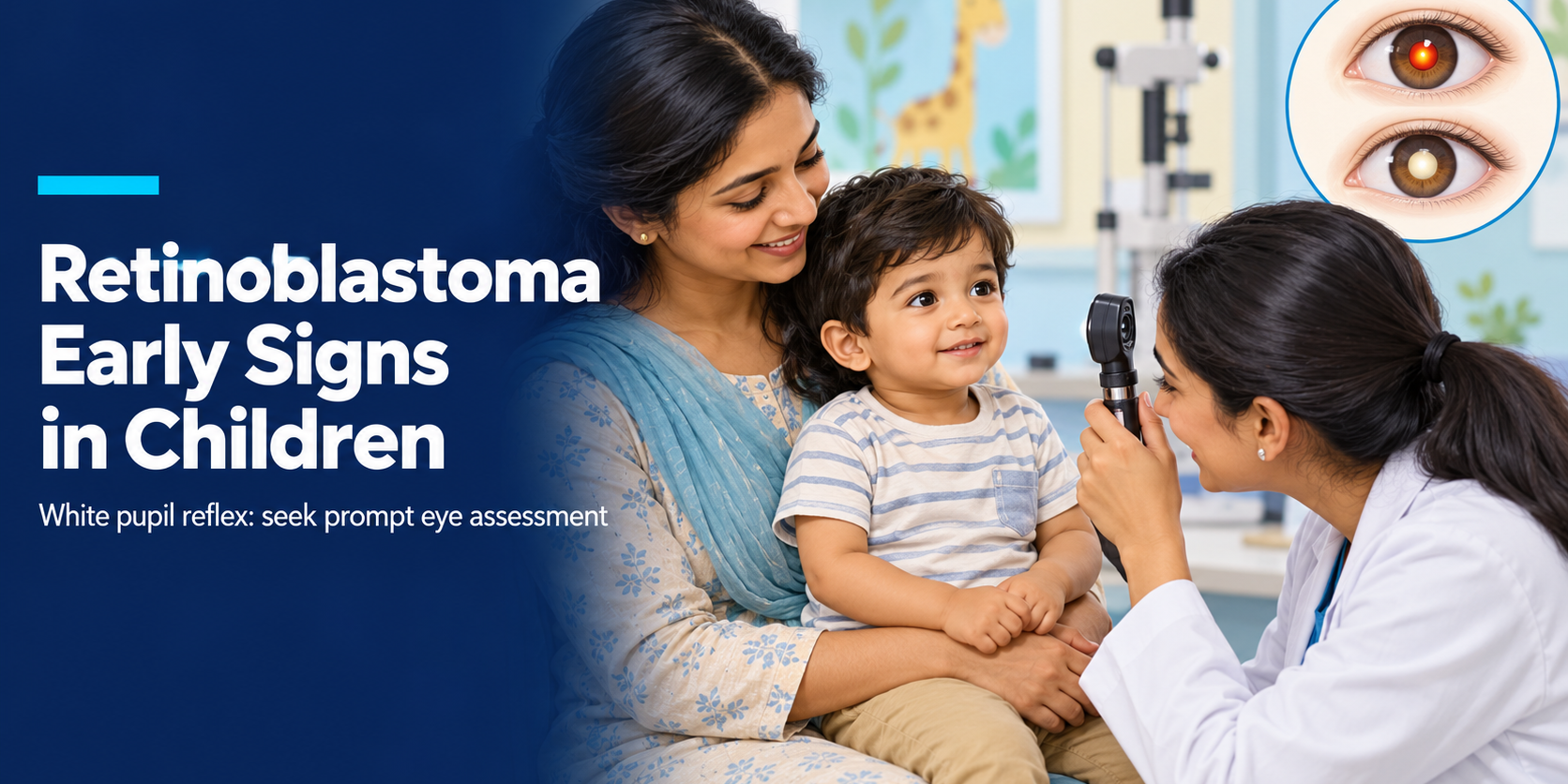
A normal eye may show a red or orange reflex in flash photographs because light reflects from the back of the eye. In retinoblastoma, the tumour can produce an abnormal white reflection, known as leukocoria, instead of the normal red reflex.
| Factor | Red reflex | White reflex (leukocoria) |
|---|---|---|
| Appearance | Red or orange glow in both pupils | White, yellow or pale glow in one or both pupils |
| What it suggests | Clear path through to a healthy retina | Something blocking or replacing the normal reflection |
| Possible causes | Normal finding | An eye tumour, congenital cataract, Coats disease or other retinal conditions |
| Next step | Routine checks | Prompt eye examination by a specialist |
Parents may notice an unusual white reflection in their child’s pupil in a photograph. Although lighting and camera angles can affect the appearance of the eyes, a white or unusual pupillary reflection should be assessed promptly by an eye specialist. Do not rely on photographs to rule out retinoblastoma or delay an examination while trying to reproduce the finding.
Retinoblastoma Causes and Risk Factors
Retinoblastoma usually develops when both copies of the RB1 gene in a retinal cell become inactive. The RB1 gene normally helps regulate cell growth. When its function is lost, retinal cells can grow abnormally and form a tumour.
There are two main forms:
- Heritable: the gene change is present in all body cells and can pass from parent to child
- Non-heritable: the gene change occurs only in the retina and usually affects one eye
Most cases are non-heritable and occur without any family history. Even so, a family history of the condition is the main known risk factor. Parents do not cause it through anything they did during pregnancy. Siblings and children of affected individuals usually need regular eye screening, and genetic counselling is often advised.
How Retinoblastoma is Diagnosed
Diagnosis is usually made through a detailed eye examination rather than a biopsy. Doctors generally avoid taking tissue from the eye, as it could allow cancer cells to spread.
- Dilated eye examination: drops widen the pupil so the retina can be viewed
- Examination under anaesthesia: a short general anaesthetic allows a thorough check in young children
- Ultrasound: sound waves show the size of the tumour and any calcium deposits within it
- MRI scan: detailed images check the optic nerve and brain
- Genetic testing: blood tests identify whether the RB1 change is heritable
Imaging also helps doctors stage the tumour, which guides treatment planning. Specialist teams often include an ocular oncologist (an eye cancer specialist), a paediatric oncologist and a genetic counsellor.
Retinoblastoma Treatment Options
Treatment is planned around three priorities: protecting the child’s life, preserving the eye and saving vision where possible. The approach depends on tumour size, location and whether one or both eyes are affected.
- Chemotherapy: medicines given through a vein, directly into the eye’s artery or by injection into the eye
- Laser therapy: heat destroys small tumours or their blood supply
- Cryotherapy: extreme cold freezes and destroys small tumours
- Plaque radiotherapy: a small radioactive disc is placed on the eye temporarily
- Enucleation: surgical removal of the eye when a tumour is large or does not respond
After enucleation, an orbital implant may be placed in the eye socket, and a custom artificial eye is fitted once the socket has healed sufficiently. The artificial eye may move to some extent with the other eye, depending on the implant and surrounding tissues. Many children adapt well with support from their treatment team.
The treatment plan may combine therapies, depending on the tumour and the child’s response.
Can Retinoblastoma Be Cured?
In many cases, yes. It is highly treatable when found early, before it spreads beyond the eye. Most children diagnosed early go on to live healthy lives.
The prognosis is generally less favourable when the cancer spreads beyond the eye, making early diagnosis and treatment important. All children need follow-up to monitor for recurrence and treatment-related effects. Children with heritable retinoblastoma also have an increased risk of developing other cancers later in life and need appropriate long-term surveillance.
When to Seek Urgent Care
Arrange an eye examination within days if you notice any of the following in your child:
- A white or unusual glow in one pupil
- A new squint or eyes that wander
- An eye that looks red, swollen or bulging
- A sudden change in vision or eye appearance
These signs can have causes other than retinoblastoma, but they should not be ignored. Prompt assessment by an eye specialist can help identify the cause and ensure that treatment begins when needed. If you noticed the change in a photograph, you can show it to the doctor, but don’t delay seeking care while you take more photos.
Conclusion
This cancer is rare, but its early signs are often visible to parents at home. A white glow in photographs, a new squint or a persistently red eye should prompt an eye examination without delay.
Recognising retinoblastoma symptoms early gives children the widest range of treatment options. Regular eye checks during infancy and early childhood also help detect changes before they progress.
Disclaimer: This article is for general information only and is not a substitute for professional medical advice. Please consult an eye specialist promptly to discuss any concerns about your child’s eyes.
FAQs
What are the First Signs of Eye Cancer?
In children, the first signs are usually a white pupil reflex and a new squint. Redness, swelling or poor vision may follow. In adults, eye cancers can cause blurred vision, floaters, or shadows in the field of vision.
Is Retinoblastoma Painful?
Usually not in the early stages. Pain, redness or swelling can develop later if the tumour raises eye pressure or causes inflammation. Because early disease is often painless, visible changes are more reliable warning signs than discomfort.
Can Retinoblastoma Lead to Blindness?
It can affect vision in the affected eye, depending on tumour size and location. Early treatment aims to preserve as much sight as possible. If an eye is removed, the child loses sight in that eye but usually adapts well using the other eye.
Can Adults Get Retinoblastoma?
Very rarely. It almost always occurs in young children, though isolated adult cases have been reported. Adults who had the heritable form as children need lifelong monitoring for other cancers.
Can Retinoblastoma Come Back?
Yes, it can. Remaining tumour cells may regrow, or new tumours may develop, especially in younger children with the heritable form. Regular follow-up examinations help detect any recurrence early.
References
AAO. (2019, April 17). What is retinoblastoma? American Academy of Ophthalmology. https://www.aao.org/eye-health/diseases/what-is-retinoblastoma
Pandey, A. N. (2014). Retinoblastoma: An overview. Saudi Journal of Ophthalmology, 28(4), 310–315. https://pmc.ncbi.nlm.nih.gov/articles/PMC4250503/