How to Cure Lazy Eye: Treatment Options and When to See an Eye Doctor
Many parents and adults wonder how to cure lazy eye, especially when one eye does not see as clearly as the other. Lazy eye, medically known as amblyopia, is a condition in which the brain does not develop or use vision normally in one eye, even when the eye itself may look healthy. It usually begins during infancy or childhood and is easier to treat when identified early.
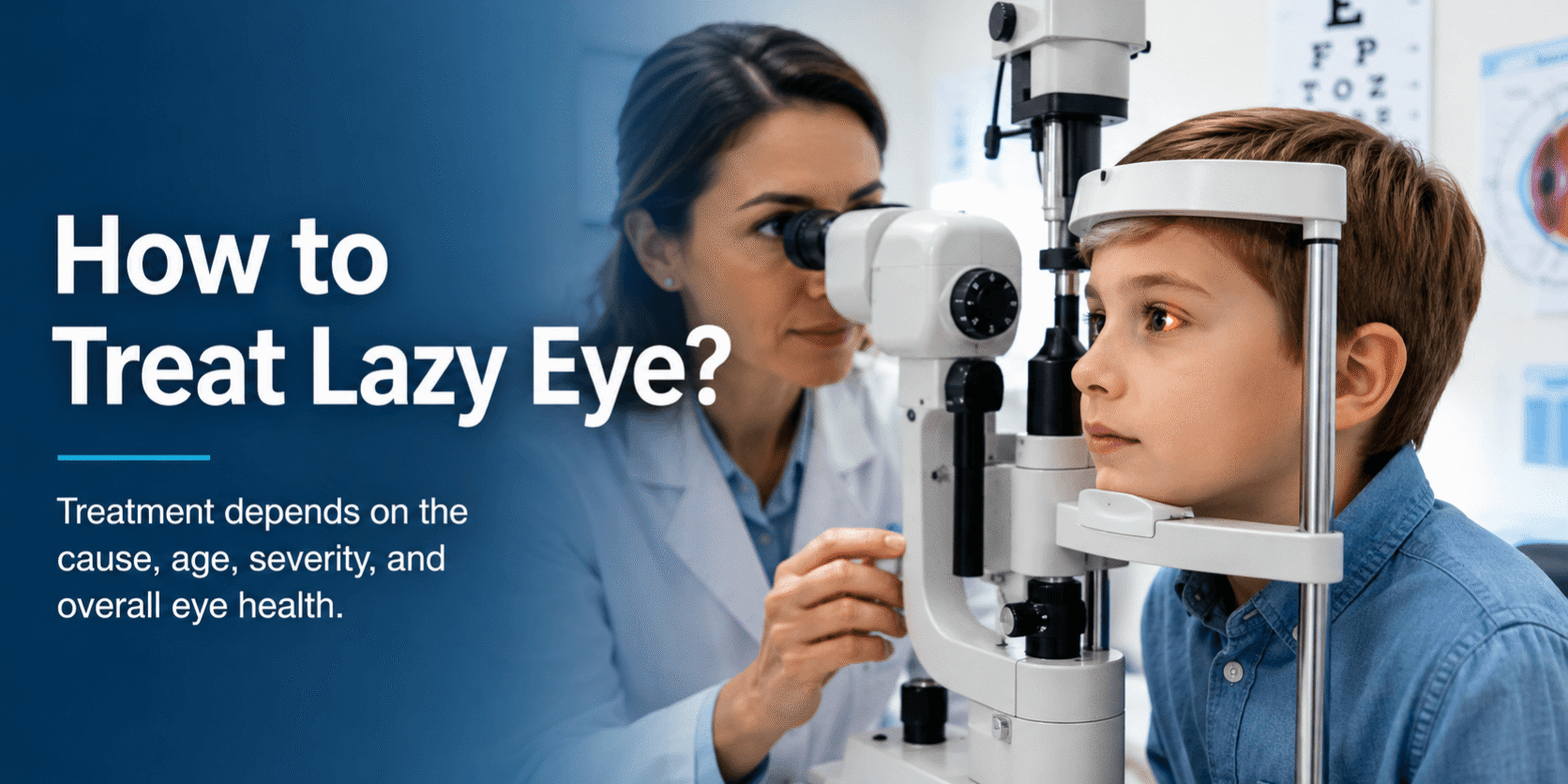
The good news is that treatment can significantly improve vision in many people, particularly children. However, there is no single treatment that works for everyone. The right approach depends on the cause, severity, age, and overall eye health.
What is Lazy Eye?
Lazy eye, or amblyopia, occurs when the brain favors one eye and does not properly use visual information from the weaker eye. Over time, this can lead to reduced vision in that eye.
Common causes include:
- Refractive errors: A significant difference in nearsightedness, farsightedness, or astigmatism between the eyes.
- Strabismus: When the eyes do not align properly and one eye may turn inward, outward, upward, or downward.
- Cataract or other eye conditions: Conditions that interfere with clear vision during early childhood can contribute to amblyopia.
How to Cure Lazy Eye
Lazy eye is usually managed rather than cured with a single procedure. Treatment aims to correct the underlying problem and encourage the brain to use the weaker eye.
1. Prescription Glasses
If blurred vision or a difference in the prescription between the eyes is contributing to amblyopia, an ophthalmologist may prescribe glasses.
For some children, correcting the refractive error with glasses alone can lead to meaningful improvement. Your eye doctor will monitor vision to determine whether additional treatment is needed.
2. Eye Patching
Eye patching is a common treatment for amblyopia. A patch is placed over the stronger eye for a prescribed number of hours each day, encouraging the brain to use the weaker eye.
The number of hours varies according to the child’s condition. Some children may need only a few hours a day, while more severe cases may require longer treatment under medical supervision.
3. Atropine Eye Drops
An ophthalmologist may recommend atropine eye drops for some children. The drops temporarily blur near vision in the stronger eye, encouraging the brain to rely more on the weaker eye.
Atropine can be an alternative to patching for certain children, but it should only be used according to an eye specialist’s prescription.
4. Treating the Underlying Eye Problem
If another eye condition is causing or contributing to amblyopia, that condition may need to be treated first.
For example, a child with a cataract that interferes with normal visual development may require appropriate treatment. Correcting the underlying problem can help provide the weaker eye with a better opportunity to develop vision.
Can Lazy Eye Be Treated in Adults?
Treatment is generally more effective when amblyopia is identified during childhood because the visual system is still developing. The National Eye Institute notes that treatment is usually less effective in adults than in children.
However, adults should not assume that nothing can be done. An eye specialist can evaluate the cause of reduced vision and determine whether treatment or other options may be appropriate. Research into treatments for adult amblyopia is also continuing.
When Should You See an Eye Specialist?
Children should have their vision checked regularly, even when there are no obvious symptoms. Signs that may warrant an eye examination include:
- One eye appears to wander or turn.
- The child frequently squints or closes one eye.
- The child tilts their head to see.
- Difficulty judging distances or depth.
- One eye consistently appears weaker than the other.
- Problems seeing clearly during school or daily activities.
Early diagnosis is important because untreated amblyopia can result in persistent vision problems.
Key Takeaways
- Lazy eye, or amblyopia, is reduced vision caused by abnormal visual development and brain-eye communication.
- Treatment depends on the underlying cause and the patient’s age.
- Prescription glasses may improve vision when refractive errors contribute to amblyopia.
- Eye patching and atropine eye drops are commonly used treatments for appropriate childhood cases.
- Early diagnosis and consistent treatment generally provide better opportunities for visual improvement.
- An ophthalmologist should determine the appropriate treatment rather than relying on home remedies or self-treatment.
Conclusion
If you are wondering how to cure lazy eye, the most important step is to get a comprehensive eye examination. Lazy eye is often treatable, particularly when diagnosed and managed early in childhood. Treatment may involve glasses, eye patching, atropine drops, or treatment of an underlying eye condition.
Because the appropriate treatment varies from person to person, consult a qualified ophthalmologist for an accurate diagnosis and personalized treatment plan.