Mature vs Immature Cataract: Key Differences, Stages & When Surgery Is Needed
Written by

Dr. Aditi Sapovadia
Peadiatric Ophthalmologist & Squint Surgeon
Cataracts are one of the most prevalent causes of vision impairment, particularly in the elderly. The risk of cataracts increases with age. In this condition, the natural lens of the eyes gets clouded, resulting in blurred vision. It can occur at any age as a result of several medical conditions or accident-related damage.
What Is a Cataract? A Quick Overview
A cataract is a disease where the transparent eye lens becomes opaque and prevents light penetration. The lens in the eye, which is behind the iris and pupil, focuses the light on the retina, thus making one see clearly. This lens is largely made out of water and protein. With time, the lens could be clogged with protein, which forms cloudy spots called cataracts. These cloudy areas block the passage of light in the lens, resulting in poor or blurred vision.
Cataracts normally increase with age, though diabetes, UV exposure, chronic steroid therapy, eye trauma, and hereditary history may accelerate the condition. Cataracts may have different levels of severity and development, and this is categorised into two types, which are mature and immature cataracts.
What Is an Immature Cataract?
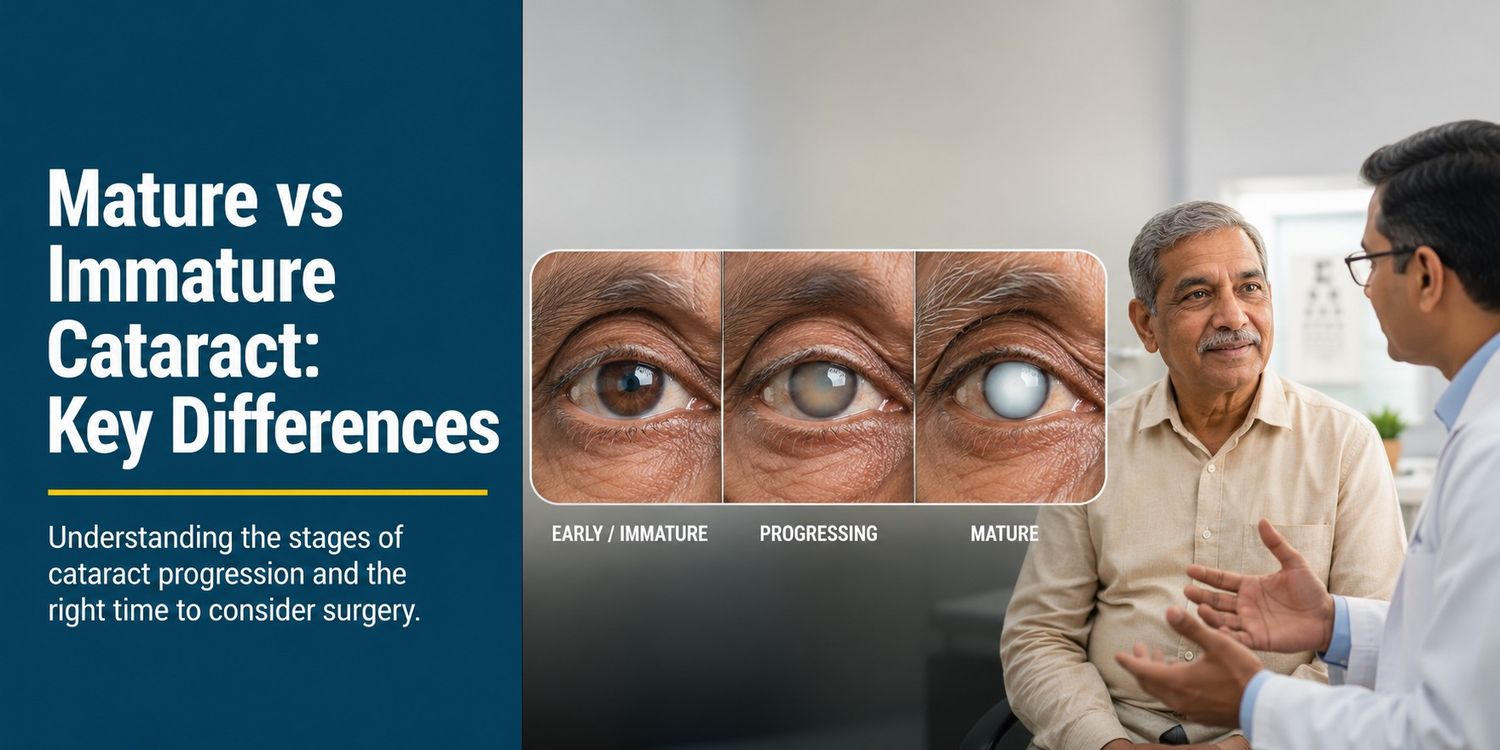
“Immature cataract” refers to an early stage of cataract formation that involves little cloudiness or opaqueness of the eye lens. Unlike mature cataracts, this type of cataract does not interfere with one’s eyesight. During this period, one’s eyesight is partially impaired. An immature cataract may not be easily noticeable.
Therefore, an eye examination is essential. Prompt action should be taken to prevent serious consequences. An eye examination plays an essential role in preventing the progression of this immature cataract.
Immature Cataract Symptoms
The immature cataract symptoms include the following:
- Partial Lens Opacity: Certain portions of the lens stay clear, enabling only a limited amount of light to get through.
- Functional vision retained: Although eyesight is impaired, most daily tasks can still be carried out.
- Blurry or Foggy Vision: Objects may appear slightly blurry or out of focus.
- Glare Sensitivity: Increased discomfort in bright lighting settings.
- Standard Prescription Changes: Contact lenses or glasses may require regular adjustments.
- Slower Progression: Immature cataracts progress more slowly than mature cataracts. While they may worsen over time, the rate of deterioration differs between individuals and is influenced by factors such as age, underlying health conditions, and lifestyle choices.
- Early-stage cataracts may be reversible or controlled: In certain situations, by modifying one's lifestyle, diet, or using prescription eyeglasses. Regular eye examinations are essential for monitoring progress and determining the best course of treatment.
Immature Cataract Causes and Risk Factors
The causes and risk factors of immature cataracts include the following:
- Ageing: The most common cause of cataract formation.
- Smoking and alcohol consumption: These lifestyle choices can raise the risk of cataract development.
- Eye Trauma or Injury: Previous injuries can cause early cataract growth.
- Diabetes Mellitus: High blood sugar levels might speed up cataract formation.
- UV Radiation Exposure: Prolonged exposure to sunshine may contribute to cataract advancement.
- Prolonged use of corticosteroids: Certain drugs can cause cataract formation over time.
- Genetic predisposition: Family history increases risk
- Nutritional deficiencies: Low antioxidant levels (vitamins A, C, E)
What Is a Mature Cataract?
The mature stage of a cataract occurs when the entire lens becomes opaque. The most important difference between mature and immature cataracts is that immature cataracts allow light to pass, while mature cataracts prevent light from passing.
At this stage, the vision of the damaged eye has either significantly diminished or completely disappeared. People suffering from mature cataracts cannot perform daily activities like reading, driving, or even identifying faces.
Mature Cataract Symptoms
The mature cataract symptoms are
- Severe Vision Impairment: In the case of mature cataracts, the lens is severely impaired, thus causing substantial vision problems. The patient may be suffering from blurred vision, double vision, difficulty in seeing in low light, or even blindness in the affected eye.
- Opaque Appearance: The affected lens may appear opaque or milky in colour, thus preventing any light from entering the retina.
- No improvement with glasses: The patient may not be able to see with the help of glasses or even contact lenses.
- Increased Risk of Complications: In the case of mature cataracts, if not treated properly, the patient may be at risk of suffering from glaucoma, inflammation, or even retinal detachment.
- Impact on daily activities: The patient suffering from mature cataracts may have problems performing day-to-day activities due to substantial vision problems. The quality of life may be adversely affected, thus making one even more dependent on others.
Mature Cataract Causes: Why Cataracts Progress
The causes of mature cataracts are:
- Untreated Immature Cataract: If not treated, an immature cataract might grow to the mature stage
- Chronic Health Conditions: Conditions like diabetes could accelerate cataract development.
- Severe Eye Trauma: An injury to the eye might cause rapid cataract growth.
- Prolonged radiation or toxin exposure: Certain environmental variables can cause early cataract formation.
Difference Between Mature and Immature Cataract: Complete Comparison
An ophthalmologist can distinguish between mature and immature cataracts using specialist diagnostic techniques like a slit-lamp examination, which allows for a thorough study of the lens.
ASPECT | IMMATURE CATARACT | MATURE CATARACT |
Lens Opacity | Partial | Complete |
Light Sensitivity | High | Limited to light perception |
Vision | Blurry but functional | Severe vision impairment or complete blindness |
Response to glasses
Not Sure About Your Diagnosis? Book Your Appointment Now!
| Temporary improvement possible | No to minimal improvement |
Color Perception | Reduced clarity | Difficult to perceive. Limited visual perception. |
Appearance of pupil | Normal or slightly cloudy | Milky/Whitish |
Daily activities | Manageable with adjustments | Significant limitations |
Surgery Requirement | Not always necessary; recommended when vision reduction impacts daily activities | Usually required |
4 Stages of Cataract: From Early to Hypermature
- Stage 1 Cataract: During this phase, though the eye's lens is clear, there might be some problems with focusing. Additionally, headaches may occur. The vision may also be slightly blurry.
- Stage 2: Immature Cataract: During this phase, cataracts start to develop. They may become cloudy. Especially in poor lighting, the vision may be extremely blurry when trying to focus on something. Other symptoms may include seeing halos of light, difficulty in reading small print, and sharp, colourless vision.
- Stage 3: Mature Cataract: During this phase, the cataract is fully grown. The problems experienced in the previous phase are more pronounced. The vision is greatly impaired due to the extreme clouding of the lens.
- Stage 4: Hypermature Cataract: Sometimes, a mature cataract may progress to this phase if left untreated for a long period of time. During this phase, the lens may wrinkle or shrink. This may impair the vision even more. Other problems may arise from the formation of hypermature cataracts. They may result in complications such as uveitis. To avoid complications from hypermature cataracts, treatment is important.
How Mature and Immature Cataracts Are Diagnosed
A key difference between mature and immature cataracts is that the retina can still be visualised in immature cases but not in mature ones. Early detection of cataracts is more than just convenient; it can significantly improve treatment outcomes and quality of life. The mature and immature cataracts are diagnosed by
- Visual acuity testing measures the degree of vision loss in both stages.
- Slit-lamp examination: An essential test to observe lens opacity; a juvenile displays partial opacity, and a mature one shows complete opacity.
- Fundus examination: The retina is visible in an immature cataract but frequently veiled in an advanced cataract.
- Red reflex test: Visible and spotty in juvenile cataracts; absent in advanced cataracts.
- Ophthalmoscopy: It helps examine the posterior segment when the media are clear (especially in young individuals).
- Ultrasound (B-scan): It is utilised in mature cataracts when the fundus cannot be seen.
Treatment Options: When Is Cataract Surgery Needed?
Cataract treatment is determined by the severity of the vision impairment and its effects on daily living. In the early stages, eyesight can be improved with glasses, better lighting, or lifestyle changes. When the cataract significantly impairs everyday tasks or quality of life, surgery is recommended.
Managing Immature Cataracts Without Surgery
The immature cataracts can be managed without surgery in the following ways:
- Regular eye examinations: Tracking progress to determine the best time for treatment.
- Updated Prescription Glasses: May temporarily improve eyesight clarity.
- Lifestyle changes include quitting smoking, managing diabetes, and using UV-protective sunglasses.
- Improving Lighting Conditions: Bright, well-lit areas help improve vision.
Surgical Options for Mature Cataracts
Cataract surgery involves removing the cloudy lens and replacing it with a clear artificial lens. This artificial lens allows for proper refocusing of light on the retina. This results in improved vision. This process is usually done under local anaesthesia. It is a relatively minor procedure.
Patients are usually discharged on the same day. This means that this process is a one-day procedure. Modern techniques, such as phacoemulsification, have made this process very safe. This process has a very high success rate.
What Happens If a Mature Cataract Is Left Untreated?
If a mature cataract is left untreated, some serious consequences may result. These consequences are as follows:
- Progressive Vision Loss: The untreated cataracts will lead to blindness.
- Increased Risk of Falls or Accidents: This will be due to poor vision.
- Complications During Surgery: The longer a person waits to have surgery, the more complicated the surgery becomes.
- Secondary Eye Diseases: Glaucoma can result from untreated cataracts.
Frequently Asked Questions
What is the main difference between mature and immature cataracts?
The primary difference between mature and immature cataracts is the degree of lens clouding. Lens clouding is more severe in mature cataracts than in immature cataracts.
Can an immature cataract become mature over time?
Yes, in most cases, cataracts worsen with time. The rate of progression varies according to age, health status, and lifestyle.
Is surgery necessary for an immature cataract?
In most cases, immature cataracts can be managed with regular eye examinations, lifestyle changes, updated prescription glasses, and improved lighting. In a few cases, the immature cataracts might need surgical intervention.
What are the risks of delaying mature cataract surgery?
The risks of delaying mature cataract surgery might lead to progressive vision loss, increased risk of falls and accidents, complications in surgery, and secondary eye diseases such as inflammation and glaucoma.
How is a mature cataract different from a hypermature cataract?
A mature cataract is a totally opaque lens with uniform consistency that causes substantial vision loss while maintaining a rather stable structure. A hypermature cataract is an advanced stage in which the lens degenerates and shrinks, increasing the risk of problems.