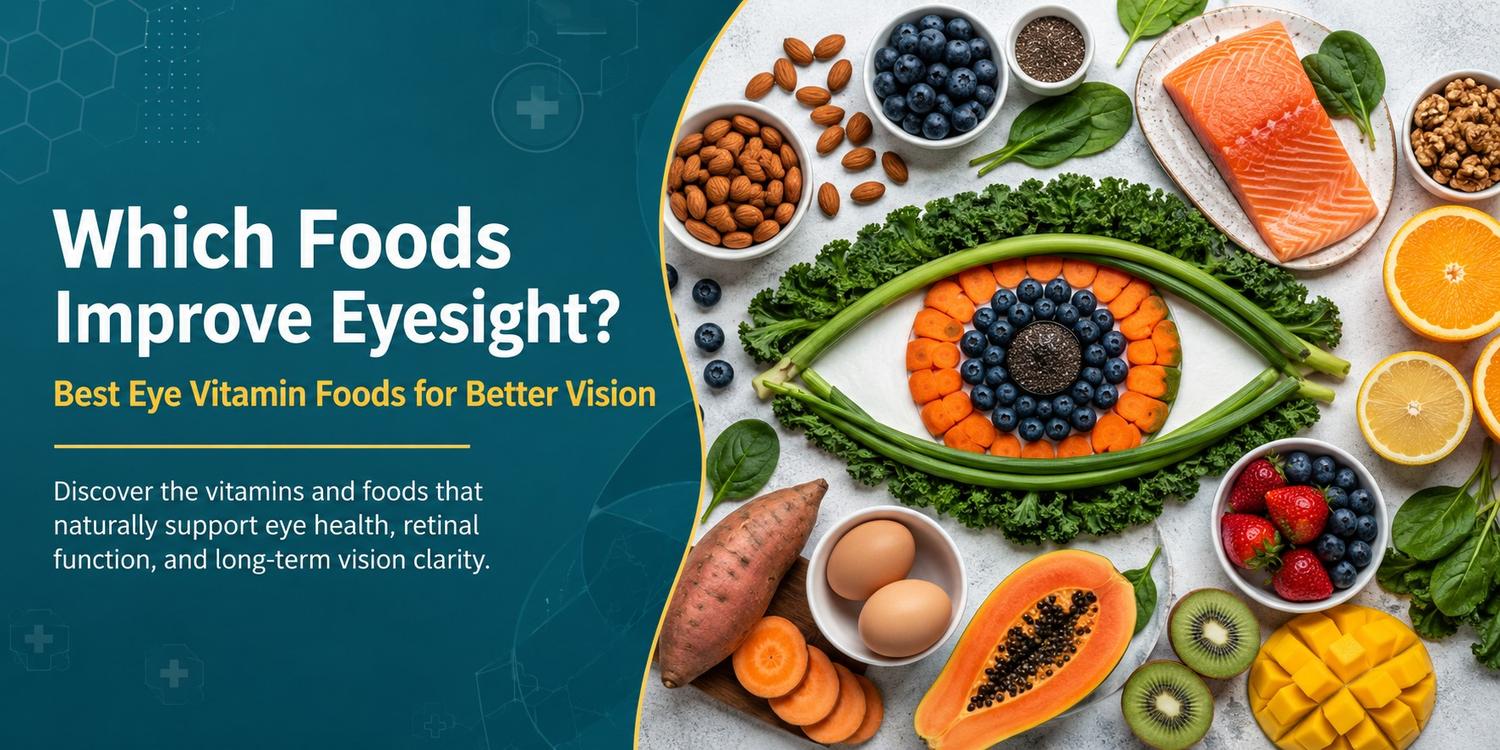
Which Foods Improve Eyesight? Best Eye Vitamin Foods for Better Vision
Maintaining good vision depends not just on regular eye checks but also on what you eat. Choosing the right vitamins for the eyes and nutrient‑rich foods can support healthy vision, protect against age‑related decline, and nourish the structures of the eye. This blog explains how diet influences eyesight and lists the foods that improve eyesight naturally.
Why Diet Is Important for Eye Health
Your eyes are metabolically active tissues. The macula, the optic nerve and the retina, as well, demand specific nutrients in order to work the best and prevent oxidation. With a balanced diet, with an abundance of antioxidant and anti-inflammatory products, one can support cellular health, prevent the development of macular degeneration or other age-related diseases.
Essential Vitamins and Nutrients for Healthy Eyes
Vision relies on a combination of nutrients, including:
- Vitamin A - essential to the eye and vision in the dark.
- Vitamin C and E- antioxidants - keep off free-radical damage.
- Lutein and Zeaxanthin - carotenoids which are found in the macula.
- The omega-3 fatty acids - structural maintenance of retinal cells.
- They have different functions to maintain the functionality of the eyes.
Each plays a unique role in keeping eyes functioning well.
Vitamin A Foods for Eyesight
A vitamin A deficiency affects photoreceptors and low-light vision. In the absence of proper vitamin A, night vision is poor, and the eye surface may also appear inflamed and irritated.
Vitamin C and Vitamin E Foods for Eyes
Both of them are potent antioxidants. They assist in lowering the oxidative stress in the eye retina and lens, mechanisms that are involved in the development of cataracts and the degeneration of the retina in relation to age.
Lutein and Zeaxanthin for Eye Protection
These are the pigments located in the Macula that absorb bad blue light and minimise oxidative damage. Excessive dieting has also been attributed to a reduced risk of progression of AMD.
Omega‑3 Fatty Acids for Eye Health
The retina contains docosahexaenoic acid (DHA) and eicosapentaenoic acid (EPA), which are required to maintain the integrity of the membrane. Omega-3s aid in keeping the tears healthy and minimise drying up.
Top Foods That Improve Eyesight Naturally
A practical list of the best foods for the eyes that provide the essential nutrients is given below.
Vegetables That Improve Eye Power
Vegetables are the richest and most accessible sources of protective nutrients:
- Carrots - classic vitamin A foods for the eyes due to beta‑carotene
- Spinach & kale - rich in lutein/zeaxanthin and vitamin E
- Sweet potatoes - combine fibre, vitamin A, and antioxidants
- The omega-3 fatty acids - structural maintenance of retinal cells.
- Red peppers - high in vitamin C
These are all among the most effective eye vitamin foods for daily diets.
Fruits Good for Eyes and Vision
Fruits contribute antioxidants and water, essential for eye nutrition:
- Citrus fruits (oranges, lemons) - excellent for vitamin C
- Berries - anthocyanins plus vitamin C
- Kiwi & guava - high in vitamin C and carotenoids
- Papaya & mango - natural vitamin A sources
Including fruits good for the eyes daily supports long‑term vision health.
Best Eye Vitamin Foods by Nutrient Type
Here’s a breakdown of foods by key nutrients.
Vitamin A‑Rich Foods (Are Carrots Good for Eyes?)
Yes, carrots are good for the eyes, primarily because they supply β‑carotene, a provitamin A compound converted in the body to active vitamin A. Other excellent sources include:
- Liver (beef or poultry)
- Egg yolks
- Fortified dairy
- Orange‑fleshed fruits and vegetables
Vitamin E Foods for Eyes
Vitamin E is a fat‑soluble antioxidant abundant in:
- Almonds and sunflower seeds
- Peanuts and hazelnuts
- Spinach and broccoli
Omega‑3 Rich Foods for Eye Strength
Key sources of omega‑3 fatty acids include:
- Fatty fish (salmon, sardines, mackerel)
- Chia seeds and flaxseeds
- Walnuts
Regular intake supports retinal structure and reduces the risk of dry eye disease.
Foods That Improve Retina Health and Night Vision
Foods rich in lutein, zeaxanthin and vitamin A carotenoids specifically help the retina and scotopic (low‑light) vision:
- Dark leafy greens
- Egg yolks
- Corn and kiwi
- Brightly coloured fruit and veg
They strengthen the macular pigment and improve dark‑adaptation responses.
Foods to Improve Eyesight Without Glasses
While no food can permanently increase visual acuity or replace glasses, a nutrient‑rich diet helps maintain optimal eye function and slows degenerative processes. For some people with nutrient‑deficiency‑related vision issues, dietary change can improve functional vision.
Weekly Diet Plan to Increase Eye Power
Here’s a simple weekly plan focused on eye health. The goal is diversity in eye vitamins, antioxidants and omega‑3s.
Sample 7‑Day Foods for Eye Health Diet Plan
Day 1:
Breakfast – spinach omelette with wholegrain toast
Lunch – grilled salmon salad
Snack – orange slices
Dinner – sweet potato and lentil curry
Day 2:
Breakfast – chia and berry pudding
Lunch – kale and quinoa bowl
Snack – almonds
Dinner – tuna with steamed broccoli
Day 3:
Breakfast – papaya and kiwi bowl
Lunch – chicken & red pepper stir‑fry
Snack – carrot sticks
Dinner – sardines with green beans
Day 4:
Breakfast – fortified cereal with milk
Lunch – lentil soup with spinach
Snack – guava
Dinner – roasted trout with sweetcorn
Day 5:
Breakfast – scrambled eggs and tomato
Lunch – chickpea & avocado salad
Snack – berries
Dinner – turkey with mixed veg
Day 6:
Breakfast – yoghurt with nuts and kiwi
Lunch – falafel wrap with kale
Snack – citrus fruit
Dinner – mackerel with spinach
Day 7:
Breakfast – omelette with peppers
Lunch – quinoa tabbouleh
Snack – pumpkin seeds
Dinner – grilled salmon with asparagus
Foods to Avoid That Can Harm Your Eyes
Certain foods may negatively affect eye health if consumed in excess:
- High sugar and refined carbs – linked to diabetic eye disease
- Trans fats – increase oxidative stress
- Excessive alcohol– can deplete eye vitamins and damage nerves
Moderation is key.
Should You Take Eye Supplements or Rely on Food?
Whole foods provide a balanced nutrient matrix and fibre, which supplements cannot. However, in cases of deficiency or specific risk (e.g., family history of AMD), supplements under medical advice can help.
Clinical trials (e.g., AREDS2) show that structured supplementation can slow AMD progression in at‑risk individuals, but supplements are not a replacement for a healthy diet.
Lifestyle Tips to Support Better Eyesight Naturally
Diet is only one contributing factor. Other practical habits include:
- Regular eye examinations
- Protecting eyes from UV exposure
- Taking screen breaks (20‑20‑20 rule)
- Staying physically active
- Managing blood sugar and blood pressure
Conclusion
Choosing the right foods that improve eyesight and focusing on a balanced intake of vitamins for eyes nutrients can support long‑term visual health. A diet rich in fruits, vegetables, omega‑3s, and antioxidants, alongside healthy lifestyle habits, lays the foundation for better vision now and in later life.
Frequently Asked Questions
Which foods improve eyesight naturally?
Leafy greens, carrots, citrus fruits, fatty fish, and nuts are among the best natural choices.
Which fruit is good for eyesight daily?
Citrus fruits, berries, papaya, and kiwi are excellent daily options.
Are carrots really good for the eyes?
Yes, carrots are rich in beta‑carotene, a vitamin A precursor essential for vision.
What vitamins are best for eye health?
Vitamins A, C, E, lutein, zeaxanthin, and omega‑3 fatty acids are crucial.
Can foods really improve eyesight without glasses?
Diet supports eye function but does not typically change refractive errors.
Is carrot good for eyesight or a myth?
Carrots help maintain healthy vision because of vitamin A content; it’s not a myth.
Which foods increase eye power naturally?
Foods high in lutein, zeaxanthin, and omega‑3s support retinal health, contributing to optimal eye power.
Should I take eye supplements or rely on natural foods?
Natural foods are preferable; supplements can help in specific clinical contexts.