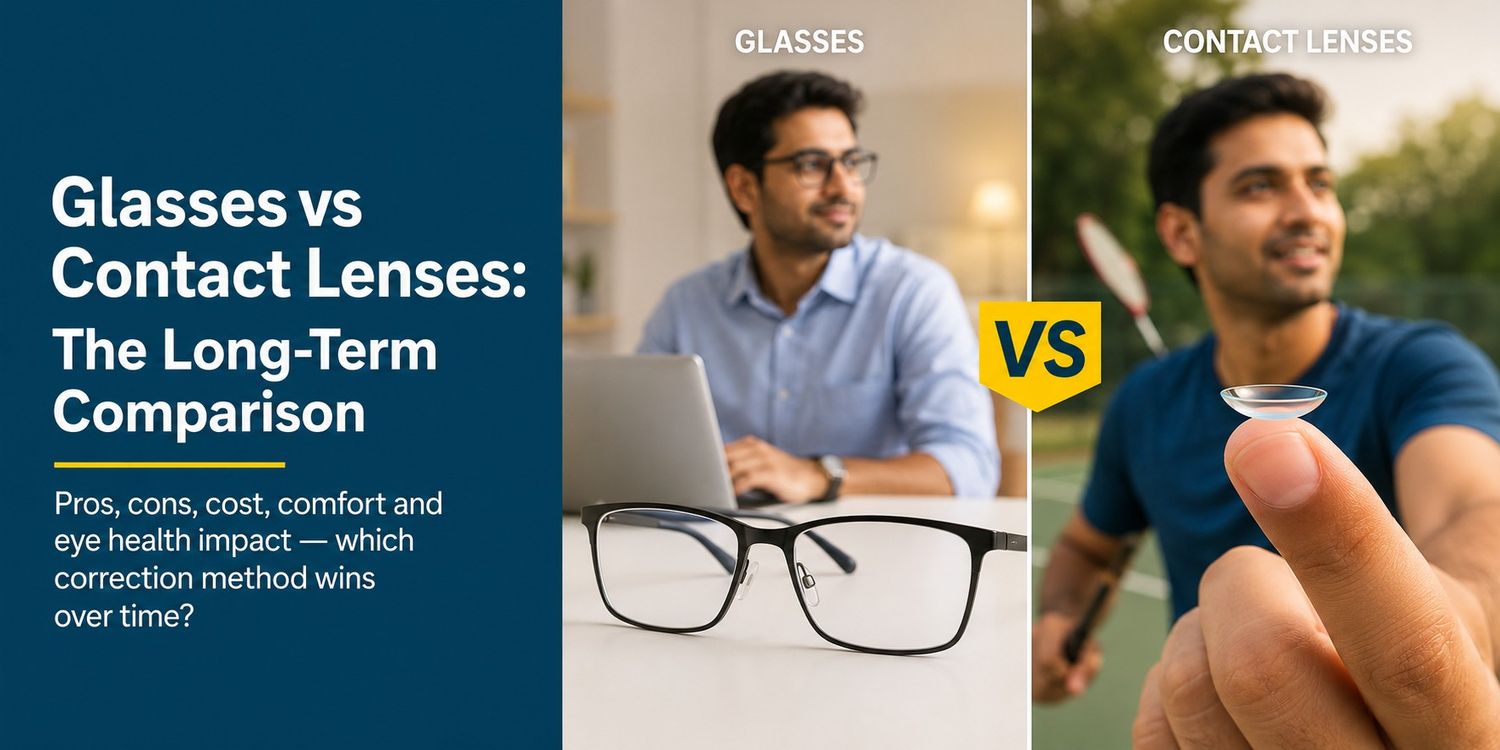
Glasses vs Contact Lenses: Long-Term Pros and Cons
Most people with a refractive error, myopia, hyperopia, or astigmatism, end up using either glasses or contact lenses at some point. Some use both depending on the situation. But the question of which one is better for long-term use is something a lot of patients genuinely struggle with, especially when they are making the choice for the first time or reconsidering after years of using one option.
This article looks at both options practically, the benefits, the limitations, and what actually matters when you are thinking about this for the long term.
Contact Lenses Pros and Cons for Everyday Wear
Contact lenses have real advantages for daily life. They sit directly on the eye and move with your gaze, which means your entire field of vision is corrected, not just what you see through a lens frame. For people who are active, play sports, or just find glasses physically uncomfortable, contacts offer genuine freedom.
They also do not fog up in rain or when you enter an air-conditioned room from outside. For people who wear spectacles in humid Indian summers, this alone can feel like a relief.
But contact lenses come with responsibilities. You have to clean and store them properly (unless you use daily disposables). Wearing them longer than recommended, sleeping in them, or using them with dirty hands are all habits that increase the risk of eye infections. In India, where dust, pollution, and heat are everyday realities in most cities, the risk of lens-related discomfort and infections is real if hygiene is not maintained.
Dry eyes are another concern. People who spend long hours on screens, which is most working professionals today, often find that contact lenses make dryness worse by the end of the day. This is a common complaint and one reason many lens wearers switch to glasses for screen-heavy days.
Spectacles vs Contact Lenses: Core Differences Explained
Glasses sit in front of your eyes. Contact lenses sit on them. That one difference creates a whole set of practical consequences.
Glasses are lower maintenance. You clean them, keep them safe, and they last a few years typically. There is no direct contact with the eye, so the risk of infection from the eyewear itself is minimal. They are also useful as a protective barrier against dust and wind in some situations.
Contact lenses require more active management. Storage solution, lens cases, replacement schedules, these are all things you have to stay on top of. If you travel frequently or have an unpredictable schedule, this can sometimes feel like a burden. On the other hand, lenses give you freedom of appearance and unrestricted peripheral vision.
Another practical difference is cost over time. A good pair of glasses might cost anywhere from Rs. 1,500 to Rs. 15,000, depending on the frame and lens type, and you use it for two or three years. Monthly contact lenses with solution can cost Rs. 600 to Rs. 1,500 per month or more, and daily disposables tend to cost even more annually. Over the years, contact lens costs add up significantly.
Contact Lenses vs Glasses: Which Provides Better Vision?
For most prescriptions, well-fitted contact lenses do provide slightly more natural vision because they are positioned directly on the eye and move with it. Peripheral vision is particularly better with contacts; with glasses, your side vision is uncorrected unless you turn your head.
However, glasses have improved greatly in terms of optics. High-index lenses, anti-reflective coatings, and progressive lenses have all made modern spectacles optically quite good. For people with very high prescriptions, thick glasses used to be a problem; modern high-index lenses have largely addressed that.
For driving at night, many people find glasses with anti-reflective coating more comfortable than contacts, which can sometimes cause halos or glare, especially if your eyes are even slightly dry.
Types of Contact Lenses: Daily, Monthly, Toric and More
Not all contact lenses are the same, and knowing the types helps you make a better choice.
Daily disposable lenses are used once and thrown away. No cleaning, no storage, fresh lens every day. They are the most hygienic option and ideal for people who wear lenses occasionally or have mild dry eye. The cost per lens is higher, but you avoid the expense of the solution and cases.
Monthly lenses are worn for up to 30 days and cleaned daily. They are more cost-effective for regular wearers. They require consistent cleaning and proper storage to prevent contamination.
Toric lenses are designed for people with astigmatism. They have different powers in different meridians of the lens and are weighted slightly so they stay in the correct orientation on the eye. Toric lenses are available in both daily and monthly formats.
Extended wear or silicone hydrogel lenses allow more oxygen to pass through to the cornea. Some are approved for overnight wear, though most eye doctors in India are cautious about recommending sleeping in lenses given the increased infection risk.
Rigid gas-permeable lenses are less common but sometimes recommended for conditions like keratoconus, where soft lenses do not provide adequate correction.
What Are Contact Lenses? How They Correct Your Vision
Contact lenses are thin, curved discs made from water-containing plastic materials. They are placed directly on the tear film that covers the surface of the eye. They work on the same optical principle as glasses; they bend incoming light so that it focuses correctly on the retina.
Soft contact lenses conform to the shape of the eye and are comfortable for most people from the first or second day of wear. They are made from hydrogel or silicone hydrogel materials. The silicone hydrogel variety allows significantly more oxygen to reach the cornea, which is important for long-term corneal health.
Eye Care Glasses: When Spectacles Are the Smarter Long-Term Choice
If you have chronic dry eye, glasses are more comfortable for all-day wear. If you have had repeated eye infections in the past, the reduced risk from glasses is worth it. For young children and older adults, glasses tend to be simpler to manage and safer for eye health. For people who work in environments with a lot of dust, chemicals, or smoke, construction sites, labs, or factories, glasses offer physical protection that lenses simply do not.
People who are irregular about their routines, who sometimes forget to remove lenses before sleeping or skip cleaning, are genuinely better off with glasses. The risks of contact lens wear rise sharply with poor compliance.
Eye Test and Glasses: Getting the Right Prescription Before You Choose
Before you decide between glasses and contacts, you need an accurate, up-to-date prescription. For glasses, the optometrist measures your refractive error. For contact lenses, you additionally need corneal curvature measurements, tear film assessment, and a fitting evaluation. A prescription for glasses cannot simply be used to order contact lenses without these additional checks.
Long-Term Eye Health: How Your Choice Affects Vision Over the Years
Glasses, when used correctly, have essentially no long-term negative impact on eye health. They correct vision without touching the eye, and they require no maintenance, which, if skipped, puts the eye at risk.
Contact lenses, when used responsibly with proper hygiene and replacement schedules, are generally safe for long-term use.
Which Should You Choose? A Guide Based on Lifestyle and Eye Health
If you are active, play sports, find glasses inconvenient, and are committed to hygiene, contact lenses work well. If you prefer low maintenance, have dry eyes, irregular routines, or are managing an eye condition, glasses are the safer, more sensible choice.
A middle ground is also good: use glasses as your primary correction and keep contact lenses for specific situations, sports, social occasions, and travel. This reduces the total hours your eyes spend in lenses and lowers the cumulative risk while still giving you the flexibility of contacts when you want it.
Frequently Asked Questions: About Contact Lenses vs Glasses
Are contact lenses safe for daily long-term use?
Yes, they are safe for most people when used correctly. This means following the replacement schedule, cleaning lenses as instructed, not wearing them while sleeping, and going for regular eye check-ups.
Can contact lenses damage your eyes over time?
If used irresponsibly, worn overnight, not cleaned properly, or used beyond their replacement date, yes, they can cause problems ranging from irritation and infections to more serious corneal issues.
Which is better, glasses or contacts for driving?
For daytime driving, both work well. For night driving, many people find glasses with an anti-reflective coating more comfortable. Dry eyes at the end of the day can make contact lenses cause slight halos around headlights, which glasses avoid.
How often should you get an eye test if you wear glasses or contacts?
Contact lens wearers should get an eye check at least once a year. Glasses wearers can generally manage with a check every one to two years, or sooner if vision changes.
Can children wear contact lenses instead of glasses?
Children can wear contact lenses, but age and maturity matter. Most eye doctors in India suggest waiting until the child is around 12 to 14 years old, old enough to handle lenses responsibly and maintain hygiene without constant supervision.