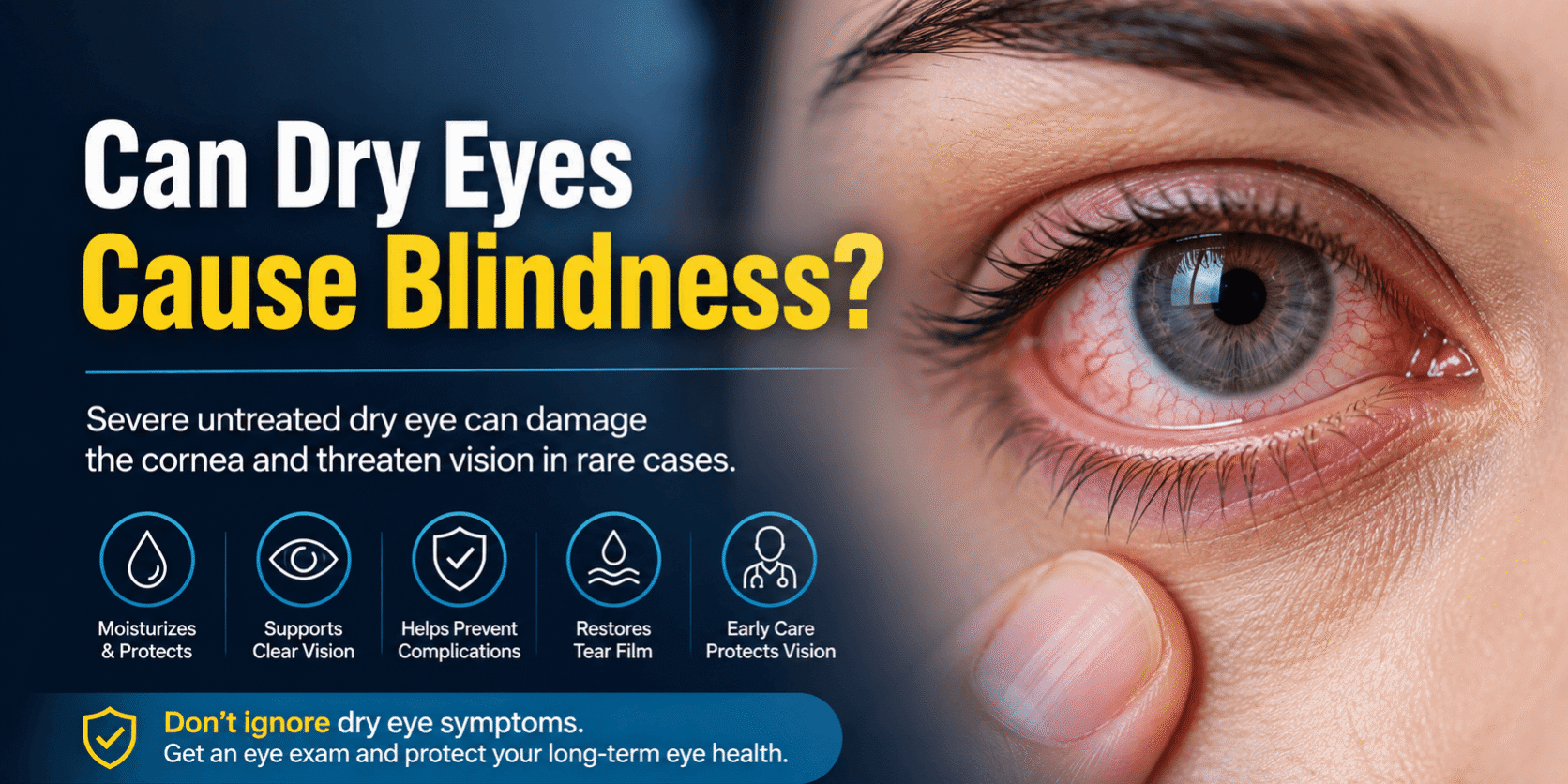
Can Dry Eyes Cause Blindness? Know the Real Risk
Dry eyes are a common eye condition that affects millions of people worldwide. Many people wonder: Can dry eyes cause blindness? The short answer is that dry eye rarely causes blindness, but if left untreated for a long time, severe cases can damage the eye’s surface and lead to vision-threatening complications. Understanding the symptoms, causes, and treatment options can help protect your vision and maintain long-term eye health.
Can Dry Eyes Cause Blindness?
In most cases, dry eyes and blindness are not directly linked. Dry eye occurs when your eyes do not produce enough tears or when tears evaporate too quickly. Tears are essential for keeping the eye’s surface smooth, comfortable, and healthy.
Mild to moderate dry eye syndrome usually causes discomfort rather than permanent vision loss. However, severe dry eyes that go untreated for months or years can increase the risk of serious complications, including corneal damage. In rare cases, these complications may significantly affect vision and could contribute to blindness if appropriate medical care is not received.
What is a Dry Eye Condition?
Dry eye is a chronic condition affecting the tear film that covers the eye. A healthy tear film helps:
- Keep the eyes moist and comfortable.
- Protect against infection.
- Wash away dust and debris.
- Provide clear vision by maintaining a smooth eye surface.
When the tear film becomes unstable, the eyes may become dry, irritated, and inflamed.
Common Dry Eye Symptoms
Dry eye symptoms can vary from mild to severe and may include:
- Burning or stinging sensation
- Redness
- Itchy eyes
- Feeling like something is stuck in the eye
- Blurred or fluctuating vision
- Sensitivity to light
- Excessive tearing after irritation
- Eye fatigue, especially during screen use
If these symptoms persist, an eye examination is recommended.
How Can Severe Dry Eyes Affect Vision?
Many people experience temporary dry eye vision problems, such as blurry vision that improves after blinking or using lubricating eye drops. This occurs because an unstable tear film affects how light focuses on the eye.
In more advanced cases, chronic inflammation may damage the cornea, the clear front surface of the eye. Potential dry eye complications include:
- Corneal scratches (abrasions)
- Persistent inflammation
- Corneal ulcers
- Eye infections
- Corneal scarring
These complications can reduce vision and, in very rare untreated cases, may threaten eyesight.
Who is at Higher Risk?
Certain factors increase the likelihood of developing dry eye syndrome, including:
- Aging, especially over age 50
- Long hours of digital screen use
- Wearing contact lenses
- Autoimmune conditions, such as Sjögren’s syndrome
- Hormonal changes
- Certain medications, including antihistamines and antidepressants
- Previous eye surgery
- Dry, windy, or air-conditioned environments
People with these risk factors should have regular eye exams and seek care if symptoms develop.
How is Dry Eye Condition Diagnosed?
An ophthalmologist or optometrist can diagnose dry eye conditions through a comprehensive eye examination. Evaluation may include:
- Reviewing your symptoms and medical history
- Measuring tear production
- Assessing tear quality and stability
- Examining the cornea and eyelids
- Looking for signs of inflammation or surface damage
Early diagnosis helps prevent complications.
Treatment Options for Dry Eye
Treatment depends on the underlying cause and severity of the condition. Your eye specialist may recommend:
- Preservative-free artificial tears
- Lubricating eye gels or ointments
- Warm compresses and eyelid hygiene
- Prescription anti-inflammatory eye drops when appropriate
- Treatment for meibomian gland dysfunction
- Punctal plugs to reduce tear drainage in selected patients
- Lifestyle changes, such as reducing screen time and improving indoor humidity
Most people experience significant symptom improvement with a personalized treatment plan.
Tips to Prevent Dry Eye Complications
Simple daily habits can help reduce symptoms and protect your eyes:
- Blink frequently while using digital devices.
- Follow the 20-20-20 rule during screen time.
- Stay well hydrated.
- Wear sunglasses outdoors to reduce wind exposure.
- Avoid cigarette smoke and dry environments when possible.
- Use artificial tears as recommended by your eye care professional.
- Attend regular eye examinations if you have ongoing symptoms.
When Should You See an Eye Specialist?
Seek prompt medical attention if you experience:
- Persistent eye pain
- Sudden decrease in vision
- Severe redness
- Sensitivity to light that worsens
- Eye injury
- Symptoms that do not improve with over-the-counter lubricating drops
Early treatment can help prevent serious complications and preserve vision.
Key Takeaways
- Dry eye rarely causes blindness, but severe untreated cases can threaten vision.
- Most dry eye symptoms are manageable with early diagnosis and appropriate treatment.
- Chronic inflammation can lead to corneal damage from dry eyes if left untreated.
- Temporary blurry vision is common, but persistent vision changes require medical evaluation.
- Regular eye examinations and proper dry eye relief strategies help protect long-term eye health.
Conclusion
So, can dry eyes cause blindness? For the vast majority of people, the answer is no. However, severe or untreated dry eye can lead to corneal damage and other complications that may affect vision. Recognizing symptoms early, following recommended treatment, and scheduling regular eye examinations can greatly reduce the risk of long-term damage. If you have persistent dry eye symptoms or notice changes in your vision, consult a qualified ophthalmologist for an accurate diagnosis and personalized care.
Medical Disclaimer: This content is for informational purposes only and is not a substitute for professional medical advice, diagnosis, or treatment. Always consult a qualified eye care professional or healthcare provider for personalized advice regarding your eye health.