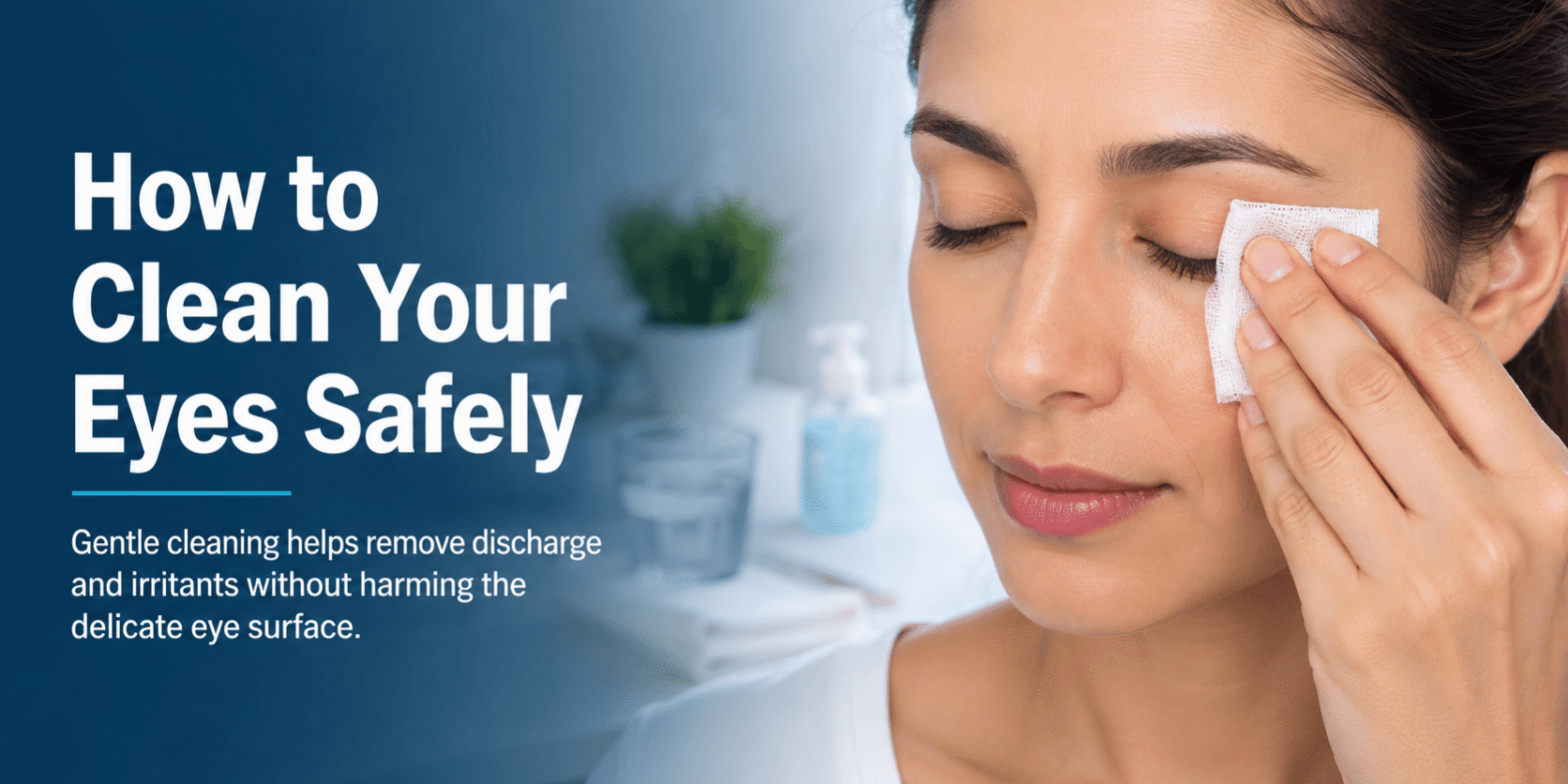
How to Clean Your Eyes Safely: Simple Tips for Healthy Eyes
Knowing how to clean eyes properly can help remove dust, discharge, and other irritants while protecting the delicate surface of the eye. However, the eyes have their own natural cleaning system through blinking and tears, so they usually do not need frequent or aggressive cleaning.
Using clean hands, safe water, and gentle techniques is important. Avoid putting household products, unprescribed eye drops, or other substances directly into your eyes.
How to Clean Your Eyes Safely
For routine eye hygiene, follow these simple steps:
- Wash your hands thoroughly with soap and clean water before touching the area around your eyes.
- Use clean water to gently clean the skin around your eyes.
- If there is dried discharge around the eyelids, use a clean, soft cloth or sterile gauze dampened with clean water.
- Gently wipe from the inner corner toward the outer corner without rubbing the eye.
- Use a clean section of the cloth or fresh gauze for the other eye to reduce the risk of spreading infection.
- Pat the area dry with a clean towel. Do not scrub the eyelids or eyeball.
If something such as dust gets into your eye, avoid rubbing it. You can gently rinse the eye with clean water or sterile saline and allow tears to help wash the irritant away.
What Should You Avoid When Cleaning Your Eyes?
The eyes are sensitive, and some commonly used cleaning methods can cause irritation or injury. Avoid:
- Rubbing your eyes forcefully
- Using dirty towels or tissues
- Sharing towels, eye makeup, or cosmetics
- Putting soap, shampoo, rose water, or other household substances directly into the eyes
- Using leftover or expired eye drops
- Using antibiotic or steroid eye drops without medical advice
- Trying to remove an object that appears embedded in the eye
If you wear contact lenses, follow the cleaning and storage instructions recommended for your specific lenses and contact lens solution.
How Often Should You Clean Your Eyes?
Most healthy eyes do not need to be washed several times a day. Tears and blinking naturally help keep the eye surface clean.
You may gently clean the eyelids and surrounding skin when there is visible discharge, crusting, or debris. If you frequently experience sticky discharge, excessive watering, itching, redness, or irritation, the underlying cause should be evaluated rather than repeatedly cleaning the eyes.
When Should You See an Eye Specialist?
Occasional dust or mild irritation usually improves after gentle rinsing. However, seek professional eye care if you have:
- Persistent eye pain or significant redness
- Blurred or reduced vision
- Light sensitivity
- Thick or persistent eye discharge
- Swelling around the eye
- A foreign object that does not come out after gentle rinsing
- An eye injury or chemical exposure
- Symptoms that continue or become worse
A chemical entering the eye requires prompt rinsing with plenty of clean water and urgent medical evaluation, particularly if pain or vision changes continue.
Key Takeaways
- Healthy eyes naturally clean themselves through tears and blinking.
- Wash your hands before touching your eyes or eyelids.
- Use clean water or sterile saline for gentle rinsing when appropriate.
- Never rub your eyes aggressively or put household substances directly into them.
- Persistent redness, discharge, pain, or vision changes should be evaluated by an eye specialist.
Conclusion
Learning how to clean eyes safely is mainly about maintaining good hand and eyelid hygiene and avoiding practices that can irritate the eye. Most healthy eyes do not require frequent washing. If you develop persistent discomfort, discharge, redness, pain, or changes in vision, consult a qualified ophthalmologist to determine the appropriate care.