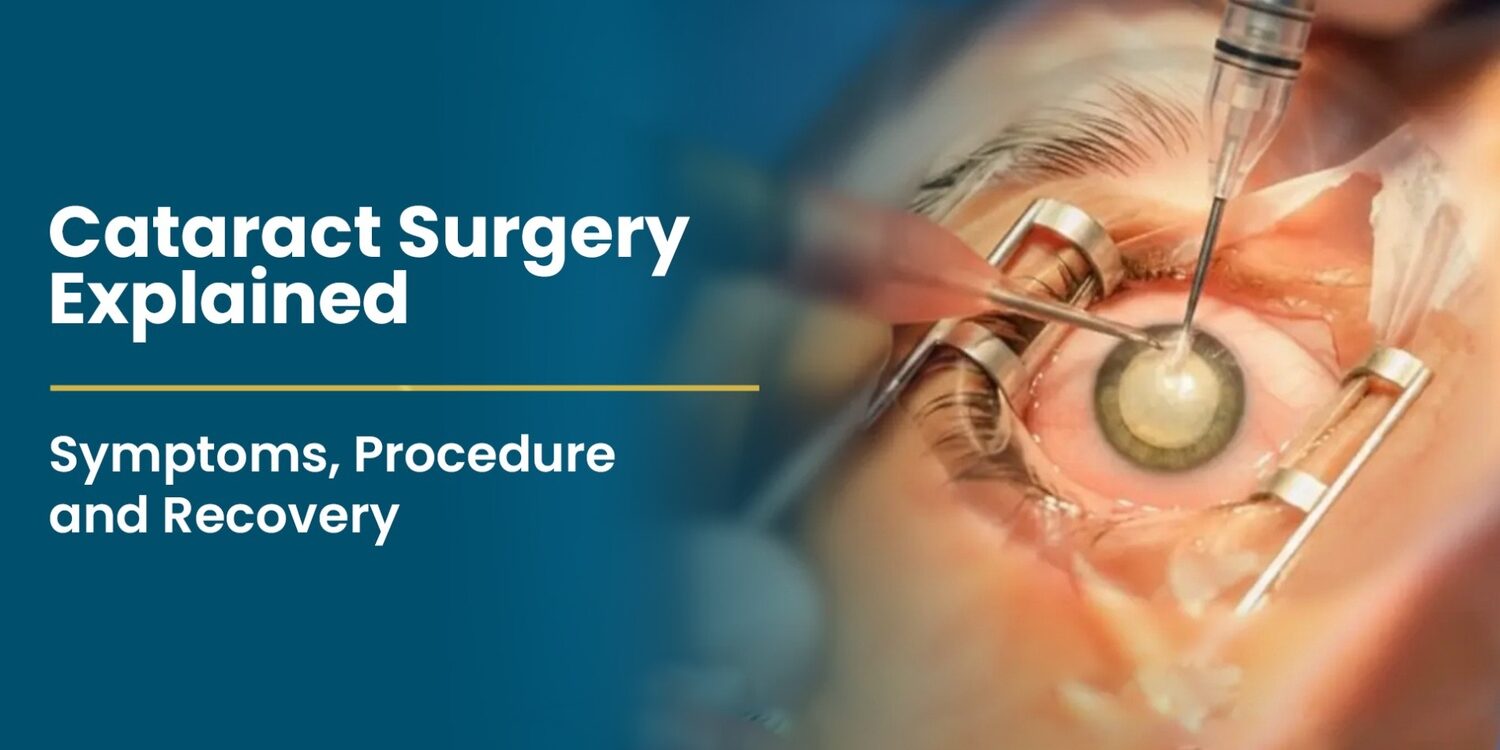
Cataract Surgery Explained: Procedure, Recovery and Lens Options
Written by

Dr. Vivek M Singh
Sr. Cataract & Refractive Surgeon
12+ Years Experience
Published on : 22 April 2026
Cataracts remain one of the leading causes of reversible vision loss worldwide, particularly among adults over the age of 60. According to the World Health Organization (WHO), cataracts account for approximately 51% of global blindness, affecting over 65 million people.
The good news is that cataract surgery is one of the safest and most effective surgical procedures in modern medicine. Clinical studies show that over 95% of patients experience significant improvement in vision after surgery when performed by an experienced ophthalmologist.
For patients diagnosed with cataracts, understanding the procedure often reduces anxiety and improves surgical outcomes. In clinical practice, patients who clearly understand the procedure, recovery expectations, and lens options tend to feel more confident and experience a smoother recovery.
What Is a Cataract?
A cataract occurs when the natural lens of the eye becomes cloudy, preventing light from passing clearly to the retina.
The eye’s natural lens is composed primarily of water and specialized proteins arranged in a precise structure. As people age, these proteins can break down and cluster together, gradually forming opaque areas that scatter light.
Common Symptoms of Cataracts
Patients with cataracts frequently report:
- Blurred or cloudy vision
- Difficulty seeing clearly at night
- Increased sensitivity to bright lights or glare
- Colors appearing faded or yellowed
- Frequent changes in eyeglass prescriptions
- Halos around lights
Risk Factors for Cataracts
Major risk factors include:
- Age over 60
- Diabetes
- Long-term ultraviolet (UV) exposure
- Smoking
- Previous eye trauma
- Prolonged corticosteroid use
- Family history
When Do You Need Cataract Surgery?
Cataract surgery is recommended when vision loss begins to interfere with daily life, rather than based solely on the stage of the cataract.
Doctors typically recommend surgery when:
- Vision problems affect daily activities
- Glasses no longer improve vision
- Night driving becomes difficult
- Glare from lights becomes severe
Types of Cataract Surgery
Phacoemulsification (Most Common Procedure)
Over 90% of cataract surgeries worldwide use phacoemulsification. A micro‑incision is made in the cornea, an ultrasound breaks the cloudy lens into fragments, the fragments are removed, and an artificial lens is inserted.
Laser‑Assisted Cataract Surgery
Some clinics use femtosecond laser technology for increased precision during certain surgical steps, such as creating corneal incisions and softening the cataract.
Small incision cataract surgery/ Extracapsular cataract surgery
Used for very advanced cataracts, this technique removes the lens in one piece through a larger incision.
Cataract Surgery Step‑by‑Step
Step 1: Pre‑Surgery Eye Examination
Doctors perform measurements such as eye length, corneal curvature mapping, and lens power calculations to select the correct intraocular lens.
Step 2: Anesthesia and Preparation
The eye is numbed with anesthetic drops/injections, mild sedation may be given, and the eye is sterilized before surgery.
Step 3: Small Corneal Incision
A microscopic incision is created at the edge of the cornea to access the cloudy lens.
Step 4: Removing the Clouded Lens
Ultrasound energy breaks the cataract into small fragments that are gently removed from the eye.
Step 5: Implanting the Intraocular Lens (IOL)
An artificial intraocular lens replaces the natural lens and restores focusing ability.
Types of Intraocular Lenses
- Monofocal Lenses – provide clear vision at one distance.
- Multifocal Lenses – allow vision at multiple distances and reduce dependence on glasses.
- Toric Lenses – correct astigmatism and improve clarity.
Recovery After Cataract Surgery
Most patients notice improved vision within 24–48 hours. Full healing generally occurs within 2–4 weeks.
Common temporary symptoms include:
- Mild irritation and watering
- Blurry vision
- Light sensitivity
- Glare from lights becomes severe
Risks and Complications
Cataract surgery has a success rate above 95%, but rare complications may include infection, retinal detachment, or swelling.
Benefits of Cataract Surgery:
Patients often experience:
- Sharper vision
- Brighter colors
- Reduced glare
- Improved daily functioning
Choosing the Right Cataract Surgeon
Patients should consider:
- Board certification in ophthalmology
- Extensive surgical experience
- Modern surgical technology
- Positive patient reviews
Cataract surgery is one of the most successful procedures in modern medicine. With proper evaluation and modern surgical care, most patients can expect clearer vision and improved quality of life for many years.
What is glaucoma, and how does it affect the eyes?
Glaucoma is optic nerve damage, often due to high eye pressure. It gradually reduces vision.
Can glaucoma occur without symptoms?
Yes. Many people do not notice early glaucoma.
What are the early symptoms of glaucoma?
Peripheral vision loss is often the earliest symptom of glaucoma.
What causes glaucoma to develop?
Poor drainage of eye fluid, genetics, age and other health issues can cause glaucoma.
How is eye pressure related to glaucoma?
High eye pressure contributes to optic nerve damage.
What is normal eye pressure, and when is it considered high?
Normal range is about 10–21 mmHg. Higher than this may be considered elevated.
What are the different types of glaucoma?
Open angle, normal‑tension, secondary, congenital and pigmentary are the main types.
Can glaucoma be prevented or slowed down?
Regular check-ups and the management of risk factors can slow the progression of glaucoma.
What are the treatment options for glaucoma?
Medication, laser therapy and surgery are primary treatments.
Does glaucoma surgery cure the condition?
Surgery controls high eye pressure but does not restore lost vision.