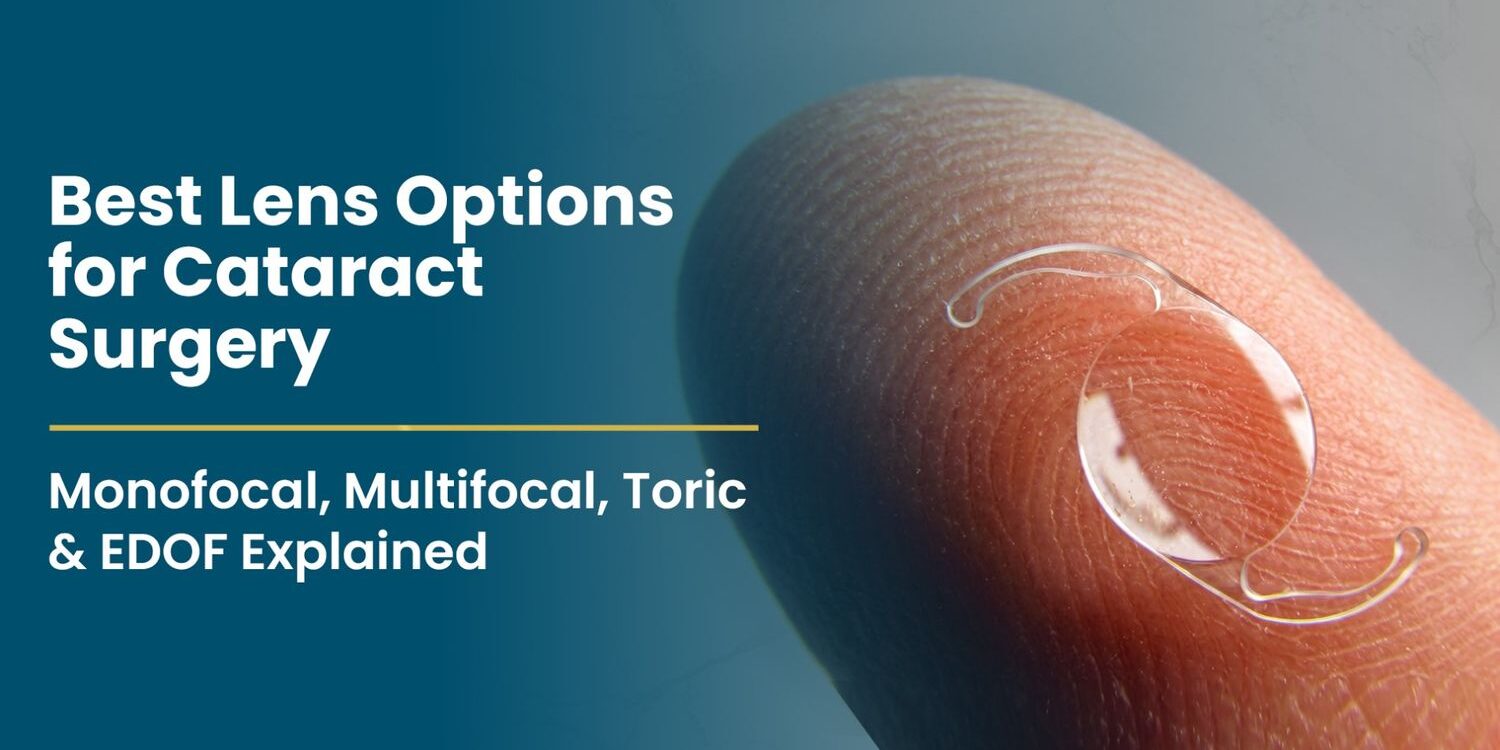
How to Choose the Best Lens for Cataract Surgery: Complete IOL Guide
Written by

Dr. Vivek M Singh
Sr. Cataract & Refractive Surgeon
12+ Years Experience
Published on : 22 April 2026
A cataract develops when proteins in the natural lens begin to break down, causing the lens to become cloudy and scatter light rather than focusing it properly on the retina.
Common symptoms include:
- Common symptoms include:
- Difficulty seeing in low light
- Increased glare from headlights or sunlight
- Colors appearing faded or yellowed
- Frequent changes in glasses prescriptions
Cataract surgery removes the cloudy lens using a technique called phacoemulsification and replaces it with a clear artificial lens. The procedure typically takes 10–20 minutes and is performed under local anesthesia.
What Is an Intraocular Lens (IOL)?
An intraocular lens is a permanent artificial lens implanted in the eye during cataract surgery. Modern IOLs are made from medical‑grade acrylic materials designed to remain in the eye permanently.
Types of Intraocular Lenses (IOLs)
Monofocal Lenses
Monofocal lenses provide clear vision at one distance, usually distance vision. They are widely used and typically covered by insurance. Patients may still need reading glasses.
Multifocal Lenses
Multifocal lenses provide multiple focal points to help patients see both near and far. Many patients experience reduced dependence on glasses, although halos or glare may occur.
Toric Lenses for Astigmatism
Toric lenses are designed for patients with astigmatism and help correct irregular corneal shape, improving visual sharpness.
Extended Depth of Focus (EDOF) Lenses
EDOF lenses create a continuous range of vision, providing good distance and intermediate vision while reducing halos compared with multifocal lenses.
Factors That Determine the Best Lens
Lifestyle and daily activities such as reading, computer work, and night driving influence lens choice. Eye conditions such as astigmatism, glaucoma, macular degeneration, or diabetic retinopathy may also affect which lens is recommended.
Cost Considerations
Standard monofocal lenses are usually covered by insurance or Medicare. Premium lenses such as multifocal, toric, and EDOF lenses may require additional out‑of‑pocket costs depending on the technology used.
Questions to Ask Your Eye Surgeon
Patients should discuss the following with their ophthalmologist:
- Which lens is best suited for my eye measurements?
- What visual side effects are possible?
- Will I still need glasses after surgery?
- What results can I realistically expect?
Recovery After Cataract Surgery
Most patients notice improved vision within 24–48 hours, with full healing taking several weeks. Temporary side effects such as mild irritation or light sensitivity usually resolve as the eye heals.
Conclusion
Cataract surgery not only restores clear vision but also allows patients to customize how they see the world. By understanding lens options such as monofocal, multifocal, toric, and EDOF lenses, patients can make informed decisions that support long‑term visual health.
What is glaucoma, and how does it affect the eyes?
Glaucoma is optic nerve damage, often due to high eye pressure. It gradually reduces vision.
Can glaucoma occur without symptoms?
Yes. Many people do not notice early glaucoma.
What are the early symptoms of glaucoma?
Peripheral vision loss is often the earliest symptom of glaucoma.
What causes glaucoma to develop?
Poor drainage of eye fluid, genetics, age and other health issues can cause glaucoma.
How is eye pressure related to glaucoma?
High eye pressure contributes to optic nerve damage.
What is normal eye pressure, and when is it considered high?
Normal range is about 10–21 mmHg. Higher than this may be considered elevated.
What are the different types of glaucoma?
Open angle, normal‑tension, secondary, congenital and pigmentary are the main types.
Can glaucoma be prevented or slowed down?
Regular check-ups and the management of risk factors can slow the progression of glaucoma.
What are the treatment options for glaucoma?
Medication, laser therapy and surgery are primary treatments.
Does glaucoma surgery cure the condition?
Surgery controls high eye pressure but does not restore lost vision.