How to Cure Dry Eyes Permanently: What Really Helps?
If you are searching for how to cure dry eyes permanently, it is important to know that there is no single permanent cure that works for everyone. Dry eye disease can have different causes, including reduced tear production, excessive tear evaporation, eyelid problems, certain medicines, contact lens use, environmental conditions, and some medical conditions.
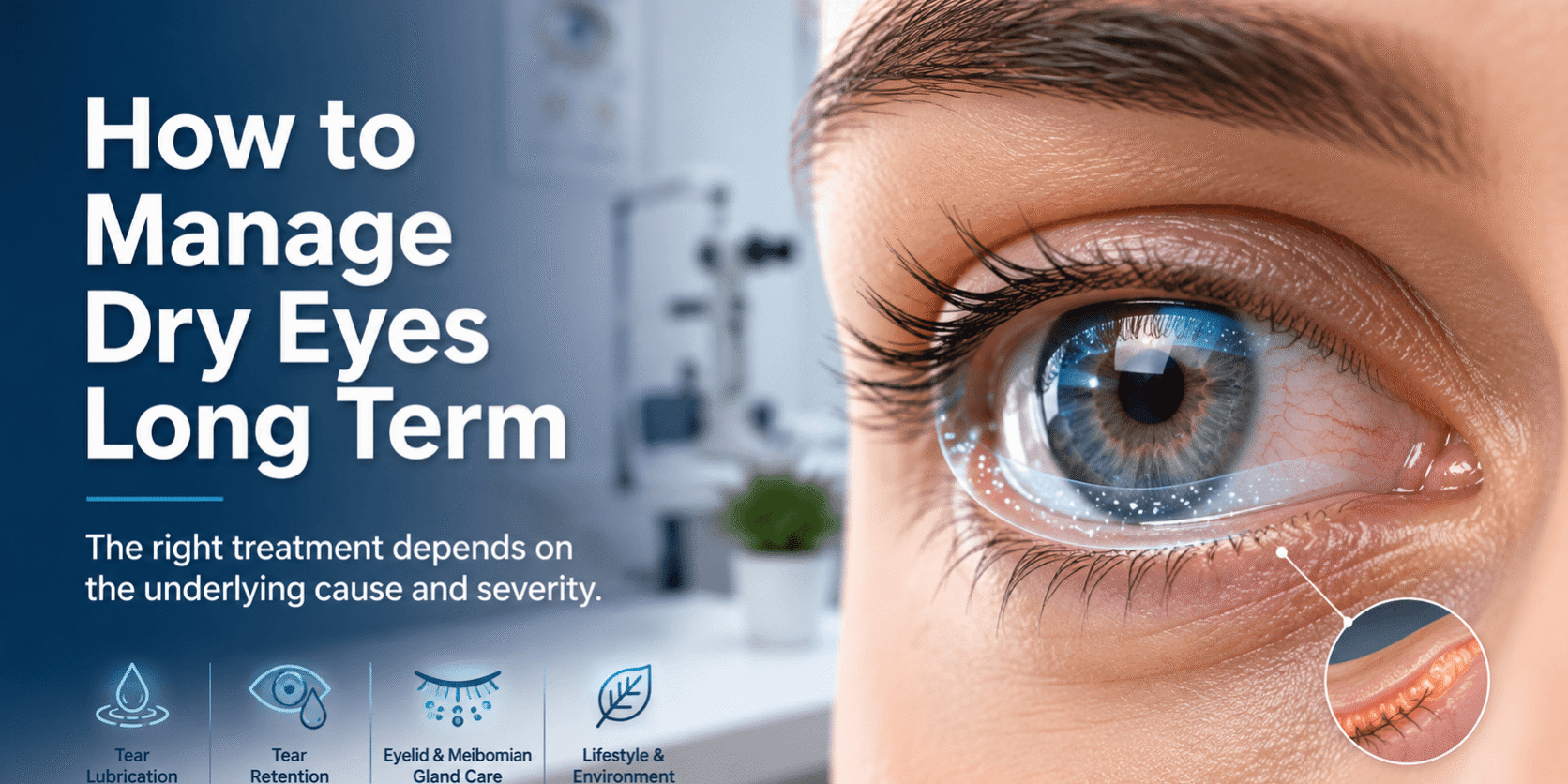
The good news is that dry eye symptoms can often be controlled effectively when the underlying cause is identified and treated. The right treatment depends on the type and severity of dry eye.
What Is Dry Eye?
Dry eye occurs when your eyes do not produce enough tears or when the tears do not remain on the eye surface properly. This can cause irritation and, in some cases, temporary changes in vision.
Common symptoms include:
- Burning or stinging
- Gritty or scratchy feeling
- Redness
- Excessive watering
- Light sensitivity
- Blurred or fluctuating vision
- Eye fatigue
Interestingly, watery eyes can also occur with dry eye because irritation may cause the eyes to produce reflex tears that do not adequately protect the eye surface.
Can Dry Eyes Be Cured Permanently?
Whether dry eye can be completely resolved depends largely on its cause. If a temporary trigger, medication, environmental factor, or treatable eyelid problem is responsible, addressing that cause may significantly improve symptoms.
However, chronic dry eye associated with aging, autoimmune conditions, meibomian gland dysfunction, previous eye surgery, or other long-term conditions may require ongoing management. The goal is usually to control symptoms, protect the eye surface, and address the underlying cause rather than promise a permanent cure.
Treatment Options for Long-Term Dry Eye Relief
Artificial Tears
Lubricating eye drops, commonly called artificial tears, are often used for mild dry eye. Depending on your symptoms, an ophthalmologist may recommend drops, gels, or ointments.
Prescription Eye Drops
For persistent or more significant dry eye, an eye specialist may prescribe medications such as cyclosporine or lifitegrast to help manage inflammation and improve tear function. Other prescription treatments may also be appropriate depending on the cause.
Treating Eyelid and Meibomian Gland Problems
The meibomian glands in the eyelids produce oils that help prevent tears from evaporating too quickly. If these glands are blocked or not functioning properly, treating the eyelid condition can form an important part of dry eye management. Warm compresses and eyelid care may be recommended in suitable patients.
Punctal Plugs
If tears drain away too quickly, an ophthalmologist may recommend punctal plugs. These small devices help retain tears on the surface of the eye for longer. In selected cases, procedures that permanently close the tear drainage openings may be considered.
Lifestyle and Environmental Changes
Simple changes can reduce symptoms and support treatment:
- Take regular breaks during prolonged screen use.
- Blink fully and frequently when using digital devices.
- Avoid direct exposure to fans, air conditioners, smoke, and strong wind.
- Consider a humidifier in very dry environments.
- Wear protective, wraparound sunglasses outdoors.
- Get adequate sleep and stay appropriately hydrated.
Do not start supplements such as omega-3 fish oil specifically for dry eye without discussing them with your doctor. A large clinical trial found that omega-3 supplementation did not provide significant additional benefit over placebo for typical moderate-to-severe dry eye.
When Should You See an Eye Specialist?
See an ophthalmologist if dry eye symptoms are persistent, worsening, interfering with daily activities, or associated with significant redness, light sensitivity, pain, or vision changes.
An eye examination can help determine whether you have dry eye and identify possible contributing factors. Your doctor may assess tear production, tear stability, the eyelids, and the surface of the eye before recommending treatment.
Key Takeaways
- There is no guaranteed permanent cure for every type of dry eye.
- Finding and treating the underlying cause is an important part of long-term management.
- Artificial tears may help relieve mild symptoms.
- Persistent dry eye may require prescription medicines or procedures.
- Managing screen use, airflow, humidity, and eyelid health can reduce symptoms.
- An ophthalmologist can recommend treatment based on the specific type and severity of your dry eye.
Conclusion
If you are wondering how to cure dry eyes permanently, the most realistic approach is to identify what is causing your dry eye and treat that cause appropriately. Some people may experience substantial or lasting improvement, while others need ongoing treatment to keep symptoms controlled.
If dry eye symptoms continue despite home measures or over-the-counter eye drops, consult a qualified ophthalmologist for a proper evaluation and personalized treatment plan.