Blind Spot of the Eye: What It Is and When to Worry
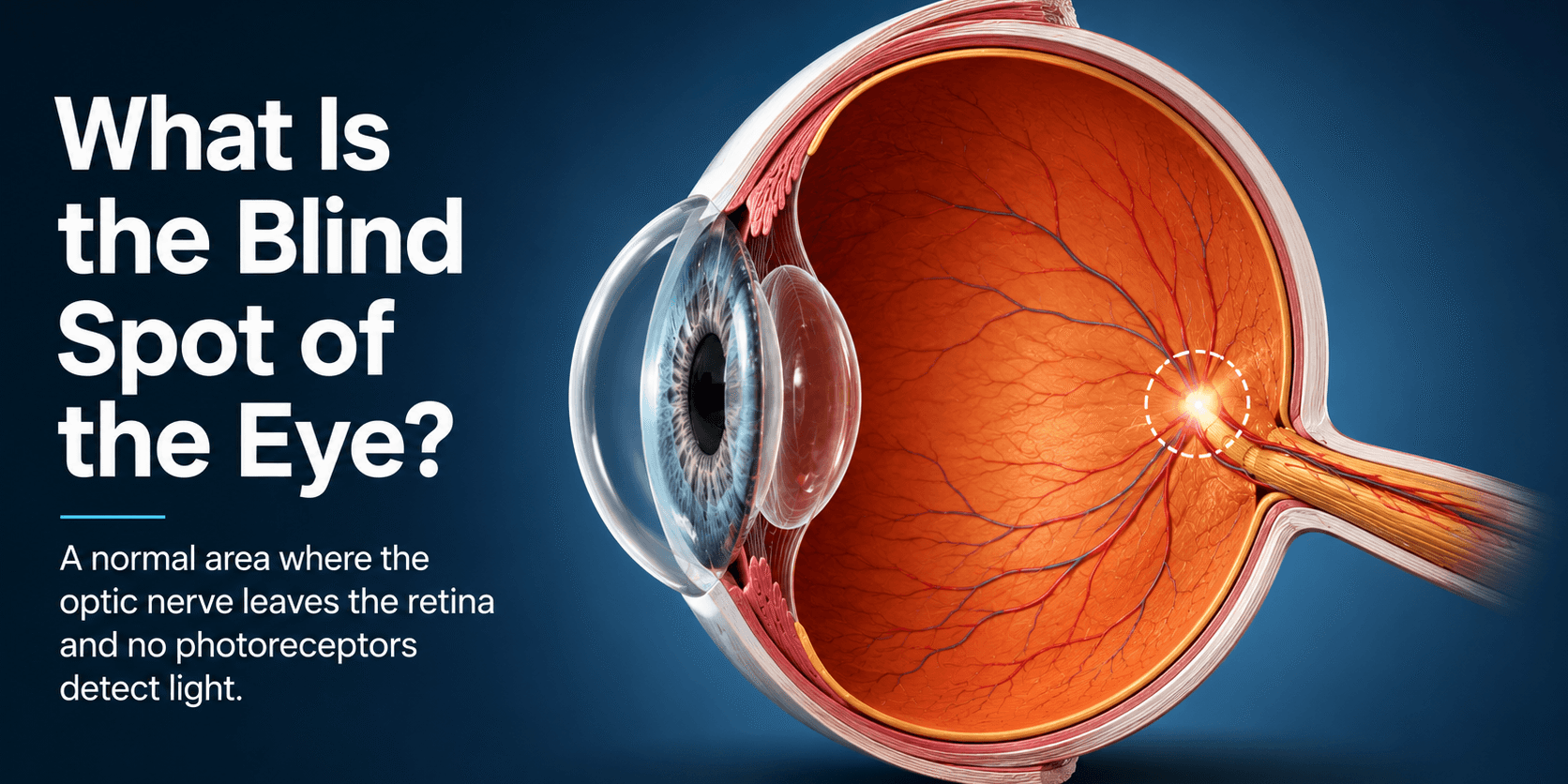
Have you ever wondered what is the blind spot of the eye and why you usually do not notice it? The blind spot is a small, normal area in each eye where you cannot see because the optic nerve leaves the retina at that location. Since there are no light-sensitive photoreceptors at the optic nerve head, light falling directly on this area cannot be detected.
Although every healthy eye has a natural blind spot, your brain and both eyes work together to fill in the missing information, so you generally remain unaware of it.
What is the Blind Spot of the Eye?
The blind spot, medically called the physiological blind spot, is the point on the retina where the optic nerve exits the eye and carries visual information to the brain.
The retina contains specialized light-sensitive cells called photoreceptors. However, the optic nerve head does not contain these photoreceptors. As a result, this small area cannot detect light and creates a normal gap in the visual field.
The blind spot is located slightly away from the center of vision. It is present in both eyes, but the blind spots are in different locations within each eye’s visual field.
Why Don’t We Notice Our Blind Spot?
Most people do not notice their blind spot because the brain processes information from both eyes and combines the visual signals. When one eye has a blind area, the other eye can provide information from that part of the scene.
Your brain can also use surrounding visual information to make the scene appear continuous. This is why everyday activities such as reading, walking, and driving normally do not make you aware of the physiological blind spot.
Can the Blind Spot Become Larger?
A normal blind spot is not usually a sign of an eye disease. However, an enlarged blind spot can sometimes be associated with conditions affecting the optic nerve, retina, or the pressure surrounding the brain and optic nerve.
For example, glaucoma can cause blind spots and peripheral vision loss as the optic nerve becomes damaged. These changes may develop gradually, and people may not notice them during the early stages.
Other eye or neurological conditions can also produce an enlarged or abnormal blind spot. The cause cannot be determined from the symptom alone and requires an eye examination when appropriate.
How is the Blind Spot Checked?
An eye specialist can evaluate the visual field using a visual field test, also called perimetry. This test measures which areas of your vision can detect light and can identify normal or abnormal gaps in the visual field.
Depending on the findings, an ophthalmologist may also examine the optic nerve and retina and may recommend additional tests.
When Should You See an Eye Specialist?
You should arrange an eye examination if you notice a new blind spot, an enlarging area of missing vision, flashes of light, sudden changes in peripheral vision, or unexplained vision loss.
A sudden or significant change in vision should be assessed promptly because abnormal blind spots can have different causes, some of which require timely medical evaluation.
Key Takeaways
- The blind spot of the eye is a normal area where the optic nerve leaves the retina.
- This area has no photoreceptors, so it cannot detect light.
- Each eye has a natural blind spot, but most people do not notice it.
- The brain and both eyes help compensate for the missing visual information.
- An enlarged or new blind spot can sometimes indicate an eye or neurological problem.
- A visual field examination can help an ophthalmologist assess abnormal areas of vision.
Conclusion
So, what is the blind spot of the eye? It is a normal area in each eye where the optic nerve exits the retina and where there are no photoreceptors to detect light. Your brain and both eyes usually compensate for this small gap, making it difficult to notice in everyday life.
However, a new, enlarged, or noticeable blind spot is different from the normal physiological blind spot. If you experience unexplained changes in your vision, consult a qualified ophthalmologist for an appropriate evaluation.