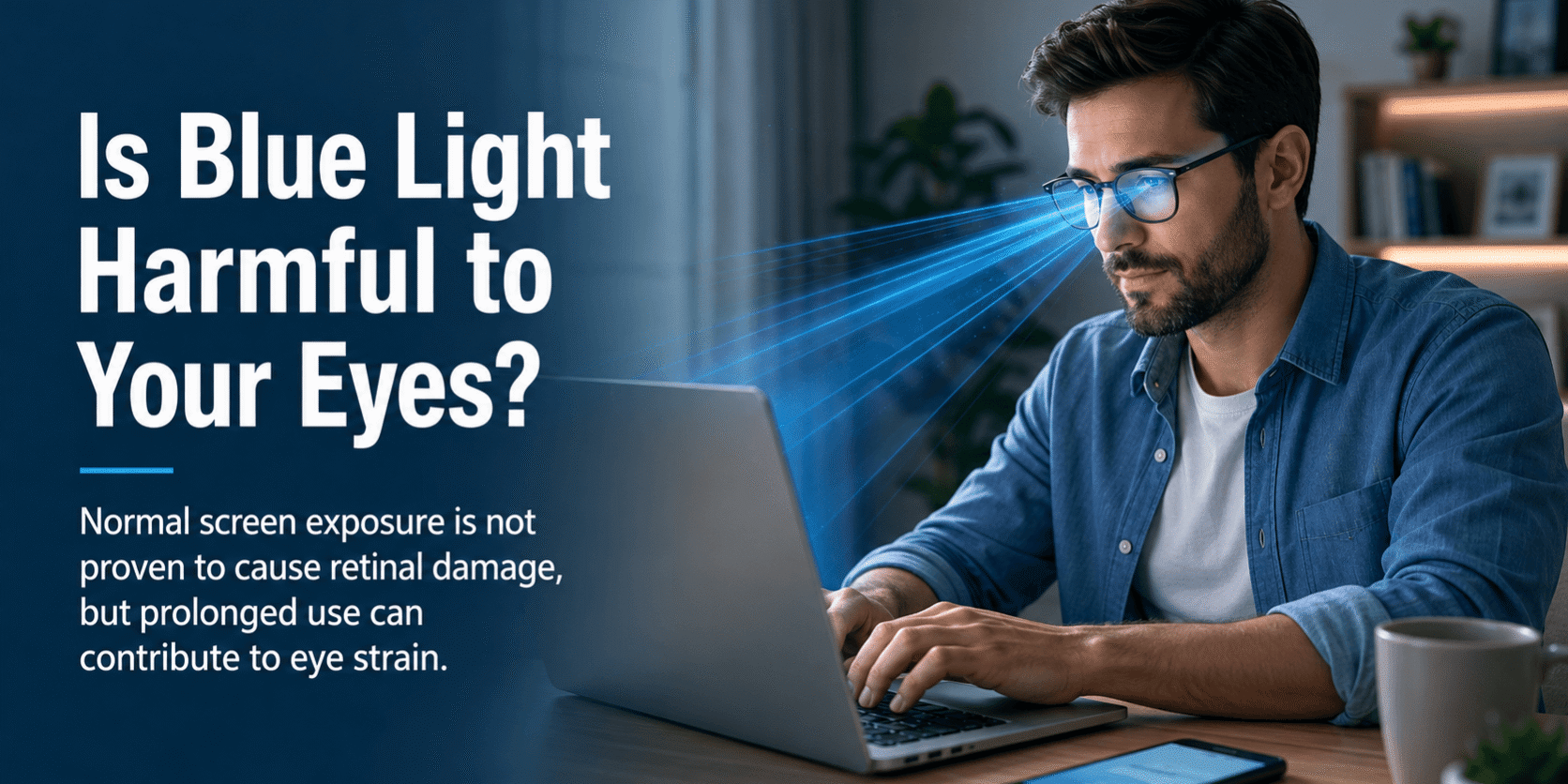
Is Blue Light Harmful for Your Eyes?
With smartphones, computers, tablets, and LED lighting becoming part of everyday life, many people ask: Is blue light harmful to the eyes? Blue light is a type of visible light emitted by natural sources such as sunlight, as well as by digital screens and LED lights.
Current evidence does not show that normal exposure to blue light from phones, computers, or other digital screens causes permanent retinal damage in healthy people. However, prolonged screen use can contribute to eye strain, dryness, blurred vision, and headaches, mainly because we tend to blink less and focus at a close distance for long periods.
What is Blue Light?
Blue light is part of the visible light spectrum. It has relatively short wavelengths and is present naturally in sunlight. Digital devices such as smartphones, computers, tablets, and LED screens also emit blue light.
Blue light is not inherently harmful. Natural blue light during the daytime helps regulate the body’s internal sleep-wake cycle. However, exposure to bright light, including blue-enriched light, late in the evening can make it harder for some people to fall asleep.
Can Blue Light Damage Your Eyes?
For everyday use of digital screens, there is currently no good evidence that blue light from computer or phone screens damages the retina or causes blindness. Laboratory and animal studies have shown that sufficiently intense or prolonged exposure to certain wavelengths of blue light can cause retinal injury, but these exposure conditions are not comparable to normal screen use.
This distinction is important. Blue light itself should not be considered the main cause of eye problems associated with prolonged screen use.
What Causes Eye Discomfort During Screen Use?
Prolonged screen use can lead to digital eye strain. Common symptoms include:
- Dry or irritated eyes
- Burning or watery eyes
- Temporary blurred vision
- Difficulty focusing
- Headaches
- Eye fatigue
- Increased sensitivity to light
One reason is that people often blink less frequently when concentrating on a screen. Reduced blinking can increase tear evaporation and contribute to dry-eye symptoms.
Do Blue Light Blocking Glasses Protect Your Eyes?
Blue-light filtering glasses are widely marketed to reduce eye strain and protect the retina. However, research has not established that these lenses prevent eye disease or retinal damage caused by normal digital screen exposure. Systematic reviews have found inconsistent evidence that they can reduce eye fatigue, protect macular health, or improve sleep.
If you experience discomfort while using a computer or phone, factors such as an incorrect glasses prescription, screen glare, poor lighting, prolonged close-up focusing, and reduced blinking may be more relevant than blue light itself.
How Can You Reduce Digital Eye Strain?
You can take several simple steps to make screen use more comfortable:
- Follow the 20-20-20 rule: every 20 minutes, look at something about 20 feet away for at least 20 seconds.
- Blink regularly while using digital devices.
- Adjust screen brightness and reduce distracting glare.
- Keep your screen at a comfortable viewing distance.
- Increase text size if you are straining to read.
- Take regular breaks during long periods of computer or phone use.
- If your eyes feel dry, speak with an eye-care professional about appropriate lubricating eye drops.
- Reduce bright screen exposure close to bedtime if it interferes with your sleep.
When Should You See an Eye Specialist?
Occasional eye fatigue after prolonged screen use is common. However, persistent blurred vision, significant eye pain, recurring headaches, persistent dryness, sudden changes in vision, flashes of light, or new floaters should not simply be attributed to blue light.
An ophthalmologist can examine your eyes, check your vision, and determine whether another eye condition is contributing to your symptoms.
Key Takeaways
- Is blue light harmful for eyes? Normal blue-light exposure from digital screens has not been shown to cause permanent retinal damage in healthy eyes.
- Blue light is naturally present in sunlight and is an important part of the visible light spectrum.
- Prolonged screen use can cause digital eye strain and dry eye symptoms, largely due to reduced blinking and prolonged close-up focusing.
- Blue-light-blocking glasses have not been consistently shown to prevent retinal disease or digital eye strain.
- Regular screen breaks, frequent blinking, appropriate lighting, and a correct vision prescription can help reduce discomfort.
- Persistent or sudden vision problems should be evaluated by a qualified eye specialist.
Conclusion
So, is blue light harmful for eyes? Based on current evidence, normal exposure to blue light from smartphones, computers, and other digital screens is not known to cause permanent eye damage. The more common concern with prolonged screen use is digital eye strain and dryness rather than blue-light-induced retinal injury.
Using screens responsibly, taking regular breaks, and maintaining good eye-care habits can help keep your eyes comfortable. If you have persistent symptoms or changes in vision, consult a qualified ophthalmologist for an appropriate eye examination.